As the U.S. Senate prepares for a significant legislative battle over the regulation of cryptocurrency, particularly stablecoins, controversy and dissent have cast a shadow on the proposed bill, dubbed the GENIUS Act. The discourse surrounding this bill illuminates the intertwining of political power and emerging financial technologies, encapsulating a moment where the future of digital currency regulation hangs in the balance.
The GENIUS Act, aimed at creating a regulatory framework for stablecoins—cryptocurrencies pegged to stable assets like the U.S. dollar—initially received bipartisan support when it passed the Senate Banking Committee in March. However, the dynamic shifted when links emerged between President Trump’s family business ventures and significant investments by an Abu Dhabi-backed firm in a Trump-affiliated crypto entity, World Liberty Financial. This venture involved a substantial $2 billion purchase of a stablecoin, stirring concerns amongst Democrats about potential conflicts of interest and corruption.
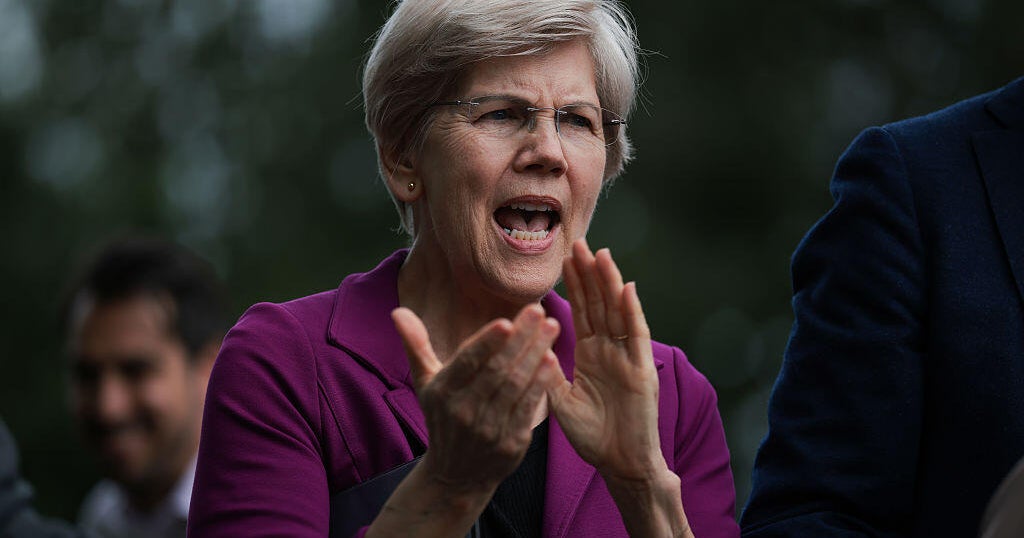
The legislation’s journey through the Senate has been fraught with challenges. Following the revelation of the Trump family’s deepening involvement in cryptocurrency, the call for tougher regulations intensified. Democrats have voiced their apprehensions about the lack of provisions in the GENIUS Act that would prevent elected officials and their families from engaging in crypto transactions that could lead to personal gains. Senator Elizabeth Warren, a leading figure on the Senate Banking Committee from Massachusetts, has been vocal about the need for stringent measures to curb what she perceives as corruption enhanced by the proliferation of digital financial instruments.
Senator Warren’s fact sheet lays out several points where the bill falls short, particularly in safeguarding against corruption and ensuring national security. Her primary recommendation is a sweeping prohibition on elected officials and their immediate families from owning or dealing in stablecoins. The aim, according to Warren, is to prevent legislative decisions that could undeservedly inflate the value of crypto businesses owned by those in power.
Simultaneously, Senator Jeff Merkley of Oregon introduced a complementary bill, the “End Crypto Corruption Act”, designed to further bind the hands of high-ranking government officials and their families from profiting off cryptocurrencies. This measure resonates with the broader Democratic sentiment aiming to solidify the barriers between public office and private gain.
The discourse took a more personalized turn when Senate Minority Leader Chuck Schumer urged his Democratic colleagues to withhold their support for the GENIUS Act as a strategic move to force amendments to the bill. This political maneuvering underscores the delicate balance of power in the Senate, where even a procedural vote expected later in the week could falter if the requisite 60 votes aren’t secured, a scenario made more plausible by the emerging bipartisan skepticism about the bill.
Adding to the complexity, a few Republicans, including Senators Rand Paul, Josh Hawley, and John Kennedy, have expressed reservations about the bill for various reasons, ranging from concerns about federal overreach to doubts about the effectiveness of the proposed regulatory measures. Their potential defection introduces an additional layer of uncertainty about the bill’s passage.
Beyond the legislative intricacies, the issue has stirred public debate and concern. Senator Bernie Sanders planned a roundtable with cryptocurrency experts to discuss the risks posed by the GENIUS Act to the U.S. financial system and economy. His proactive approach highlights the growing scrutiny and skepticism regarding the regulation of a technology that, while innovative, carries significant risks if left unchecked.
The controversy is further fueled by the significant financial implications for President Trump, whose crypto holdings, spurred by ventures like the launch of $TRUMP and $MELANIA meme coins, constitute a substantial portion of his wealth. This personal financial expansion, amid loosening federal regulations under his administration, paints a troubling picture for those wary of the encroaching fusion of political power and burgeoning financial sectors.
In response to the Democratic critique, World Liberty Financial stated that the Abu Dhabi investment sets a “historic precedent” as the largest-ever investment in a crypto company. However, the company shied away from disclosing the exact benefits accruing to the Trump family from this investment, thereby intensifying calls for greater transparency.
Senators, including Richard Blumenthal of Connecticut, have taken concrete steps to illuminate these dealings by requesting detailed records from involved entities like Fight Fight Fight LLC and World Liberty Financial. These actions represent a broader attempt to lay bare any communications that might suggest improper exchanges between the Trump administration and both domestic and foreign entities involved in the crypto space.
As the Senate gears up for a potential vote on the GENIUS Act, the stakes are high and the outcomes uncertain. The coming days will reveal whether the U.S. legislative framework can adapt to the challenges posed by digital finance, ensuring transparency, fairness, and security, or if it will falter under the weight of political and financial complexities. This legislative episode is not merely about regulating a financial tool but is a litmus test for how America handles the intersection of technology, finance, and governance in an increasingly digitized world economy.