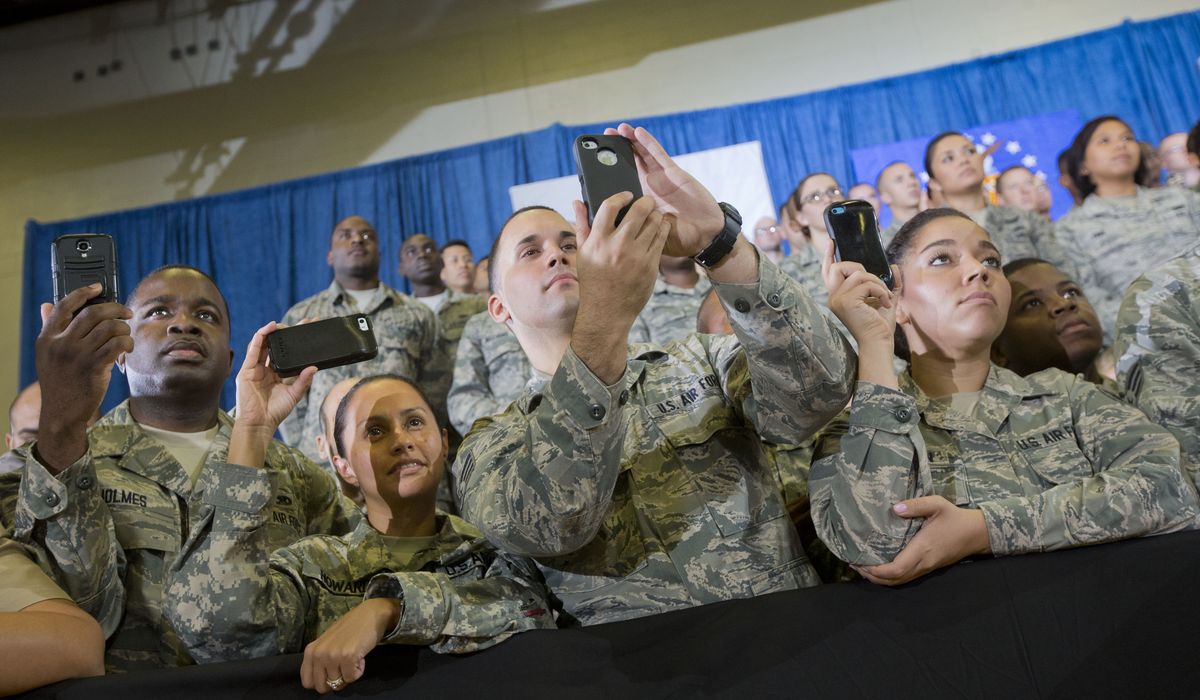
The ability of adversarial forces to utilize commercially available location data from smartphones to pinpoint and target U.S. military personnel in the Middle East has raised significant alarms among a group of bipartisan lawmakers. They have described this situation as a “five-alarm fire” that mandates immediate attention and action.
The lawmakers, in a letter addressed to the Defense Department’s Chief Information Officer, Kirsten A. Davies, have urged the Department of Defense (DoD) to take numerous steps to counter the escalating threat posed by what is known as “ubiquitous technical surveillance.” This term refers to the trail, or what military officials refer to as “digital exhaust,” which is emitted by modern smartphones.
Smartphone apps collect location data, which can easily be purchased by an adversary from so-called data brokers. This is the same way that corporations buy such data to keep track of consumer behavior and customize advertisements for specific individuals. The lawmakers highlighted several instances in their letter where commercial data was utilized to track phones on U.S. military bases. This included an incident involving personnel from the special forces in Syria.
However, it appears that the Department of Defense has not given this issue the gravity it deserves. The letter, signed by 14 lawmakers from both sides of the aisle, including prominent liberal senators such as Ron Wyden of Oregon and Elizabeth Warren of Massachusetts, as well as conservative Republicans like Representatives Pat Harrigan of North Carolina and Scott Perry of Pennsylvania, states, “DoD officials have not treated this counterintelligence and force protection threat as a five-alarm fire.”
The letter went on to censure the Department of Defense for its lack of action against this threat, which it has been aware of for over a decade. “DoD has known about this threat for over a decade, yet have failed to take meaningful steps to protect our men and women in uniform,” the letter read. The lawmakers deemed this inaction as unacceptable. They called upon the DoD to immediately implement common-sense cybersecurity measures to prevent the sale of location data that could undermine national security and endanger the lives of U.S. personnel.
In addition to the letter, Senator Wyden pointed to responses from U.S. Central Command, in response to inquiries from his office, confirming that this issue is prevalent in the Middle East, where U.S. troops have been conducting operations against Iran. “CENTCOM has received multiple threat reports concerning adversary exploitation of commercial location data to target or surveil U.S. personnel in theater,” CENTCOM stated in its response to Senator Wyden.
The group of lawmakers suggested several steps that the Pentagon could take to counter this threat. They urged the Pentagon to disable advertising identification on all Pentagon-issued smartphones; implement a policy that mandates the disabling of advertising ID on all phones brought into military bases or deployed overseas; eliminate web browsers that facilitate data collection by Google, such as Google Chrome; among other steps.
Adm. Frank M. Bradley, the head of U.S. Special Operations Command, expressed his concern about UTS during a recent Special Operations Forces Week convention. He highlighted that UTS is a significant worry for his personnel due to the changing nature of surveillance in the modern world.
Admiral Bradley said, “We now fight in a space of pervasive surveillance, a ubiquitous information environment driven by technical surveillance. Exquisite information is no longer the guarded property of governments or of the state. It is increasingly crowdsourced, exploitable and available to anyone with the will to look.”
He went on to discuss the implications of this surveillance for the battlefield. He explained that commercial technology, when applied to the battlefield, could turn seemingly harmless data into a significant threat. This includes data such as tracking information, open-source data, and the digital exhaust from web searches. In a battlefield environment, this digital footprint could provide adversaries with precise coordinates for targeted attacks.
In conclusion, the lawmakers’ letter underscores the urgent need for the Department of Defense to address this grave threat. They insist that it is unacceptable for the Department to have known about this threat for over a decade and yet fail to take meaningful steps to protect American military personnel. The lawmakers are calling for immediate action, including adopting common-sense cybersecurity measures and disabling certain features on smartphones. As the nature of warfare changes in the digital age, it is clear that the U.S. military must rapidly adapt to protect its personnel and maintain national security.