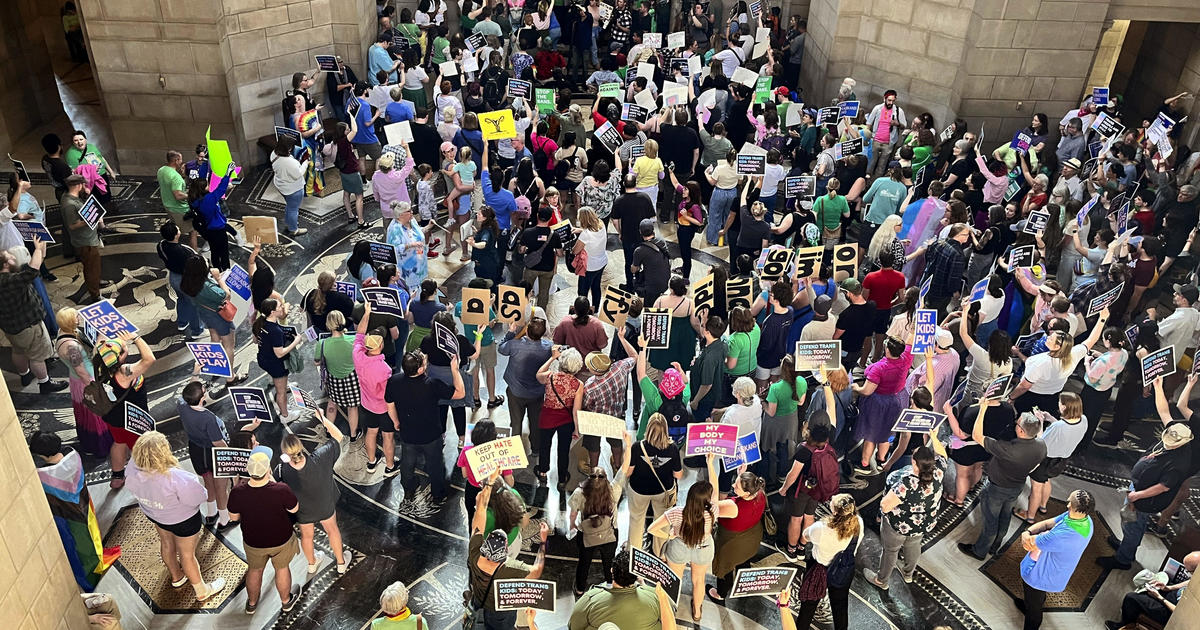
The Nebraska Supreme Court made a ruling on Friday regarding competing measures that would either expand or restrict abortion rights in the state. This decision came after the court heard arguments in three lawsuits that aimed to keep one or both of the state’s competing abortion initiatives off the November ballot. Both sets of organizers for the measures gathered well over the required 123,000 valid signatures needed to place the initiatives on the ballot.
One of the initiatives seeks to enshrine in the Nebraska Constitution the right to have an abortion until viability or later in order to protect the health of the pregnant woman. The other initiative aims to include Nebraska’s current 12-week abortion ban, which was passed by the Legislature in 2023. This ban includes exceptions for cases of rape, incest, and when the life of the pregnant woman is at risk.
Two of the lawsuits filed against the initiatives argued that the measure seeking to expand abortion rights violated the state’s prohibition against addressing more than one subject in a bill or ballot proposal. The plaintiffs claimed that the ballot measure addressed three separate issues: abortion rights until viability, abortion rights after viability to protect the woman’s health, and whether the state should be allowed to regulate abortion.
A similar single-subject argument was made in a case involving an abortion rights ballot measure in Florida earlier this year, but it failed before the conservative Florida Supreme Court. Another lawsuit challenged the 12-week ban initiative, arguing that if the abortion rights measure failed the single-subject test, then the 12-week ban initiative should also be considered to have failed it.
The lawsuit against the 12-week ban ballot measure contended that it encompassed at least six separate subjects, including regulations on abortion in each trimester and exceptions for rape, incest, and the life of the mother. The Nebraska Supreme Court has had mixed results in the past when it comes to single-subject law challenges. In 2020, the court blocked a ballot initiative that aimed to legalize medical marijuana because it included provisions that were considered separate subjects.
However, in a recent ruling, the court found that a bill passed by the Legislature in 2023, which combined the 12-week abortion ban with another measure to limit gender-affirming health care for minors, did not violate the single-subject rule. This decision led to a dissent by Justice Lindsey Miller-Lerman, who criticized the majority for applying different standards to bills passed by the Legislature compared to those sought by voter referendum.
The Nebraska Supreme Court expedited its hearings and rulings on the lawsuits in order to avoid any lower court proceedings and to ensure that the issue was decided before ballots were printed for the November election. The deadline to certify the Nebraska November ballot was approaching quickly.
Nebraska will be the first state to have competing abortion amendments on the same ballot since the U.S. Supreme Court overturned Roe v. Wade in 2022, shifting the issue to a state-by-state matter. However, abortion will be on the ballot in nine states across the country this year, with measures to protect access also qualifying to go before voters in Arizona, Colorado, Florida, Maryland, Missouri, Montana, Nevada, and South Dakota.
New York also has a ballot measure that proponents argue would protect abortion rights, though there is some dispute about its actual impact. While Arkansas does not have a measure on the ballot, there is an effort to add one through litigation. In all seven states that have had an abortion-related ballot measure since the reversal of Roe v. Wade, voters have favored abortion rights.
Since Roe v. Wade was overturned, most Republican-controlled states have implemented some form of abortion bans. Fourteen states currently have bans on abortion at all stages of pregnancy, with some exceptions. Four states have bans after about six weeks, which is before many women even realize they are pregnant. Nebraska and North Carolina are the only states that have chosen bans that take effect after 12 weeks of pregnancy.