The fragile ceasefire between the United States and Iran has not brought an end to sporadic hostilities and continued uncertainty in the Strait of Hormuz, one of the world’s most important energy and shipping corridors. This ongoing tension is causing reverberations through global supply chains, leading to increased transport and fuel costs, and putting a strain on aid operations that are already dealing with severe funding shortfalls.
The impact of these disruptions was highlighted by Carl Skau, the Acting Executive Director of the World Food Programme (WFP), during a speech at UN Headquarters in New York. Skau pointed out that the warnings issued earlier in the crisis about the knock-on effects of higher energy prices are now becoming a reality in some of the world’s most vulnerable countries.
Skau emphasized the real consequences of these disruptions, stating, “Just to illustrate that what we warned against is now playing out in real time in many of these contexts.” The situation is dire, with the potential for millions of additional people to be pushed into hunger if oil prices remain above $100 a barrel through July.
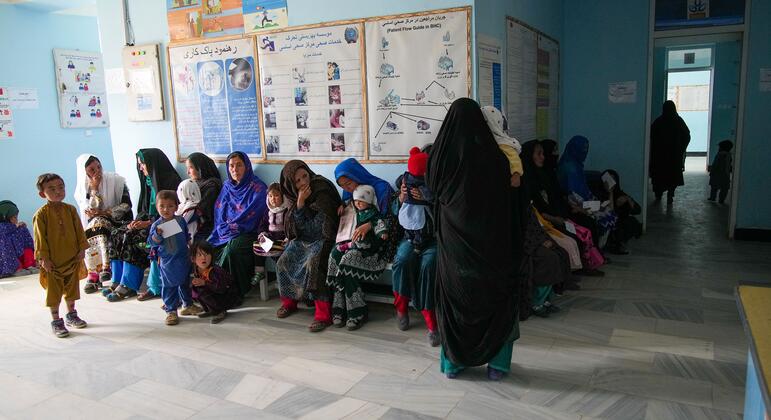
WFP had previously warned that the close relationship between energy and food prices could have devastating effects, and these predictions are already starting to materialize. In Somalia alone, an additional 2.5 million people have become acutely food insecure, while 2.3 million people in Afghanistan and 1.3 million in Sri Lanka have been pushed into acute hunger.
The drivers behind this crisis vary from country to country, but they include rising food prices, underfunded humanitarian responses, and sharply higher operating costs that are limiting the number of people aid agencies can reach with available resources. The longer-term outlook is equally troubling, with higher fertilizer costs potentially reducing agricultural productivity in East Africa during the upcoming planting season.
The disruptions in global supply chains are also impacting humanitarian operations. The UN Children’s Fund (UNICEF) has warned that maritime diversions around the Cape of Good Hope are adding significant delays to shipping times, while air freight capacity across Middle Eastern routes is tightening, and congestion is spreading through ports in Africa and other regions.
Jean-Cédric Meeus, UNICEF’s Chief of Global Transport and Logistics, highlighted the consequences of increased transport costs, stating, “Increased transport costs mean less money for the lifesaving supplies children need. What begins as a disruption to shipping lanes can spiral into a humanitarian crisis.” The situation is dire, with the potential for millions of additional people to be pushed into hunger if oil prices remain above $100 a barrel through July.
The impact of these disruptions was highlighted by Carl Skau, the Acting Executive Director of the World Food Programme (WFP), during a speech at UN Headquarters in New York. Skau pointed out that the warnings issued earlier in the crisis about the knock-on effects of higher energy prices are now becoming a reality in some of the world’s most vulnerable countries.
Skau emphasized the real consequences of these disruptions, stating, “Just to illustrate that what we warned against is now playing out in real time in many of these contexts.” The situation is dire, with the potential for millions of additional people to be pushed into hunger if oil prices remain above $100 a barrel through July.
WFP had previously warned that the close relationship between energy and food prices could have devastating effects, and these predictions are already starting to materialize. In Somalia alone, an additional 2.5 million people have become acutely food insecure, while 2.3 million people in Afghanistan and 1.3 million in Sri Lanka have been pushed into acute hunger.
The drivers behind this crisis vary from country to country, but they include rising food prices, underfunded humanitarian responses, and sharply higher operating costs that are limiting the number of people aid agencies can reach with available resources. The longer-term outlook is equally troubling, with higher fertilizer costs potentially reducing agricultural productivity in East Africa during the upcoming planting season.
The disruptions in global supply chains are also impacting humanitarian operations. The UN Children’s Fund (UNICEF) has warned that maritime diversions around the Cape of Good Hope are adding significant delays to shipping times, while air freight capacity across Middle Eastern routes is tightening, and congestion is spreading through ports in Africa and other regions.
Jean-Cédric Meeus, UNICEF’s Chief of Global Transport and Logistics, highlighted the consequences of increased transport costs, stating, “Increased transport costs mean less money for the lifesaving supplies children need. What begins as a disruption to shipping lanes can spiral into a humanitarian crisis.”
The situation is dire, with the potential for millions of additional people to be pushed into hunger if oil prices remain above $100 a barrel through July. WFP had previously warned that the close relationship between energy and food prices could have devastating effects, and these predictions are already starting to materialize.
In Somalia alone, an additional 2.5 million people have become acutely food insecure, while 2.3 million people in Afghanistan and 1.3 million in Sri Lanka have been pushed into acute hunger. The drivers behind this crisis vary from country to country, but they include rising food prices, underfunded humanitarian responses, and sharply higher operating costs that are limiting the number of people aid agencies can reach with available resources.
The longer-term outlook is equally troubling, with higher fertilizer costs potentially reducing agricultural productivity in East Africa during the upcoming planting season. The disruptions in global supply chains are also impacting humanitarian operations. UNICEF has warned that maritime diversions around the Cape of Good Hope are adding significant delays to shipping times, while air freight capacity across Middle Eastern routes is tightening, and congestion is spreading through ports in Africa and other regions.
Jean-Cédric Meeus, UNICEF’s Chief of Global Transport and Logistics, highlighted the consequences of increased transport costs, stating, “Increased transport costs mean less money for the lifesaving supplies children need. What begins as a disruption to shipping lanes can spiral into a humanitarian crisis.”
The situation is dire, with the potential for millions of additional people to be pushed into hunger if oil prices remain above $100 a barrel through July. WFP had previously warned that the close relationship between energy and food prices could have devastating effects, and these predictions are already starting to materialize.
In Somalia alone, an additional 2.5 million people have become acutely food insecure, while 2.3 million people in Afghanistan and 1.3 million in Sri Lanka have been pushed into acute hunger. The drivers behind this crisis vary from country to country, but they include rising food prices, underfunded humanitarian responses, and sharply higher operating costs that are limiting the number of people aid agencies can reach with available resources.
The longer-term outlook is equally troubling, with higher fertilizer costs potentially reducing agricultural productivity in East Africa during the upcoming planting season. The disruptions in global supply chains are also impacting humanitarian operations. UNICEF has warned that maritime diversions around the Cape of Good Hope are adding significant delays to shipping times, while air freight capacity across Middle Eastern routes is tightening, and congestion is spreading through ports in Africa and other regions.
Jean-Cédric Meeus, UNICEF’s Chief of Global Transport and Logistics, highlighted the consequences of increased transport costs, stating, “Increased transport costs mean less money for the lifesaving supplies children need. What begins as a disruption to shipping lanes can spiral into a humanitarian crisis.”
The situation is dire, with the potential for millions of additional people to be pushed into hunger if oil prices remain above $100 a barrel through July. WFP had previously warned that the close relationship between energy and food prices could have devastating effects, and these predictions are already starting to materialize.
In Somalia alone, an additional 2.5 million people have become acutely food insecure, while 2.3 million people in Afghanistan and 1.3 million in Sri Lanka have been pushed into acute hunger. The drivers behind this crisis vary from country to country, but they include rising food prices, underfunded humanitarian responses, and sharply higher operating costs that are limiting the number of people aid agencies can reach with available resources.
The longer-term outlook is equally troubling, with higher fertilizer costs potentially reducing agricultural productivity in East Africa during the upcoming planting season. The disruptions in global supply chains are also impacting humanitarian operations. UNICEF has warned that maritime diversions around the Cape of Good Hope are adding significant delays to shipping times, while air freight capacity across Middle Eastern routes is tightening, and congestion is spreading through ports in Africa and other regions.
Jean-Cédric Meeus, UNICEF’s Chief of Global Transport and Logistics, highlighted the consequences of increased transport costs, stating, “Increased transport costs mean less money for the lifesaving supplies children need. What begins as a disruption to shipping lanes can spiral into a humanitarian crisis.”