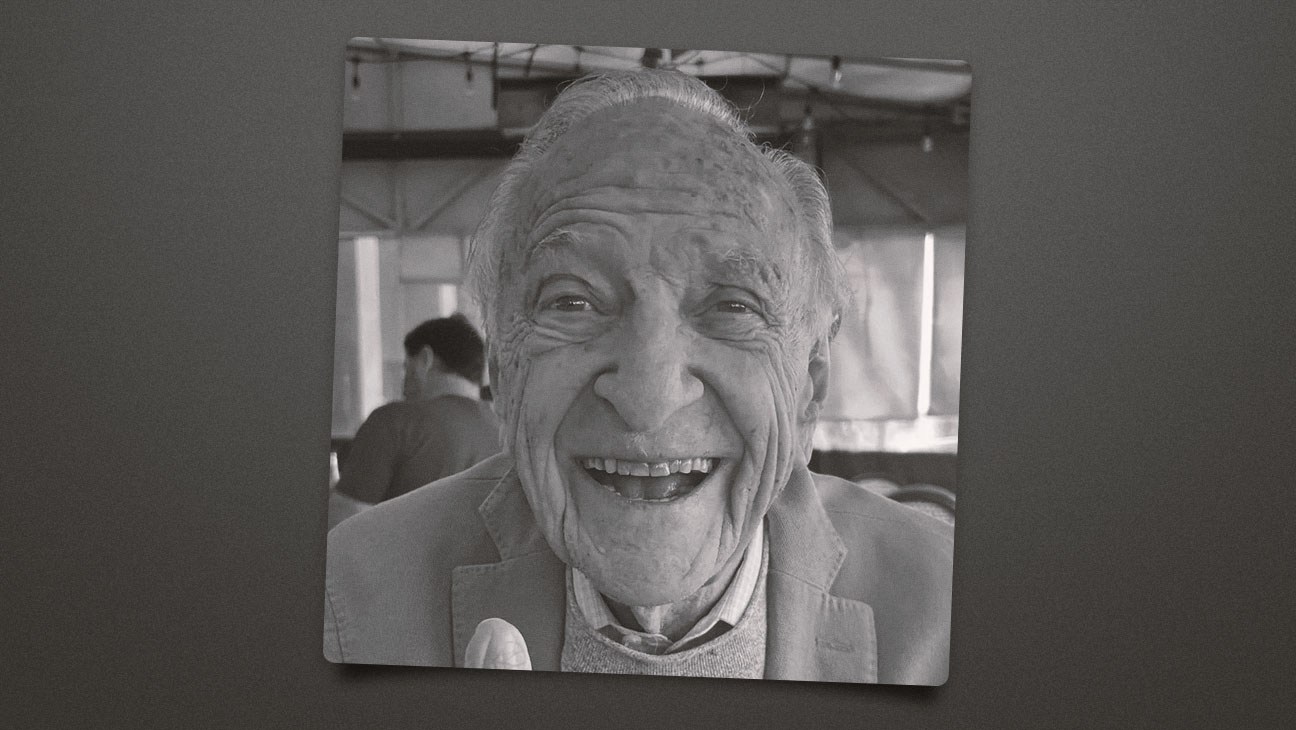
Gene Schwam, Publicist to Elvis, Judy Garland and Julie Andrews, Dies at 96
Gene Schwam, the veteran Hollywood publicist who guided the images of some of the entertainment industry’s most beloved icons, including Elvis Presley, Judy Garland, Julie Andrews and Barbara Eden, has died. He was 96.
Schwam died Friday in Los Angeles after a brief illness, according to family sources. His death marks the end of a career that stretched from the golden age of mid-century Hollywood nightlife to the modern era of celebrity branding, and one that was built as much on personal relationships as on press releases and phone calls.
At the time of his death, Schwam was perhaps best known for having worked with an astonishing roster of stars. His clients and collaborators included not only Presley and Garland but also Julie Andrews, Barbara Eden, Lenny Bruce, Cyd Charisse and Gene Barry. He was also a trusted friend and colleague to filmmaker Blake Edwards, who famously drew from their friendship when creating a publicist character for his 1981 satirical film S.O.B. That character, widely understood to be inspired by Schwam, was a testament to how closely Schwam’s own personality was intertwined with the industry he served.
Schwam’s path into public relations began in a more modest era of Hollywood, long before social media managers and influencer campaigns. In 1954, he was working alongside fellow publicist Stanley Cowan, earning just $35 a week. It was a modest salary even by the standards of the time, but it gave Schwam a firsthand education in the craft of shaping public perception. The following year, in 1955, he took a major risk and left that job to strike out on his own. Together with Adeline Hanson, he opened Hanson & Schwam Public Relations, a firm that would grow from a small operation representing restaurants and musicians into a respected agency with a client list that read like a who’s who of entertainment.
The firm’s early focus was on the dining and music scenes. Hanson & Schwam represented restaurants and musicians at a time when nightlife and celebrity culture were deeply intertwined. Among the notable names on their roster were the singers Nancy Wilson and Lou Rawls, both of whom were rising stars at the height of their careers. The agency also handled publicity for the Cocoanut Grove, one of Los Angeles’ most legendary nightclubs. Located at the Ambassador Hotel, the Cocoanut Grove was a glamorous venue where Hollywood’s elite mingled with performers, and where a publicist needed to be as nimble as the acts on stage.
From those beginnings, Schwam’s reputation grew. He became known not just for getting his clients into the papers, but for protecting their stories and crafting narratives that would endure. His work with Elvis Presley came during a period when Presley was transitioning from a controversial rock-and-roll figure into a mainstream movie star and cultural institution. Schwam was part of the machinery that helped manage the King’s public appearances and film publicity, a task that required enormous discretion and a deep understanding of the media landscape.
With Judy Garland, Schwam handled a different kind of challenge. Garland was one of the most celebrated performers of the 20th century, but her career was also marked by personal struggles and turbulent comebacks. A publicist working with Garland had to balance the demands of the press with the need to protect a star whose public and private lives were often at odds. Schwam’s ability to navigate those waters earned him the trust of many in Garland’s circle.
Julie Andrews and Barbara Eden were also central to Schwam’s career. Andrews, fresh off her triumphs in Mary Poppins and The Sound of Music, was one of the most beloved actresses in the world, and she worked with Schwam during a period of enormous fame. Eden, who became an icon in her own right through the television series I Dream of Jeannie, also relied on Schwam’s counsel during the height of her popularity.
But Schwam’s influence was not limited to the biggest names. He also worked with Lenny Bruce, the groundbreaking and controversial comedian whose run-ins with the law over obscenity charges made him a lightning rod in the early 1960s. Handling a figure like Bruce required a publicist who was willing to defend free expression and comfortable with the legal and moral controversies that followed his performances. Schwam’s work with Bruce demonstrated a willingness to take on clients who were not always easy to market, but whose cultural importance was undeniable.
In addition to his work with singers and actors, Schwam maintained a lasting friendship with Blake Edwards. Edwards, best known for directing Breakfast at Tiffany’s, the Pink Panther films and Victor/Victoria, was a frequent collaborator with his wife, Julie Andrews. Over the years, Edwards and Schwam developed a bond that went beyond the usual publicist-client relationship. When Edwards made S.O.B. — a dark satire about Hollywood’s excesses and the desperation of the film business — he included a publicist character inspired by Schwam. The film was not a flattering portrait of the industry, but it reflected the deep familiarity Edwards had with the people who kept it running, and the character served as a tribute to Schwam’s distinct place in that world.
Later in life, Schwam turned some of his attention toward more philosophical pursuits. He was the creator of Humanity 101, an initiative of Arizona State University’s Project Humanities. The program was designed to promote a set of values that Schwam clearly believed were essential not just to public relations but to a meaningful life: compassion, empathy, forgiveness, integrity, kindness, respect and self-reflection. It was a fitting legacy for a man who had spent his career understanding how people connect with one another, both through the media and in their personal lives.
In April 2021, Schwam sat down with The Hollywood Reporter’s Chris Gardner to reflect on his six decades in the business. During that conversation, he offered a number of insights that revealed his philosophy of public relations. “There’s a mistake people make when they think it’s about who you know in Hollywood,” he said, “but it isn’t about that — it’s about who knows you.”
That observation captured the essence of Schwam’s approach. He understood that a publicist’s true currency was not access, but trust. A reputation for reliability and discretion was worth more than a list of powerful contacts, and it was that reputation that kept clients coming back year after year.
He also offered practical advice for anyone hoping to succeed in the field. “Begin with the end of the game and work your way backward,” Schwam said. “Figure out what it is that we want to do, such as win an Oscar, then we figure out how to get there.” This strategy of reverse engineering success was one he applied consistently throughout his career, whether promoting a new film, managing a scandal or building the long-term image of a star.
And when asked about the secret to building a successful practice, Schwam was clear that personal referrals had always been the foundation of his work. “I’ve always felt that success of the personal service business is referrals,” he said. “It’s not getting on the phone or going online. It’s always been someone saying, ‘Hey, Gene, I have a friend who is writing a book, would you be interested in working with them?’”
That personal touch defined Schwam’s entire career. In an industry often accused of superficiality, he was known for genuine relationships. His clients were not just accounts; they were people he cared about, and he often remained close with them long after their professional arrangements ended.
Schwam is survived by his wife, Myrna Schwam; his daughter, Stephanie Schwam Adams; his stepchildren, Adam London, Greg London and Linda London; and four grandchildren. His death leaves a significant void in the lives of those who loved him, but his legacy will endure through the many stories he helped tell, the stars he helped nurture and the values he championed through Humanity 101.
In the end, Gene Schwam represented a generation of Hollywood publicists who worked without the benefit of viral moments or hashtags. They operated with handwritten notes, carefully placed press items and a deep understanding of the human beings behind the headlines. Schwam was one of the last of that generation, and his passing marks the end of an era.