Apple Jumps Into the Smart Home Hardware Game With Home Collection and HomeView
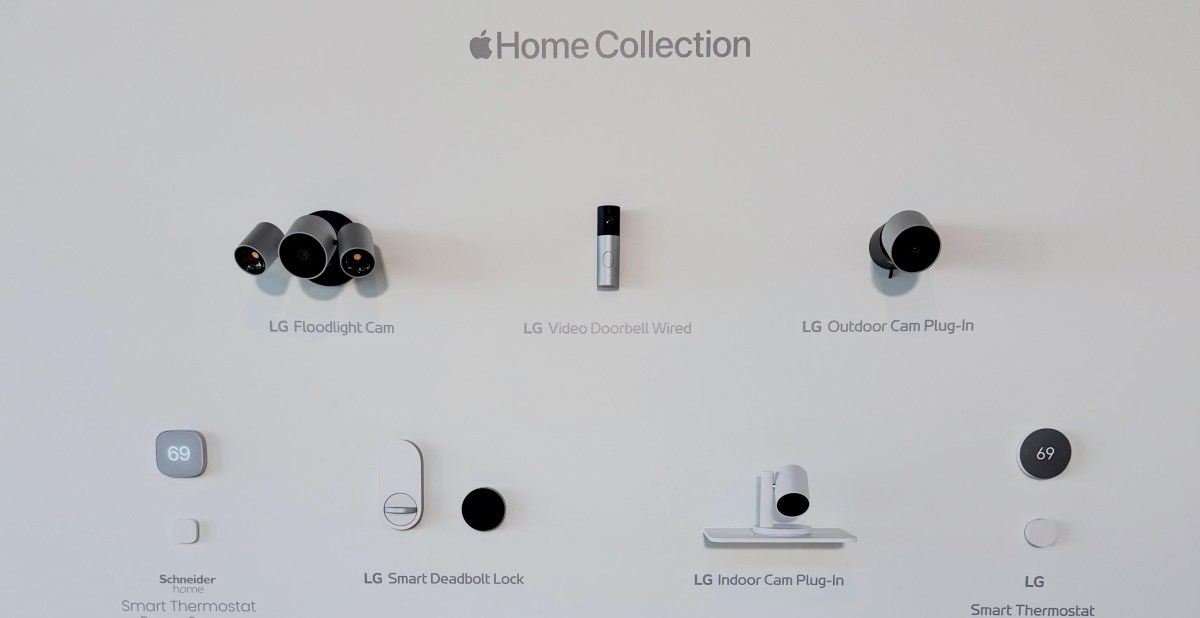
For more than a decade, Apple has been happy to play the role of platform provider in the smart home, telling other companies what to build and how to build it for HomeKit. This week, though, Apple stepped onto the hardware stage itself. The company announced the Apple Home Collection, a tightly curated lineup of connected home accessories that includes cameras, thermostats, sensors, a smart door lock, and a video doorbell. The products were codeveloped with LG Electronics and Schneider Electric, two companies with deep experience in consumer devices and home infrastructure. They were introduced alongside HomeView, Apple’s first smart display and the new visual centerpiece for its smart home ambitions.
The move marks a significant shift for Apple. HomeKit has been around since 2014, and during those 12 years, Apple’s ecosystem has often seemed underdeveloped compared to what Amazon and Google offer. Amazon has Alexa and its Ring doorbells; Google has Nest and its own family of displays. Apple had a protocol, a Home app, and a roster of third-party accessories, but it never gave customers a definitive product that felt like the Apple experience of the smart home. With the Home Collection, that changes.
But why launch its own hardware now, and does this really add anything new beyond different packaging? At Apple’s “Welcome home” event in New York this week, Kaiann Drance, Apple’s vice president of product marketing for home, sat down with The Verge to explain the company’s thinking and to talk about how this new approach relates to Matter, the open smart home standard Apple helped create.
According to Drance, the timing comes down to two key technologies finally maturing. The first is Matter, which gives Apple and its partners a common language for devices to talk to each other across ecosystems. The second is artificial intelligence, which has made Siri far more conversational and useful than the voice assistant that originally shipped with HomeKit. Those two pieces, Drance said, were necessary to make a dedicated home product like HomeView feel genuinely valuable. “With the magic of Siri AI, it comes together in a way that we haven’t been able to deliver before,” she said. “That’s been a really critical piece of bringing this all together.”
The bigger strategic play, however, is HomeView as a gateway. Apple is not just selling another screen for the kitchen counter. It is trying to create an on-ramp for people who have never thought about automating their homes. The idea is simple: you buy HomeView because you want a nice display for recipes, music, video calls, and calendar checks. Then, once it is sitting in your home, you start to imagine what else it could do. Maybe you add a video doorbell so you can see who is at the front door from the kitchen. Maybe you add a smart lock so you can let in the dog walker without making a spare key. Each product leads naturally to the next.
Drance said Apple has seen this pattern before. People who try one smart device and discover that it is easier than expected often develop a deeper curiosity about what else is possible. “It unlocks this delightful understanding of what’s possible once you bring these products into the home,” she said. Most people, she argued, simply do not know what a smart home can do for them.
That argument is backed up by research. According to Parks Associates, the biggest barrier to buying smart home devices is not price or privacy, at least not at first. It is that consumers do not see the value in the products. People are not lining up to buy smart locks and sensors because they are not sure those products would make their lives meaningfully better. Complexity, privacy concerns, and security worries also rank high, and cost is always a factor. Apple is not doing much to address the cost issue here — the Home Collection products start at $200 and climb from there. But it is leaning hard into the other concerns. The company promises one-tap setup, end-to-end encryption, no need for separate accounts or apps, and a single place to control everything: the Apple Home app.
There is also the power of Apple’s brand. Elizabeth Parks, president and CMO of Parks Associates, pointed out that Apple users tend to be extremely loyal and the user base is enormous. When Apple puts its stamp of approval on a category, longtime customers listen. That loyalty could help Apple make progress in a market where it currently trails its rivals.
Until now, Apple Home has been a bit like a buffet. You could walk in and choose from any product that supported HomeKit or Matter, from any brand, and then hope it all worked together smoothly. The Home Collection is more like a chef’s tasting menu. Apple has done the selecting and pairing for you, and it promises that the dishes will go well together. Drance acknowledged that many customers have asked for exactly this kind of guidance. “There is a lot of choice with Matter, and there’s a lot of great products out there,” she said. “But sometimes we do get asked, ‘Hey, what product should I put in the home?’”
Rather than build all of these products from scratch, Apple chose to codevelop them with partners that already have strong expertise. “LG more so in consumer products, Schneider through home build and home installations,” Drance explained. Apple contributed the design language, making sure the devices looked at home alongside iPhones, MacBooks, and HomePods. To help with physical installation, Apple is also partnering with ADT, which will offer installation services through Apple retail stores.
The emphasis on ease of use runs through every part of the product experience. Drance said one-tap setup was a major focus. Tapping an iPhone to a device should be enough, just like pairing AirPods. There is no need to scan a QR code, create an LG account, or download a separate Schneider app. Everything is managed through Apple Home, and all data is end-to-end encrypted, meaning only the homeowner can access it. Drance was also careful to say that the Home Collection is not replacing the broader ecosystem. “We still have this incredible ecosystem with Matter, and with Works with Apple Home, that is going to remain,” she said. “We know that homes are not a one-size-fits-all solution, so our customers will continue to have that choice, and we remain committed to building that ecosystem as well.”
The hardware mostly supports that commitment. The lock, thermostats, and sensors are Matter-compatible. The lock also supports Aliro, a new standard for digital keys, and works entirely locally through Thread. That means it should continue functioning even if your Wi-Fi goes down. All the devices use Thread for connectivity, and Apple says they can update their own network credentials when you change your Wi-Fi password, which could solve one of the most frustrating problems in smart homes today. The cameras are the one exception: they use Apple’s HomeKit Secure Video rather than the Matter standard. Apple has not yet announced support for Matter camera protocols, which was a surprising omission. The Thread radios in the hardware suggest the devices may be ready for Matter support in the future, and Apple might simply be waiting for the standard to catch up with its own privacy features.
In many ways, the Home Collection does not offer features that other Apple Home devices cannot deliver. Drance herself described it as adding an extra layer of deeper integration. There are no exclusive functions, no secret capabilities hidden in the firmware. Instead, Apple is making a confident promise: these products will support every feature Apple Home has to offer. It is similar to Google making Pixel phones to show Android developers what the platform is capable of. The Home Collection is Apple’s reference design for what a smart home should feel like.
The practical advantages are real, though. The LG smart lock, for example, is only the third lock to offer hands-free Home Key unlocking over ultra-wideband, a feature that lets you walk up to your door and have it unlock without pulling out your phone. Both thermostats support Apple’s Clean Energy Guidance and Adaptive Temperature features, which adjust heating and cooling based on your location, sleep schedule, and local energy grid. The cameras continue recording to onboard storage even when Wi-Fi drops. These are not extraordinary capabilities on their own, but together they form a polished, cohesive starter kit for the smart home.
There are caveats. The collection is expensive, and camera history requires an iCloud Plus subscription. Anyone who already has a Ring doorbell or a Google Nest Hub may not find much reason to switch, since those devices will not work with HomeView at launch. Apple is also arriving late to a mature market. Smart displays have been in millions of homes for years, and Amazon and Google have deeply embedded ecosystems. Parks Associates data shows that Apple Home currently ranks third in smart home platform adoption, behind Google and far behind Amazon.
Still, there is an opportunity. Parks Associates found that four out of five smart home households would consider switching to a different platform, especially if that platform lets them control everything in one place. That openness suggests customer loyalty to Amazon and Google is not as strong as it might seem. “Interoperability will be critical, but the bigger prize is owning the consumer relationship,” Elizabeth Parks noted.
With its Home Collection and HomeView, Apple is not inventing the smart home all over again. It is not even trying to build everything for everyone. Instead, it is offering a curated path for its millions of loyal customers who have not yet taken the plunge. The Apple Home Collection may be expensive, late, and unapologetically Apple, but it may also be the easiest way for a certain kind of person to finally understand what a smart home can do.