OpenAI Unveils GPT-6 and ‘Intelligent UI’: A Paradigm Shift in Human-AI Interaction
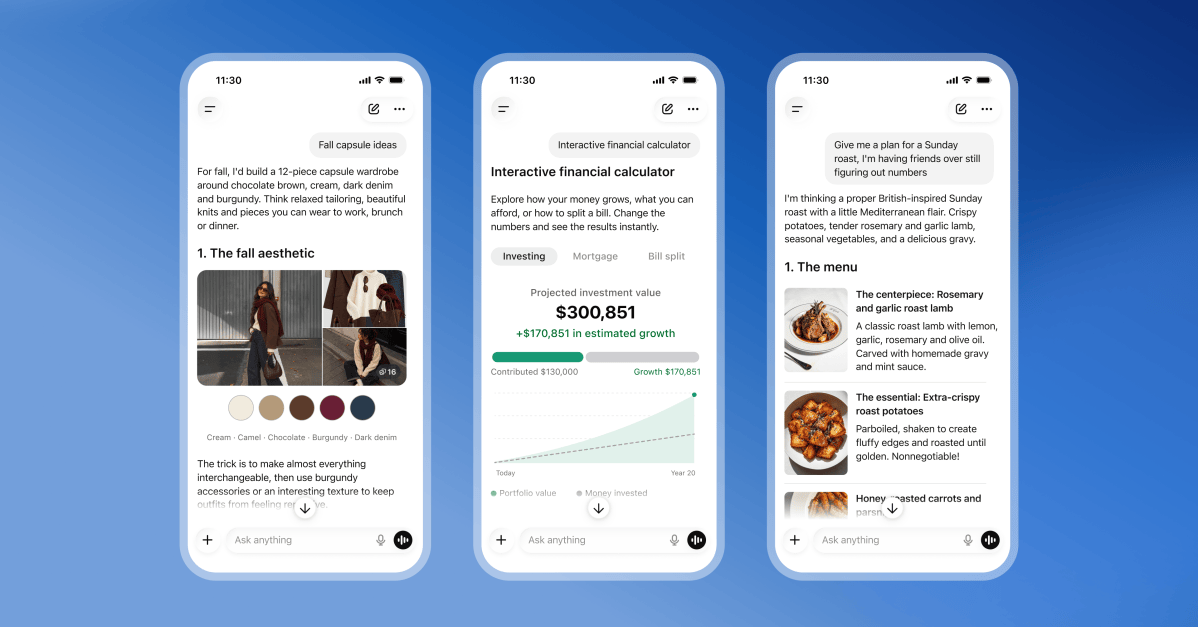
In a move that fundamentally redefines the boundaries of artificial intelligence interaction, OpenAI has announced the global rollout of its highly anticipated GPT-6 model family, accompanied by a groundbreaking new feature dubbed “Intelligent UI.” This update, which began deploying to users on Tuesday, marks a significant departure from the traditional text-parsing chatbot experience, transforming ChatGPT into a multi-dimensional visual and interactive workspace. The new feature empowers the chatbot to respond to complex queries not just with written words, but with a dynamic amalgamation of diagrams, interactive charts, tappable buttons, forms, and fully functional tools built in real-time.
For months, the AI community has speculated about the capabilities of GPT-6, and OpenAI’s latest announcement confirms that the model is not merely an incremental improvement in linguistic ability but a complete re-imagining of how generative AI can present information. The integration of Intelligent UI suggests a future where conversational interfaces evolve into fully interactive application environments, effectively blurring the line between a chatbot and a software developer.
The Rise of the Interactive Answer
The core of this update lies in the “Intelligent UI” capability. Instead of relying solely on paragraphs of text or static images, GPT-6 has been meticulously trained to recognize when a visual or interactive format would be more effective than prose. According to OpenAI’s official blog post detailing the change, the model has been trained specifically on when to generate these visuals to optimize comprehension and user engagement.
This is a critical shift in the AI’s operational logic. Previously, models were largely constrained to Reactive or Predictive text generation, limited to converting tokens into words. GPT-6, however, is designed to understand the semantic nature of a query and construct the most effective “interface” to deliver the answer. If a user asks about a complex mechanical system, a multi-step process, or comparative data, the AI is now more likely to produce a structured, interactive graphic than a wall of text.
To illustrate this evolution, OpenAI shared a striking example involving a classic piece of engineering: the seven-speed bicycle. If a user were to ask a standard AI about the design and mechanics of such a bicycle, they would likely receive a lengthy, albeit accurate, description of the derailleur, chainrings, and shifters. With GPT-6’s Intelligent UI, the response is fundamentally different. The chatbot now generates a detailed, visual diagram of the bicycle directly within the chat interface. This is not merely a static image; it is an interactive schematic. Users are presented with tappable buttons that highlight different components of the bicycle—such as the cassette, the crankset, or the brake calipers—providing an intuitive, self-guided tour of the mechanics.
Interactive Learning and Tool Creation
The implications for education and learning are perhaps the most profound. OpenAI provided another compelling demonstration: teaching users to play the complex Chinese tile-based game, Mahjong. Traditionally, learning Mahjong requires studying dense rulebooks and memorizing the intricacies of tile sequences. With GPT-6, the chatbot generates visuals of each individual tile, organizing them into scrollable, categorized sections. This allows the user to see the suits, honors, and bonus tiles laid out in a logical manner, making the learning process feel more like a curated museum exhibit than a reading assignment.
Beyond educational diagrams, Intelligent UI ventures into the realm of application development. The new update allows users to ask ChatGPT to generate custom tools on-the-fly, directly embedded within the conversation. For instance, a user can request a “retirement savings calculator,” and the AI will generate a functional, interactive form with input fields and a submit button, computing results based on the user’s data. Similarly, users can prompt ChatGPT to build small, playable retro-style games or a bill-splitting utility for a group dinner. The AI effectively writes the code, designs the user interface, and serves the application to the user in a seemingly frictionless instant.
This functionality positions ChatGPT as a proxy for a full-stack developer. The complexity of the tools is currently bounded, but the demonstration of capability signals a future where users do not need to navigate away from their chat window to access software. The “tool generation” ability allows ChatGPT to function as a dynamic presentation layer, adapting not just what it says, but what it can do based on the conversation thread.
Inside GPT-6: The Sol and Luna Models
Underpinning this visual and interactive leap is the architecture of the GPT-6 model family. OpenAI originally announced the existence of its first GPT-6 models last month, but this week’s rollout brings the Sol and Luna variants specifically to the ChatGPT interface.
These two models are designed to serve different tiers of computational efficiency and user demand. The higher-tier GPT-6 Sol is described as the mid-range model, optimized for complex reasoning tasks and the full extent of the Intelligent UI capabilities. It is the powerhouse variant that handles the deeper computational loads required for generating dynamic visual elements and coding tools instantaneously.
Conversely, GPT-6 Luna is the more efficient, streamlined model. It is intended for faster, lightweight interactions where immediate responsiveness is prioritized over deep, multi-step reasoning. Luna is ideal for straightforward conversations, quick searches, and rapid drafting, ensuring that users on lower tiers still experience a massive leap in speed and capability without requiring the same level of computational resources.
Enhanced Web Search and Reduced Latency
In addition to the visual revolution, the GPT-6 update brings substantial improvements to the underlying “thinking” processes of ChatGPT. OpenAI has highlighted that the new models exhibit significantly enhanced web search capabilities. The AI is now better equipped to parse live data, analyze current events, and synthesize information from disparate sources with greater accuracy.
One of the most user-visible quality-of-life improvements is the introduction of quicker, partial answers. Previously, a user would issue a prompt and wait several seconds for the entire response to be generated before reading anything. Now, GPT-6 is engineered to begin presenting information to the user almost immediately. It will offer partial answers or preliminary stances on a topic while it continues to gather comprehensive background information in the background. This reduction in perceived latency drastically improves the conversational flow, making the interaction feel more fluid, human, and responsive.
Rigorous Safety Training
OpenAI has also taken the opportunity to address the persistent challenges of AI safety and alignment. The company notes that GPT-6 demonstrated “stronger resistance to attempts to bypass its safety training.” This suggests that the new model has been hardened against “jailbreaking” techniques—prompts specifically designed to trick the AI into generating harmful, biased, or prohibited content. As AI models become more capable, the risk of misuse increases, making this focus on safety alignment a critical component of the release. The team claims that the model’s boundaries are more robust and that it has a better understanding of its operational constraints, making it less susceptible to adversarial manipulation.
Rollout Strategy and Availability
The deployment of GPT-6 with Intelligent UI is a carefully phased process. Starting today, Tuesday, the update is being rolled out globally to ChatGPT Plus, Pro, Business, and Enterprise users. These top-tier subscribers will be the first to experience the new feature set, with access to the GPT-6 Sol model to power their interactions.
OpenAI has confirmed that the rollout will expand to the Go and free tiers of the service starting Thursday. This staggered approach allows OpenAI to monitor server loads and system stability while the highest concentration of initial user traffic interacts with the new models. For users on the Go and free tiers, the experience will be powered by the more efficient GPT-6 Luna model. This ensures that even users who do not subscribe have access to the rapid search speeds and improved conversational abilities, though they may miss out on some of the more intensive visual generation tasks that benefit from the Sol model’s enhanced reasoning power.
The Future of Interfaces
With this announcement, OpenAI has signaled a decisive move away from the “scroll and read” paradigm that has defined the internet and software for decades. The Intelligent UI feature is a direct challenge to the idea that AI must be confined to a text box. It suggests that the most effective user interface is an adaptive one—one that is born from the context of the request itself.
As the rollout progresses, developers and users alike will be watching closely to see how these interactive visuals are received and how the model handles the infinite variety of potential requests. The ability to generate a functional calculator, an educational diagram, or a playable game on demand marks a transition from the AI as an “information provider” to the AI as a “tool creator.” This is likely to have massive implications for productivity, education, and entertainment, setting a new precedent for what consumers should expect from their digital assistants in the era of generative AI.