Fragrance Is Getting Weirder — and More Personal
If your most recent trip to a perfume counter left you with a peculiar sense of déjà vu, you’re not imagining it. For years, shelves have been dominated by gourmands—fragrances built on edible, dessert-like notes of vanilla, sugar, caramel, and warm amber. At a certain point, every new launch began to smell like the same bakery window. But behind the scenes, the perfumers and fragrance developers who actually shape these releases are making a sharp turn. The next era of scent is not about smelling sweetly polished. It is about smelling like someone with a perspective.
The Sweetness Isn’t Going Away—It’s Deepening
Alberto Morillas, the master perfumer responsible for some of the most iconic fragrances in modern memory, has a simple diagnosis for why the industry is moving on. “These notes are quite simple,” he recently told Refinery 29. “But a perfume with true depth features a slight bitterness to it.” For Morillas, the future is not in dessert but in ingredients with a sharper edge: artichoke, thyme, vetiver, cypriol. These are not the kind of materials that make you smell delicious. They are the kind that make you smell observant, maybe even intellectual.
Cypriol, for those who haven’t looked it up yet, is an earthy, smoky root with a dry, paper-like quality. Vetiver is grass—green, mineral, almost metallic. Artichoke adds a green, slightly nutty, but unmistakably vegetal undertone. Thyme brings an herbal sharpness that cuts through any sweetness like a knife. Not exactly the stuff of candy displays. But that’s exactly the point. The perfumer’s goal is no longer to comfort everyone in the room; it’s to give the wearer a reason to be remembered.
Contrast Is the New Signature
Once sweetness is no longer the goal, something more interesting happens: fragrances begin to play with tension. The most compelling launches over the next year will rely on opposites coexisting in the same bottle. Sweet and smoky. Green and floral. Earthy and clean. Savory and sweet. Mineral and woody. These contradictions give the nose something to work through.
A perfume built on a single note, especially a simple sugar note, tends to evaporate from memory as quickly as it fades from skin. But a fragrance with contrast lingers in a different way. It creates a sense of unease, intrigue, discovery. It doesn’t say “I smell good.” It says “What is that?” And being the answer to that question is exactly what the next generation of fragrance wearers seem to want.
The Notes That Are Leading the Charge
If you want to know where perfumery is headed, look at the ingredients now appearing in brief after brief. The list reads less like a menu and more like a nature walk: tomato leaf, wet soil and petrichor, matcha, ink, smoke, salt, fig leaf, mushroom, tea, herbs, and vegetables.
Tomato leaf has become something of a breakout smell—green, sharp, slightly sweet, with a faintly peppery bite. It smells like a garden in late summer, not like a perfume aisle. Wet soil and petrichor capture the mineral smell of rain on dry ground, a scent that feels almost primitive. Matcha adds a bitter, grassy undertone that works beautifully in minimalist compositions. Ink is dry, metallic, and oddly intimate. Smoke obviously adds heat, but a careful perfumer can make it feel like a campfire or a candle just blown out. Salt is less about how something tastes and more about how it makes the skin feel—cool, saline, almost oceanic. Fig leaf is greener and more astringent than fig fruit. Mushroom brings an umami, damp-earth quality. Tea lends something contemplative and slightly bitter. And herbs and vegetables, from basil to celery seed, are turning up in compositions that would have seemed unthinkable just a few years ago.
Notice what’s missing from this list: no sugar, no caramel, no cotton candy. This is a damp garden, not a bakery. That shift alone tells you everything about where fragrance is going.
Perfume Is Becoming an Atmosphere
The change isn’t just about ingredients. It’s about the fundamental purpose of perfume. Jasmina Aganovic, founder of Future Society, put it succinctly in a recent interview with New Beauty: “Rather than smelling like a single ingredient or traditional fragrance family, people are increasingly drawn to fragrances that capture an ephemeral environment: clouds, fresh air after a storm, humidity-laden forests and more. There’s a growing appetite for scents that transport you somewhere or make you feel immersed in a different place.”
This reframes the entire project. A perfume is no longer a flavor profile. It’s a location. It’s air after a thunderstorm. It’s a fogged-in forest floor. It’s the moment when humidity gathers on leaves and the temperature drops. When a fragrance can do that, it stops being an accessory and becomes a memory you can wear.
Sea Salt Is the Breakout Bridge
No single ingredient captures this transition better than sea salt. It is familiar enough to feel wearable, but unusual enough to signal that you’re paying attention. Mary Testa-Gough, associate vice president of product and fragrance development at Bath & Body Works, has watched salt move from niche curiosity to mainstream trend. “Over the last few years, we are seeing sea salt becoming a more fashion-forward fragrance trend,” she told PureWow. “It creates a more faceted sensorial contrast.”
Her description of how salt interacts with other notes is practically a blueprint for the future of perfumery. Salt, she says, “pairs beautifully with blue aquatic watery notes, musk, creamy vertical woods and amber, sandalwood, cedar, oud, solar florals such as orange blossom. When combined with tropical fruits such as mango, passionfruit, and pineapple, sea salt amplifies the juiciness while adding a savory mineral quality that feels both unexpected and addictive.” Translation: even when sweetness remains, it’s no longer allowed to be simple. It’s being roughed up, balanced, complicated.
Not All Sweetness Is Retiring
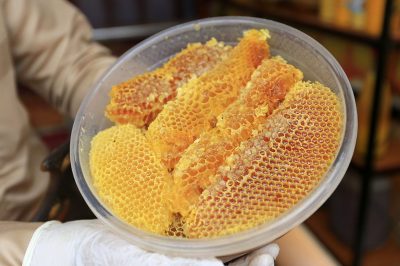
There is one notable exception to the move away from sugar: honey. In fact, honey has emerged as one of 2026’s biggest fragrance trends, with perfumers and shoppers alike chasing the warm, nostalgic glow of a well-blended nectar note. The shift makes sense. Honey is sweet, but it is not simple. It can be golden and bright or dark and animalic. It can carry hints of beeswax, pollen, and even a faintly leathery undertone. It behaves less like a sugar cube and more like a memory—a beehive at golden hour, a waxed wooden floor, a jar of something homemade and precious.
Move over, clean laundry musks. The fragrance world has found a new obsession, and this one has more texture. Honey proves that the gourmand impulse isn’t disappearing entirely; it’s maturing into something more sensorial.
What It All Means for Your Next Bottle
Put the pieces together and the direction is unmistakable. Perfumery is edging away from flattery and toward distinction. The notes gaining ground—bitter herbs, wet earth, ink, smoke, salt—aren’t trying to charm anyone on first sniff. They’re trying to stick. They’re trying to ask a question rather than answer one.
For the person choosing a new signature scent, this is liberating. You no longer have to smell like everyone else’s idea of “pretty.” You can smell like rain on asphalt, or a tomato vine just brushed in a garden, or a mineral coast at low tide. These are not scents designed to blend in. They’re designed to locate you somewhere.
If the last decade rewarded the person who smelled richest, the next one looks likely to reward the person who smells most like themselves. Watch the launches rolling out through 2026, and expect fewer desserts and more weather. The era of invisible, universally appealing fragrance is ending. What’s coming next is stranger, more personal, and much harder to forget.