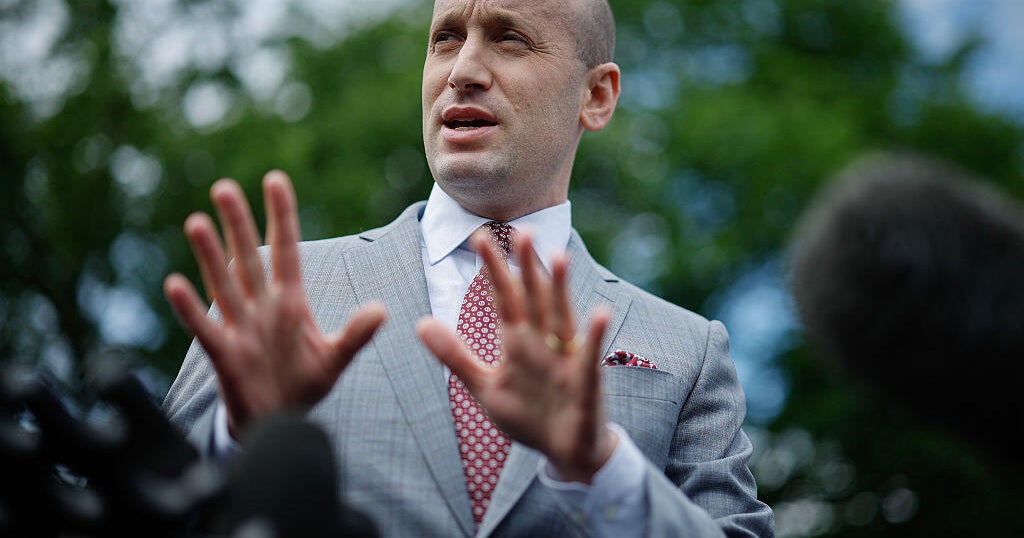
In a recent announcement that has stirred a significant amount of debate and concern among the legal and immigrant communities, the Trump administration has expressed that it is “actively looking at” the possibility of suspending the writ of habeas corpus for handling cases involving individuals they claim are in the United States illegally. This revelation came straight from the White House Deputy Chief of Staff Stephen Miller during a press interaction last Friday.
The writ of habeas corpus is a fundamental legal procedure that protects against unlawful and indefinite imprisonment. It necessitates that a person detained by the authorities is brought before a court, which then determines the legality of the detention. It is a right central to constitutional liberty in America, where Article I of the Constitution clearly states that “the privilege of the writ of habeas corpus shall not be suspended, unless when in cases of rebellion or invasion the public safety may require it.”
Stephen Miller’s comments came in a response to a question regarding whether President Trump was considering the controversial step of suspending habeas corpus to manage issues related to illegal immigration. Miller noted, “Well, the Constitution is clear — and that, of course, is the supreme law of the land — that the privilege of the writ of habeas corpus can be suspended in a time of invasion. So it’s an option we’re actively looking at. Look, a lot of it depends on whether the courts do the right thing or not.”
The Trump administration’s stance on immigration has been under rigorous scrutiny and controversy. This has been highlighted by the multiple lawsuits it faces over its treatment of undocumented immigrants, including cases where migrants were sent to countries like El Salvador. The administration’s approach reflects a broader, more aggressive stance against illegal immigration, underscored by President Trump’s past statements where he has implicitly criticized the judicial process for hindering swift deportations.
President Trump himself has been vocal about the impracticalities of providing court hearings or trials for all individuals suspected of illegal entrance into the country. In one of his social media posts in April, he mentioned, “We cannot give everyone a trial, because to do so would take, without exaggeration, 200 years.” This statement not only reflects his frustration with the current legal system but also highlights the administration’s push for more streamlined processes.
Legal representatives for the Trump administration have, in past instances, labeled illegal immigration as an “invasion.” This aligns with the utilization of the Alien Enemies Act of 1798 during their tenure, which is a wartime statute enabling the deportation of nationals from a hostile nation. The application of such a historical and potent law to contemporary immigration issues illustrates the administration’s aggressive approach to what it perceives as threats to national security.
Notably, the suspension of the writ of habeas corpus has only occurred a few times in the history of the U.S. and its territories. Past suspensions include during the Civil War, in counties in South Carolina overwhelmed by the Ku Klux Klan during Reconstruction, specific locales in the Philippines during an insurrection in 1905, and most recently in Hawaii following the bombing of Pearl Harbor. None of these instances, however, related directly to immigration.
It’s critical to recognize that habeas corpus is more than just a point in the U.S. Constitution; it’s a deeply entrenched legal principle with roots stretching back well before the founding of the country. Derived from Latin, meaning “you shall have the body,” the term indicates a legal obligation to physically bring a detained individual before a judge, making it a cornerstone of lawful procedure and individual rights in the face of state power.
The consideration to suspend habeas corpus as a response to the complex issue of immigration raises profound concerns about the balance between national security and civil liberties. Such a move would not only represent a significant shift in U.S. legal practice but also potentially set a precedent impacting the country’s approach to justice and human rights.
As the debate over this issue unfolds, legal experts, civil rights advocates, and the wider public are keenly watching the developing scenario. It brings to the forefront the ongoing discourse about immigration, the limits of executive power, and the enduring significance of constitutional protections in the United States. The administration’s explorations into such drastic legal territories will likely continue to spark intense discussions, legal challenges, and potentially far-reaching implications for the fabric of American jurisprudence and civil liberty.