Russell Brand Accuser Mia Latter Bravely Steps Forward: A Testament to Courage in the Face of Injustice
In a courageous act that has sent ripples through the ongoing conversation about sexual assault accountability, one of the women who accused the now-convicted rapist Russell Brand of sexual violence has made the momentous decision to publicly reveal her identity for the first time. This revelation comes in the wake of the disgraced comedian’s sentencing to more than a decade behind bars, marking a significant chapter in a case that has captured international attention and sparked crucial dialogues about consent, power dynamics, and the treatment of survivors within the criminal justice system.
Warning: The following contains explicit and potentially distressing descriptions of alleged sexual assault that may be triggering for some readers.
Mia Latter, who previously went by the pseudonym “Alice” in the damning investigative reports published by the Sunday Times, The Times, and a Channel 4 Dispatches documentary that outlined the various allegations against the 51-year-old Brand, has now chosen to step out of the shadows. In a deeply emotional interview with The Times published on Saturday, November 14, Latter provided harrowing details of her encounter with the actor when she was just 16 years old and he was 30—an encounter she describes as one of the most traumatic experiences of her life.
Latter’s account paints a disturbing picture of the alleged assault, describing how Brand’s actions escalated in a manner that left her feeling completely powerless and vulnerable. “He ended up forcing me against the headboard [of the bed] and I couldn’t move, and he orally raped me—and I was choking and crying,” she recounted, her words carrying the weight of decades of suppressed trauma. The visceral nature of her testimony offers a window into the terror she experienced at such a young age, and the lasting impact it has had on her psychological well-being.
“I was trying to push him off, so he knew that I didn’t want him to be doing that, and so I ended up having to hit him in the stomach to get him off me,” Latter continued to claim, her voice reflecting the desperation she felt in that moment. “I’ve never hit anyone [before] and… He said, ‘I just wanted to see your mascara run.'” The casual cruelty of that statement, remembered with chilling clarity years later, speaks to a predatory mindset that allegedly viewed her distress as entertainment rather than a clear signal to stop.
The Decision to Come Forward
In her interview, Latter revealed that she made the difficult decision to waive her right to anonymity after learning that authorities had chosen not to include her allegations in Brand’s highly publicized rape and sexual assault trial. This exclusion came despite the fact that her allegations had been part of the original investigative reporting that first brought the accusations to light. The trial, which ultimately resulted in the Get Him to the Greek actor being found guilty of one count of rape and three counts of sexual assault, proceeded without Latter’s testimony being presented to the jury. Brand was found not guilty on the remaining three counts, and despite his conviction, the comedian has consistently maintained his innocence.
“They [the police] wanted me to be part of a subsequent trial, but they said that the decision was made [not to include her in the first trial] after he had done the Megyn Kelly and the Piers Morgan interviews,” she claimed, suggesting that media appearances by Brand may have influenced the prosecution’s strategic decisions. “I was told that I wasn’t actually going to make it to the October trial because… they didn’t want it to become ‘the Alice show,’ which was my pseudonym in the article. I was devastated by it.”
The exclusion from the trial has clearly left Latter feeling that her voice was silenced when it mattered most, and her decision to now come forward publicly appears driven by a desire to ensure that her story cannot be ignored or forgotten. The emotional toll of carrying this burden for so many years, only to be told that her testimony wouldn’t be part of the proceedings, is evident in her words and reflects a broader frustration with how survivor accounts are sometimes handled within the legal system.
Context of the Original Allegations
The allegations against Brand first came to widespread public attention in September 2023, when multiple women came forward with accusations spanning various periods of his career at the height of his fame. These reports, which emerged through collaborative investigative journalism between the Sunday Times, The Times, and Channel 4 Dispatches, painted a troubling picture of a man who allegedly used his position of power and influence to exploit vulnerable young women.
Latter’s story is particularly significant because it highlights the complexities surrounding age of consent laws and the power imbalances that can exist even when those laws are technically satisfied. When Brand appeared on Megyn Kelly’s program back in April, he made admissions that would prove damaging to his defense. “The plain fact of it is that in Europe and in the United Kingdom, where I’m from, the age of consent is 16. And I did sleep with a 16-year-old when I was 30,” Brand said during his appearance on The Megyn Kelly Show. “When I was 30, I was a very different person. I was a lot younger, and I was an immature 30-year-old.”
The age of consent in the United Kingdom was indeed 16 in 2006, when this encounter allegedly occurred, and it remains so to this day. However, as Latter pointedly noted in her response to Brand’s rationalization, the legality of the encounter under the letter of the law does not negate the fundamental power imbalance that existed between a successful, influential 30-year-old man in the entertainment industry and a 16-year-old girl with no life experience to draw upon.
“He was a very successful man who had a lot of power and sway in the industry,” Latter told the outlet, her words carrying an undeniable weight of truth. “Whereas I was a 16-year-old with no life experience, no sexual experience and no prior relationships. What was my level of maturity meant to be?” This rhetorical question strikes at the heart of the matter, challenging the assumption that legal age of consent automatically denotes genuine, informed consent in every circumstance.
The Trial and Its Aftermath
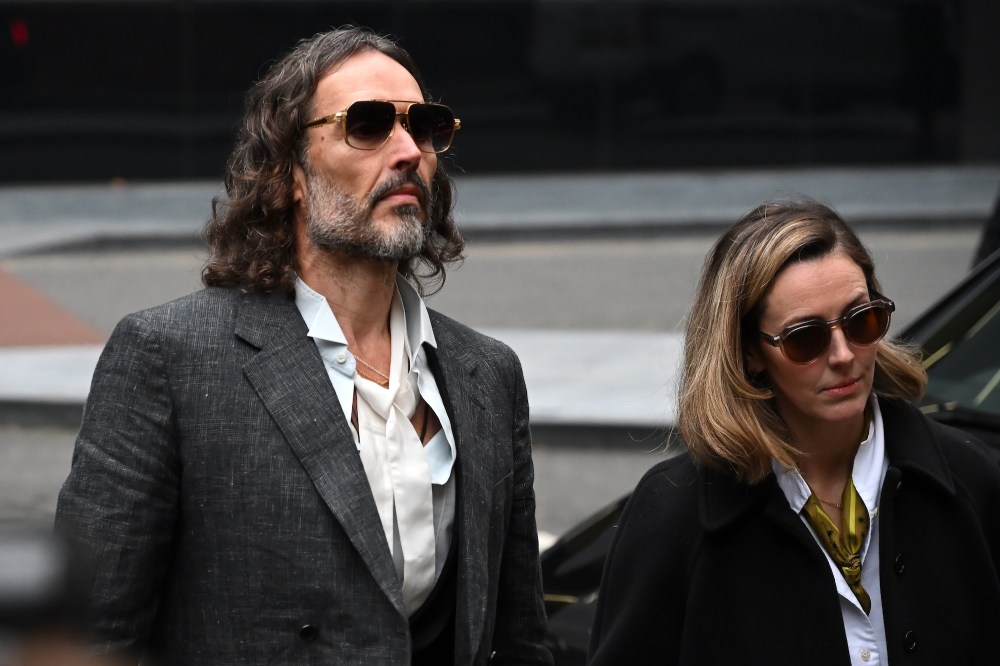
Months after Brand’s controversial interview with Kelly, the comedian was sentenced to 10 years and six months in prison for the charges of which he was convicted. The trial itself had drawn significant media attention, with supporters and detractors alike following every development. Brand and his wife Laura were photographed arriving at Southwark Crown Court on November 5, 2026, with the weight of the proceedings evident on their faces.
In the aftermath of the conviction, Kelly, 55, came quickly to the disgraced comedian’s defense, making remarks that have drawn widespread criticism from survivors’ advocates and legal experts alike. During the Monday, November 9 episode of her YouTube show, Kelly made her position unequivocally clear. “I don’t believe the charges,” Kelly said. “And I don’t have to believe them just because the jury came through with the opposite conclusion. I feel indignant that this obvious conservative stalwart has been targeted.”
The former journalist went even further in her defense of Brand, adding comments that many have characterized as dismissive and inappropriate given the serious nature of the convictions. “And he had backdoor sex with a woman who licked his backdoor before she was even introduced to him. This is insane.” These remarks have been widely condemned as victim-blaming and indicative of a dangerous tendency to dismiss sexual assault allegations when they involve individuals with whom one shares political or ideological alignment.
A Call for Legal Reform
Beyond her personal desire for justice, Latter told The Times that she made the decision to go public with her identity in an effort to advocate for changes to consent laws. Her advocacy is rooted in the belief that the current legal framework, which sets the age of consent at 16 in the United Kingdom, fails to adequately protect young people from predatory behavior by older, more powerful individuals.
“I just don’t know what capacity I have to give years more of my life to this, for my head to be occupied with these awful crimes,” she said, acknowledging the personal cost of her continued advocacy. “And it takes a toll on your personal life, on your marriage. I feel as though I haven’t been the world’s greatest mum at times, because I’ve been so upset, and I haven’t been the greatest daughter [or] sister.”
The ongoing impact of the assault on every aspect of her life underscores the profound and lasting damage that sexual violence inflicts upon survivors. Her willingness to sacrifice her privacy and endure continued emotional distress speaks to her commitment to preventing similar experiences for others.
“It’s shocking to me time and time again that whenever the news comes up again about him, it’s always in the comments about the relationship with a 16-year-old. That’s not the most heinous bit. But why is that the thing that everybody collectively gets stuck on? I think we all sort of agree that… adults shouldn’t be allowed to have sexual relationships with children, with somebody under the age of 18. That really doesn’t seem like a gigantic leap to take,” she added, addressing the public fascination with the age difference while pointing out that the more serious allegations of sexual violence tend to receive less attention in public discourse.
Latter’s call for legal reform touches on a broader debate that has been gaining momentum in recent years, with advocacy groups and legal experts questioning whether existing age of consent laws adequately address the complexities of power dynamics in sexual relationships. Some have called for a “Romeo and Juliet” style exception that would narrowly apply to relationships between individuals of similar ages, while also strengthening protections for situations where there is a significant age gap and corresponding power imbalance.
The Broader Implications
The decision by Latter to come forward publicly represents more than just a personal choice; it carries significant implications for how we as a society discuss and address sexual violence, particularly in cases involving powerful public figures. Her courage in stepping forward, despite the personal cost and the failure of the justice system to include her in the trial proceedings, serves as a powerful reminder of the strength required to speak truth to power.
The case has also highlighted continuing concerns about how survivors are treated within the criminal justice system, particularly regarding decisions about which allegations to pursue and how to present them to juries. The phrase “the Alice show”—used reportedly in reference to concerns about the case becoming too focused on one accuser—has raised troubling questions about whether strategic considerations may sometimes override the interests of individual victims in securing justice.
For Brand, his conviction and subsequent sentencing represent a dramatic fall from grace for a man who once commanded significant influence in entertainment and media circles. From his early days as a stand-up comedian to his rise as a Hollywood actor and, later, a controversial online personality, Brand had cultivated an image as a boundary-pushing, provocative figure. That public persona has now been fundamentally redefined by his conviction, with potential implications for how his body of work will be viewed and consumed in the future.
Supporting Survivors
For those who have experienced sexual assault, resources are available for support and assistance. The National Sexual Assault Hotline can be reached at 1-800-656-HOPE (4673), where trained professionals provide confidential support, information, and assistance to survivors and their loved ones. In the United Kingdom, similar services are available through organizations such as Rape Crisis England & Wales, which operates a national helpline at 0808 802 9999.
These resources play a vital role in helping survivors navigate the complex emotional and practical challenges that follow an assault, providing a lifeline to those who may feel isolated or unsure where to turn for help. The importance of these services cannot be overstated, particularly in the context of high-profile cases that may encourage other survivors to come forward with their own experiences.
A Continuing Conversation
As the conversation about Russell Brand’s crimes continues to evolve, Latter’s decision to go public ensures that her voice will be part of the ongoing dialogue about accountability, consent, and the treatment of survivors within the legal system. Her story serves as a powerful counterpoint to those who would dismiss or minimize the allegations, and her advocacy for legal reform may ultimately contribute to meaningful changes that protect future generations from similar experiences.
The case has also reignited debates about the responsibility of media figures who provide platforms for accused individuals to share their perspectives, with questions being raised about whether interviews like those with Kelly and Piers Morgan inadvertently provided opportunities for victim-blaming and narrative control. The timing of the decision not to include Latter’s allegations in the trial, reportedly made after these interviews, has raised additional concerns about the intersection of media narratives and legal strategy.
In the end, Latter’s decision to reveal her identity represents a deeply personal act of courage that transcends the specific details of her case. By choosing to step forward, she has joined a growing movement of survivors who refuse to be silenced, who demand to be heard, and who work tirelessly to ensure that future generations will not face the same obstacles to justice that they have encountered. Her story is a reminder that while the legal system has made progress in addressing sexual violence, there is still much work to be done to ensure that all survivors receive the justice they deserve.
If you or someone you know has been sexually assaulted, contact the National Sexual Assault Hotline at 1-800-656-HOPE (4673) for confidential support and resources.