Spencer Pratt, the former reality television star who has traded the drama of The Hills for the high-stakes arena of Los Angeles politics, has finally broken his silence on one of the most persistent controversies of his mayoral campaign: his decision to stay at the luxurious Hotel Bel-Air. In a lengthy and unflinching statement posted to X on Tuesday, November 3, the 43-year-old former candidate addressed the public backlash head-on, revealing a layered and complicated rationale that he claims he was previously forbidden from sharing. He maintains that the choice, which drew intense scrutiny and accusations of profligacy, was not a display of “bougie” entitlement but a calculated security measure born from a campaign besieged by threats and logistical chaos.
Pratt’s political journey has been anything but conventional. A longtime Pacific Palisades resident, he catapulted from reality TV fame into the public consciousness for a very different reason in January 2025 when the devastating Palisades fire swept through his community, reducing his family’s home to ashes. Alongside his wife, Heidi Montag, Pratt became a symbol of both the tragedy and the resilience of the area, documenting the grim aftermath and their struggles to navigate insurance claims and rebuild their lives.
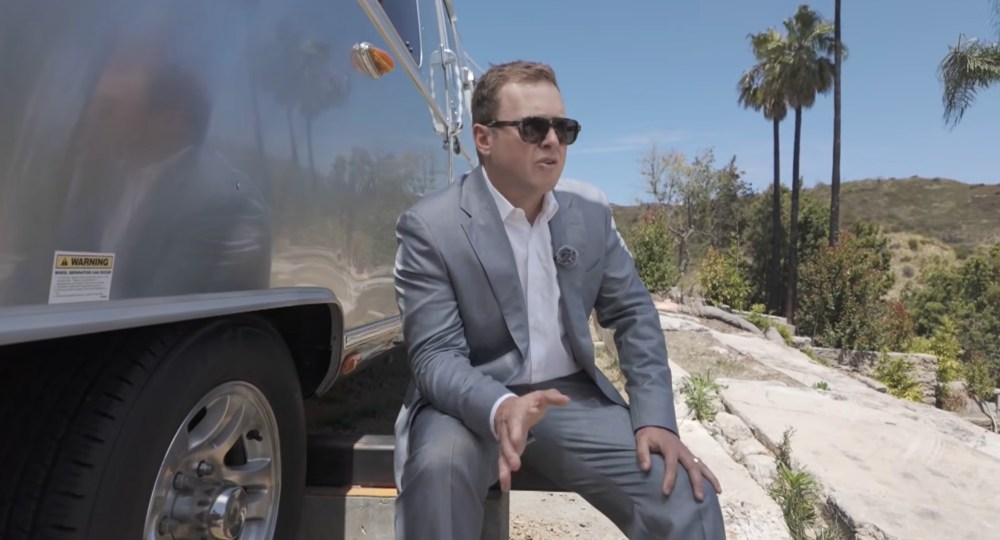
It was this personal connection to disaster that he leveraged to launch his campaign for the city’s top job. In his recent post, Pratt fondly recalled the genesis of his political ambitions, painting a picture of a man who wanted to contrast his own gritty reality with the perceived detachment of the city’s political elite. “Remember when you first met me? For those of you in the [Pacific] Palisades, that was likely many years ago, but the majority of folks met me when my first campaign ad dropped back in April,” he wrote. In that ad, he offered a stark visual comparison: the multimillion-dollar mansions of his opponents, Mayor Karen Bass and Councilwoman Nithya Raman, set against the “nuked out wreckage” where his own home once stood, with a sleek Airstream trailer perched precariously on his hillside lot as a symbol of his temporary, post-disaster existence.
The narrative took a sharp turn when investigative outlets revealed that Pratt, the man living in an Airstream on a scorched property, was allegedly a guest at one of the most exclusive hotels in the city. With nightly rates ranging from $900 to $1,200 for standard rooms, the Hotel Bel-Air is a bastion of old-money luxury and discretion. The story quickly went viral, casting Pratt as the ultimate hypocrite and dominating headlines at the expense of his policy platform.
Pratt acknowledged the firestorm, admitting that while the controversy was a reminder of his opponent’s perceived failures, it quickly became an unwelcome distraction. “When the media found out I was staying there, they were most certainly not cozy nor at ease. The backlash was intense, and predictably so,” he wrote. “Now, in many ways, our campaign was perfectly fine with the controversy, because the kerfuffle over me staying at a hotel just reminded everyone of my opponent’s biggest failure; Karen Bass is the reason I didn’t have a home to go to. But, nonetheless, it was becoming such a big controversy, it was eating up all the oxygen in the room, and it was a distraction from all my winning policy ideas; instead of talking about the campaign, we were talking about a damn hotel.”
Pratt has consistently hammered Bass, 73, for her absence from the city during the critical early hours of the fire, a failure he argued left Los Angeles woefully unprepared for a catastrophe that destroyed more than 6,800 structures. His campaign, however, was ultimately unsuccessful; Bass and Raman secured the most votes in the June primary, effectively eliminating Pratt from Tuesday’s general election ballot. This political defeat, however, appears to have unlocked a new sense of candor in him.
In his viral post, Pratt finally answered the question that had dogged him: Why the expensive hotel? He preempted the public’s most cynical assumptions—that he was a “bougie spoiled brat” misusing campaign funds—by explaining that the reality was far more serious. He revealed that during his campaign, he was subjected to “numerous death threats” so severe that maintaining his safety became the campaign’s paramount and most costly concern. His security team took the responsibility with extreme gravity, assessing that his residence at the Airstream was no longer a viable option. The trailer, while a powerful visual symbol of his plight, offered no meaningful protection from a determined individual.
“At the time, I couldn’t explain the math to people, and my campaign staff told me I wasn’t allowed to divulge the real reason I had to stay there, but now that the election is coming to a close, I don’t need to listen to anyone anymore,” he stated, explaining his new-found transparency.
He went on to describe the Hotel Bel-Air not as a decadent indulgence, but as a “unique” property with security features that made it the most economically sensible option. “Unlike normal hotels, it is a very secure facility, which is why Presidents and Royalty like the Prince of Wales or Saint Thomas of Cruise feel comfortable staying there,” he explained. His security detail, he argued, felt the property’s surrounding “fortress wall” and advanced security protocols were sufficient to keep him safe, allowing them to stand down. “When my security team dropped me off behind the walls of the Bel Air, they felt good about leaving me alone in the secure facility.”
He then presented a surprising cost-benefit analysis. Had he chosen a standard hotel, even a budget-friendly Motel 6, he would have required his security team to book multiple rooms for overnight protection, a logistical necessity that would have driven costs up significantly. “Had I stayed anywhere else, I would have needed to book out 3 rooms for my team to maintain overnight security, which would’ve cost an additional $3,000 per night,” he calculated. “Paradoxically, by this calculation, I was actually saving a ton of money by staying at the secure Bel Air; even staying at a Motel 6 would’ve cost me more money, and in a campaign…money is everything.”
The logic, while unconventional, presented a compelling counter-narrative to the media’s portrayal of a pampered celebrity. He described the profound comfort and relief he felt having a professional team “watching everything and everyone around me,” a level of vigilance that allowed him to focus on his political ambitions rather than his personal safety.
Now, with the campaign officially over, Pratt admits that this “executive-level security” is no longer in his budget. He claims that the threats, unfortunately, have not subsided. “Now that there’s no campaign, I can’t afford that level of protection, even though I still deal with death threats and trespassers at my property, routinely,” he alleged. He has since taken a more proactive, community-driven approach to security.
In a move that blurs the lines between personal advocacy, civic engagement, and entrepreneurship, Pratt used his platform to promote a new service called Patrol. He described it as “the Uber Black of private security,” an app that would allow his neighbors and other subscribers to collectively fund professional security patrols for their neighborhoods. By pooling resources, they can access the same caliber of protection he enjoyed during his campaign, democratizing what has long been a luxury of the wealthy elite.
Even more strikingly, Pratt revealed that Patrol is planning to integrate private firefighting services into its platform. In an era where public resources are often stretched thin, and in the wake of a fire that his community found to be catastrophically under-resourced, he envisions a future where residents can “crowdsource our own private contractors to do the job that our governments are failing to do.” This, Pratt believes, is the inevitable next step in community self-reliance in the face of climate change and governmental inertia. “This is the way of the future,” he declared, “and I’m doing everything in my power to keep my family safe. … I’m done leaving our lives in the hands of government. We are on our own.”
This final sentiment crystallizes the profound shift in Pratt’s journey. From reality TV villain to fire survivor, to mayoral candidate, and now to a private security advocate, his story is a test case for the future of civic responsibility in a city grappling with extraordinary challenges. His defense of the Hotel Bel-Air stay, framed as a necessary evil to preserve his life and campaign, offers a sobering glimpse into the threats political figures face in the modern era. His pivot to private, community-funded security and firefighting networks, however, raises profound questions about the erosion of public trust in government and the privatization of essential services. Pratt, ever the provocateur, is not merely telling a story; he is setting a precedent, inviting a debate about who is responsible for protecting citizens when city hall appears to have failed. Whether one views him as a cynical opportunist, a traumatized pragmatist, or a visionary ahead of his time, his explanation ensures that his political legacy will be just as contentious as his reality TV one.