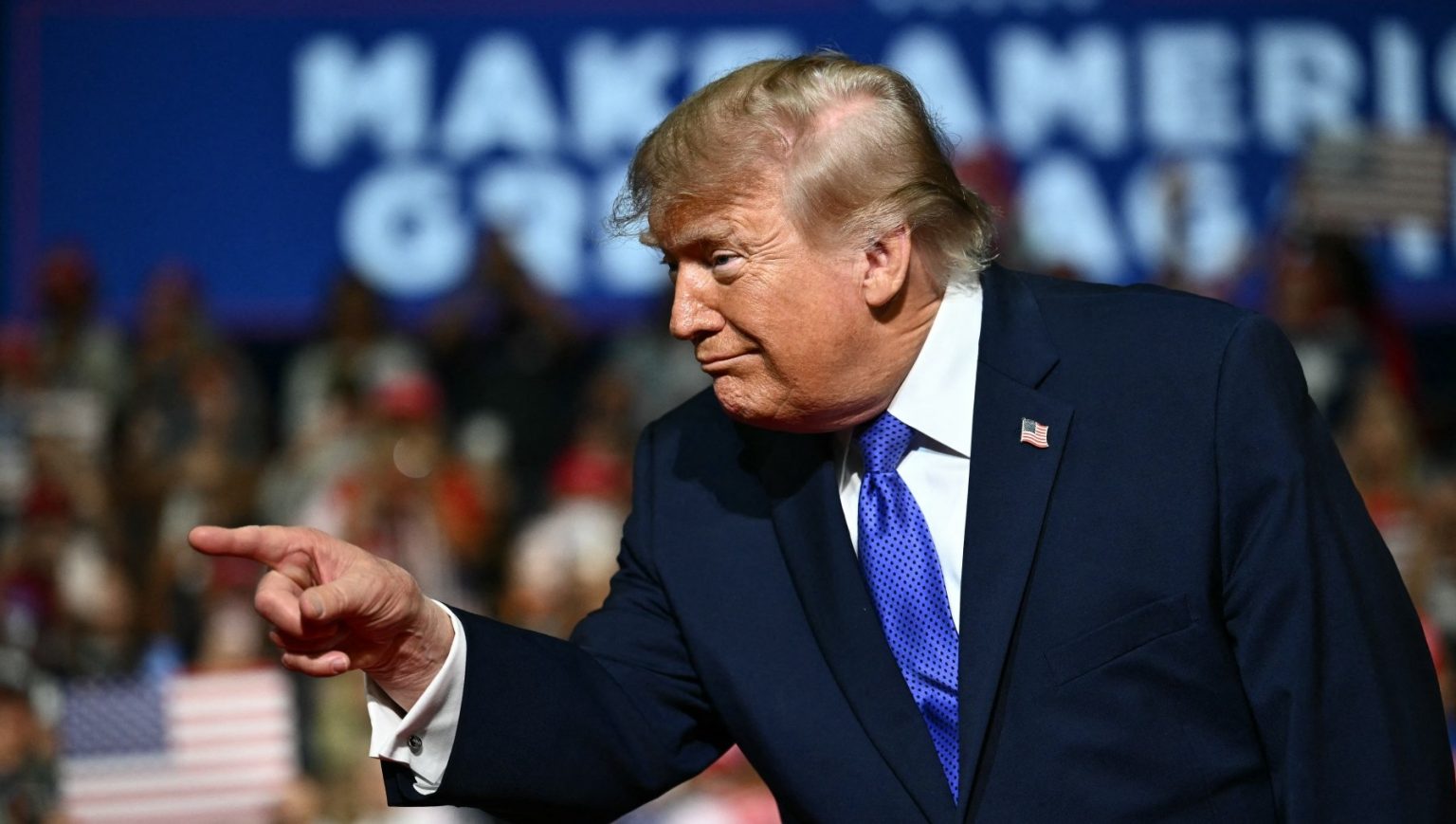
Trump’s Election Day Threats: President Claims He Would Move to Israel if Americans ‘Get Tired’ of Him
Controversial Comments Come as President Faces Historically Low Approval Ratings and Critical Midterm Elections
By [Your Name] | November 3, 2025
In a stunning series of remarks that have sent shockwaves through the political landscape, President Donald Trump has threatened to abandon the United States entirely if the American electorate turns against him, suggesting he would relocate to Israel and seek the position of Prime Minister in a dramatic departure from traditional presidential decorum.
The commander-in-chief, who celebrated his 80th birthday earlier this year, made these explosive comments during a telephone appearance on the Tuesday, November 3 episode of “Fox & Friends,” a morning program known for its generally favorable coverage of the president. Speaking to hosts via phone rather than appearing in person, Trump used the platform to make a number of bold claims about his popularity, his relationship with Israel, and his future plans should the political winds shift against him.
“If people ever get tired of me in the U.S., I’ll move to Israel and become prime minister,” Trump declared during the broadcast, a statement that immediately raised eyebrows among political analysts and constitutional scholars alike, given that Israeli citizenship and political office require specific legal qualifications that would present significant hurdles to such a plan.
Trump’s Claims of Unprecedented Popularity
During the same interview, the president made extraordinary assertions about his approval ratings, claiming levels of support that bear little resemblance to any publicly available polling data. “I’m at 99 percent approval. I have the highest approval rating of anybody in history,” Trump told the morning show hosts, a claim that appears to have no basis in any recognized polling methodology.
These assertions stand in stark contrast to the reality of Trump’s current political standing as reflected in multiple independent surveys. A comprehensive CNN poll conducted between October 13 and October 26 reveals that the president’s disapproval rating has soared to a staggering 64 percent among the American public, representing a significant majority of voters who express dissatisfaction with his performance in office.
The disconnect between Trump’s self-assessment and measurable public opinion has become a recurring theme throughout his political career, but the magnitude of this latest discrepancy is particularly notable. The president’s overall approval rating has plummeted to just 34 percent according to the same polling data, placing him among the least popular presidents at this stage of their tenure in modern American history.
Geographic analysis of the polling data reveals that Trump’s support has become increasingly concentrated in specific regions of the country. Just nine states continue to rate the president positively, with Wyoming, North Dakota, and Arkansas emerging as his strongest remaining strongholds. This represents a dramatic contraction of his political base compared to previous election cycles, when his support spanned a broader cross-section of the American electorate.
Implications of the President’s Israel Comments
The president’s apparent plans to leave the United States if his popularity continues to wane come amid a series of other controversial statements regarding American foreign policy, particularly concerning the nation’s long-standing relationship with Israel. During the same Fox & Friends appearance, Trump made headlines by claiming that the United States would no longer be sending military aid to Israel, a statement that represents a significant departure from decades of established American foreign policy.
The United States has historically provided approximately $4 billion in military assistance to Israel on an annual basis, a commitment that has enjoyed bipartisan support in Congress and has been viewed as a cornerstone of American policy in the Middle East. Trump’s suggestion that this funding should be eliminated marks a dramatic shift in approach.
“Israel’s our No. 1. We give them more than anybody else, and they no longer need it,” Trump said during the on-air interview, attempting to frame the potential aid cut as a positive development that reflects Israel’s growing economic and military self-sufficiency. “We’ve been doing it for years. I’ve been doing it. But Israel is a very thriving country. They don’t need it. If they did need it, I would say keep it going.”
The president went further, claiming to have recently negotiated a personal deal with Israeli Prime Minister Benjamin Netanyahu to terminate American military funding, including support for the country’s Iron Dome missile-defense system. According to Trump, the two leaders “made a deal months ago” and that the money would get “cut off at the end of the year.”
“They’ve been a great partner, but we stopped Iran,” the president said before abruptly changing topics. “Iran was an unstoppable force. We knocked the hell out of them.”
Netanyahu, who at 77 years old continues to serve as Israel’s prime minister, has yet to publicly comment on the president’s claims. The lack of confirmation from Israeli officials has led many observers to question the accuracy of Trump’s assertions, particularly given the strategic importance of American military support to Israel’s national security apparatus.
Midterm Election Context
The president’s controversial interview comes during what political analysts describe as a pivotal midterm election for the United States, with control of both chambers of Congress hanging in the balance. Depending on the results in several key battleground states, Democrats could potentially take back control of both the Senate and the House of Representatives, representing a significant check on Trump’s power during his second presidential term.
The stakes of these elections have been amplified by the president’s increasingly contentious relationship with Congress and his willingness to bypass traditional legislative processes through executive action. A Democratic takeover of either chamber would fundamentally alter the political dynamics in Washington and could potentially embolden investigations into the administration’s activities.
Hours before voting centers closed on the East Coast, Trump demonstrated his characteristic willingness to engage in public feuds when he took to social media to criticize a guest appearing on his preferred news network. “Watching the Pre-Election Results on Fox News, but I can’t stand Jessica Tarlov’s voice — DUMB AS A ROCK, but it’s the voice that gets me,” he wrote via Truth Social on Tuesday. “Have to go somewhere else until that LOSER is off the air — I’ll be back later!”
The president’s decision to publicly attack a Fox News personality during election coverage reflects his ongoing sensitivity to media criticism and his willingness to use his considerable social media platform to express personal grievances, even at moments of significant political consequence.
Analysis: The Strategic Logic Behind Trump’s Statements
Political strategists and communications experts have offered various interpretations of the president’s remarkable statements, with some suggesting that Trump’s threats to leave the country and his claims of unprecedented popularity represent a calculated political strategy designed to energize his base and deflect attention from unfavorable polling data.
By framing himself as a figure of overwhelming popularity who is voluntarily choosing to depart rather than being rejected by voters, Trump may be attempting to preemptively shape the narrative around potential Democratic victories in the midterm elections. This approach mirrors his historical pattern of claiming election fraud or unfair treatment when faced with political setbacks.
The president’s comments about Israel may also serve multiple strategic purposes. By positioning himself as a leader willing to make tough decisions regarding foreign aid, Trump appeals to isolationist sentiments within his political base. Simultaneously, his continued emphasis on his relationship with Israel and his popularity in the region reinforces his self-presentation as a global statesman of unique importance.
Historical Context of Presidential Threats
While presidents have occasionally made offhand remarks about leaving the country or retiring to private life, Trump’s specific threat to relocate to Israel and pursue the position of Prime Minister is unprecedented in American political history. The statement raises numerous legal and constitutional questions, including whether any foreign nation would welcome a former American president seeking political office.
The Israeli political system requires that prime ministers be citizens of Israel and members of the Knesset, the country’s parliament. Trump’s current citizenship status and his lack of established residence in Israel would represent significant obstacles to any serious pursuit of such a position, leading many observers to interpret the remarks as hyperbole rather than a genuine plan.
Nevertheless, the casual nature with which the president discussed abandoning his country has concerned constitutional scholars and political commentators, who note that such statements from a sitting commander-in-chief could have international implications and might be viewed with alarm by allied nations.
The Road Ahead
As the nation awaits election results and the political landscape continues to evolve, the president’s latest comments add another layer of uncertainty to an already volatile political environment. With control of Congress potentially shifting, Trump’s ability to implement his agenda in the coming years may face significant constraints.
The president’s approval ratings remain historically low, and his continued claims of unprecedented popularity appear increasingly disconnected from measurable public opinion. Whether Trump’s threats to relocate to Israel represent genuine considerations or merely rhetorical posturing remains unclear, but the statements have nonetheless captured the attention of a nation already accustomed to the president’s unconventional approach to political communication.
Election officials across the country reported high voter turnout throughout the day, suggesting that Americans are engaging with the political process in significant numbers. The results of these elections will likely shape the final two years of Trump’s presidency and determine whether the Democrats’ seizure of congressional power will create new challenges for an administration that has shown little willingness to compromise with opposition parties.
For now, the political world watches with a mixture of fascination and concern as President Trump continues to dominate headlines with statements that challenge conventional expectations of presidential behavior. Whether his threat to move to Israel materializes or fades like so many other controversial declarations remains to be seen, but the very mention of such an unprecedented step has added yet another remarkable chapter to one of the most unconventional presidencies in American history.
Reporting contributed by [Your Name] | Copyright 2025 | All Rights Reserved