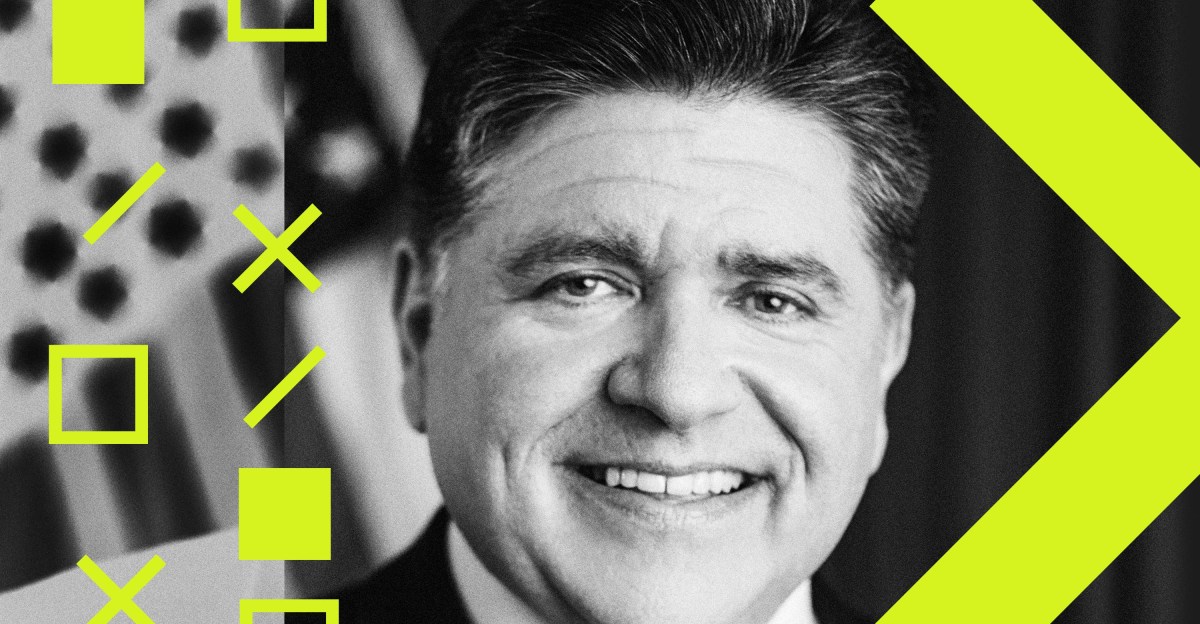
Illinois Gov. JB Pritzker on AI, Privacy, and the New Political Realignment
In a wide-ranging and unusually philosophical episode of The Verge’s Decoder podcast, Illinois Governor JB Pritzker sat down with editor-in-chief Nilay Patel to discuss artificial intelligence, privacy, the fractured relationship between government and big business, and the strange political realignment that is reshaping American politics ahead of the midterms. With early voting already underway in many states and control of Congress hanging in the balance, Pritzker offered a surprisingly deep meditation on what government is even for, why states are being forced to act as laboratories of policy in the absence of federal leadership, and whether the Chicago Bears will actually stay in Illinois.
Pritzker, a Democrat running for reelection, did not shy away from the existential questions that Patel raised. The conversation opened with a joke about the Bears potentially moving to Indiana — a prospect Patel, a self-described Green Bay Packers fan, found amusing — but quickly turned to the serious dynamics of political realignment. Patel pointed to the tension between states and massive corporations, from data center developers to entertainment conglomerates, and asked whether the old model of governments competing to offer ever-larger tax incentives is breaking down. Pritzker acknowledged that states are absolutely in competition with one another, but he argued that a generational and attitudinal shift is underway, one that demands government become a fighter for ordinary people rather than a collaborator with business on everything.
“I do believe that the government has to be more active now and become a fighter for our people and not just a collaborator with business on everything,” Pritzker said. “I’m a businessman, as you know, before I became governor. But I also know that, for the people of Illinois anyway, my job is to protect the working people of this state who often don’t have anybody protecting them except a government that will stand up for them.”
Pritzker, who described himself as having come out of the tech world, said the realignment is partly generational. “Generationally, we’re a little more aggressive,” he said. “I’m 61 years old, but I think of myself as having come out of the tech world and as somebody who has been a fighter for progressive values.” He warned that too much power is concentrated in too few hands, particularly when it comes to AI. “When we talk about AI, where it’s potentially existential, but certainly transformative,” he said, government will have to get engaged. He expressed concern about the potential for significant job loss, suggesting that if 4 percent unemployment is currently considered near full employment, AI could push the baseline to 7 or even 10 percent. “We better be focused on how we’re going to give people the dignity of work and enough income so that they can make a life for themselves when you’re going to put people out of work by virtue of this technology,” he said.
Patel pressed Pritzker on the high-stakes brinksmanship between states and companies, comparing the Bears negotiations to California Governor Gavin Newsom’s decision to settle a lawsuit with the Ellison family over the Warner Bros. merger rather than risk Paramount leaving the state. Pritzker declined to comment directly on Newsom’s handling of the Paramount situation, saying he didn’t know enough about it, but he made clear that Illinois takes a tough negotiating stance. “We’re pretty tough negotiators in Chicago and Illinois,” he said. When asked directly whether the Bears would be allowed to move to Indiana, Pritzker was firm: “That is not our intention. We are, in fact, in discussions with the Bears and the NFL about keeping the Bears either in Chicago or in Arlington Heights, but in Illinois.”
The conversation then turned to the mechanics of running a state government, a topic Patel said is often opaque to the public. Pritzker explained that he restructured Illinois government in a way no previous governor had done, creating four deputy governors, a general counsel, and a chief of staff to help manage the state. The goal, he said, was to break down the silos that had long prevented state agencies from working together. “I took all of the health and human services-related departments — that’s the Department of Public Health, the Department of Human Services, the Department of Healthcare and Family Services, everything from health insurance, Medicaid, and public health during the pandemic — and put it all under one deputy governor working directly for me,” he said. Instead of 26 direct reports, he now has four or five, each overseeing six or seven departments.
Pritzker also described efforts to improve the way residents interact with government, framing it as a customer service operation. He cited a program called BEACON, designed to help families find mental health resources for children. Previously, there were seven different ways people could approach the government for help, and the state wasn’t coordinating them. Now, he said, there is “one door to enter through BEACON that allows you to get access to all of those resources, even if they’re in multiple departments.” He also mentioned a birth equity initiative to reduce maternal mortality, particularly in Black and Brown communities, and free diapers for some families. The problem, he acknowledged, is that many people don’t even know these programs exist. “If you’re a working person who’s working two minimum-wage jobs, you don’t have any time, and you don’t have any money, and you don’t even know how to talk to the government,” he said.
On AI, Pritzker said he created an “AI Cabinet” to bring experts together with leaders of state agencies, with a focus on privacy, safety, and efficiency. He said the state is drawing expertise from the University of Chicago and the University of Illinois, and that his emergency management agency and state police are also at the table. “There are things, as you know, about AI that are dangerous,” he said. “We’re trying to approach it carefully before it gets out of control to a point where we have no way to pull it back in.”
Patel asked Pritzker how he makes decisions, and the governor offered a candid framework. “I am not one of those people who thinks that I’m right 100 percent of the time,” he said. “Maybe a good way to describe it is that I’m 90 percent sure I’m right, but there’s also a 10 percent chance that I’m dead wrong.” He said he tries to hire people who are better than him at various things and is willing to ask for help. “Knowing what you don’t know and being willing to ask for help is a philosophy that I have,” he said.
That philosophy was tested almost immediately when the COVID-19 pandemic hit during his first year in office. “No one runs for governor thinking there’s going to be a global pandemic,” Pritzker said. He described working 18-hour days and having to procure ventilators and masks through emergency measures. He also shared a striking story about calling then-President Donald Trump to ask for help. “I wrote a script for myself because I know he likes to be flattered,” Pritzker said. He told Trump the country was in a national emergency and needed to invoke the Defense Production Act, then asked directly for 2 million N95 masks and 4,000 ventilators. “He never delivered, just so you know, even though he promised that he would deliver,” Pritzker said.
The conversation turned to privacy, a topic Patel argued has become a rare area of bipartisan agreement. Pritzker agreed, noting that Illinois has long been a leader with the Biometric Information Privacy Act, which requires companies to obtain consent before collecting biometric data. But he acknowledged the challenges posed by new surveillance technologies, including Flock license plate readers and Meta’s camera-equipped smart glasses. He said the focus on privacy is “warranted and long overdue” and that COVID accelerated the spread of conspiracy theories, which complicates the debate. Still, he argued that self-policing by AI companies will not work. “Everybody’s going to operate in their own self-interest,” he said. “It’s one of the reasons why you need a government.”
Pritzker expressed frustration that the federal government has failed to act on AI and privacy, leaving states to go it alone. He noted that Illinois has passed the AI Safety Measures Act, which he called the toughest in the country, along with the Children’s Social Media Safety Act. But he said only a handful of states have done so. “State by state, this is not the way to do this,” he said. “We’re doing the best we can in the absence of a federal government that is addressing these issues.”
Patel also asked about data centers, which have become a flashpoint for local opposition across the country. Pritzker said he does not think data center opposition is an effective route to AI regulation, but he understands why people are frustrated. Data centers consume enormous amounts of electricity, and in Illinois, that has become a particular concern. Pritzker noted that Illinois produces more nuclear power than any other state — about 53 or 54 percent of its electricity comes from nuclear — and is a net electricity exporter. Yet bills are going up because of the methodology used by regional transmission organizations. “If Ohio decides to build a hyperscale data center, our bills in Illinois are affected,” he said. “That’s shocking to people who live in Illinois.”
The interview also touched on social media regulation and the recent settlement between Illinois and Meta. Pritzker signed a landmark settlement that is expected to bring Illinois around $750 million to $760 million. The deal requires TikTok and YouTube to agree to similar terms, with Meta paying the remainder. Patel noted that Mark Zuckerberg has described this as a tragedy of the commons problem: if Instagram stops using engagement bait but TikTok doesn’t, kids will just move to TikTok. YouTube CEO Neal Mohan, however, has reportedly refused to sign on. Patel pointed out the apparent contradiction in Zuckerberg’s approach to AI regulation, where he favors a free-for-all. Pritzker responded that he is an optimist at heart and that the country has to keep trying to address these challenges. He compared AI to nuclear weapons, noting that humanity has so far managed not to destroy itself. “I don’t know whether that gives you any optimism, but it does to me,” he said.
Finally, Patel asked Pritzker whether he believes AI could become conscious. Pritzker declined to give a definitive answer. “I haven’t felt it,” he said. He argued that ethicists, technologists, and government all need to be involved in deciding how to regulate AI. “If we had the power to create it, we have the power, in my view, to rein it in,” he said.
The conversation ended with a discussion of generational change in politics. Pritzker said the country needs better people running for office and smarter policy development in government. He pointed to Trump’s Secretary of Education, who reportedly confused AI with “A1,” as an example of the problem. But he stopped short of calling for term limits. “I am opposed to term limits because I think that you should have all the choices,” he said. “A great case could be made for the 45-year-old who’s just as smart as the 75-year-old was when he was 45, but has a modern look at the issues around AI privacy.” He added, with a laugh, that he would vote for Patel over Donald Trump if given the choice.
Pritzker closed by thanking Patel for the conversation and saying he would like to return to Decoder soon. The episode is available now on YouTube and wherever podcasts are distributed.