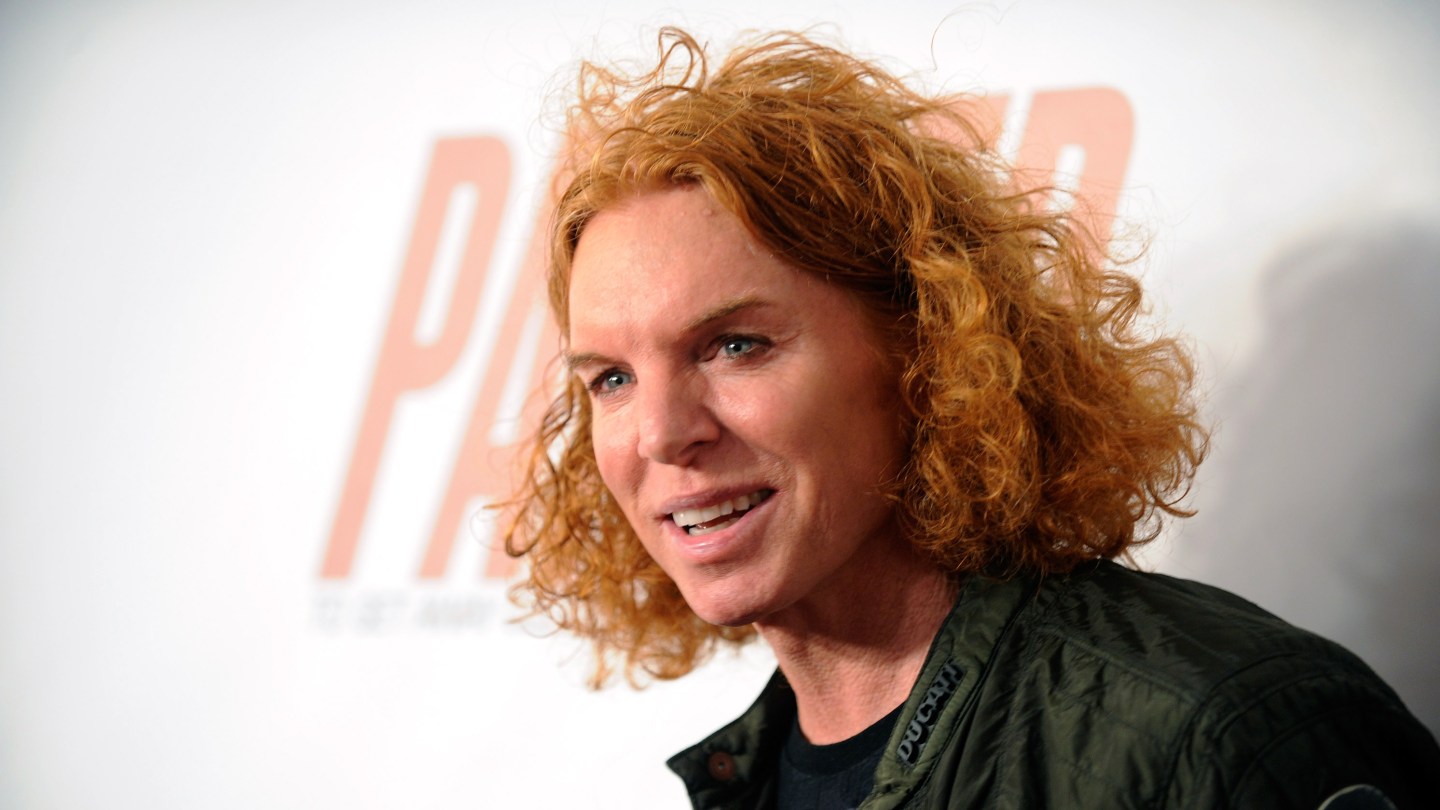
Carrot Top Breaks Silence on Instagram Following Suicide Attempt, Announces Return to Las Vegas Stage
After weeks of silence and a harrowing brush with mortality, the beloved prop comedian known to the world as Carrot Top has finally addressed his fans directly, offering a heartfelt message of gratitude and confirming that he will be returning to the stage that has made him a Las Vegas institution. The 61-year-old entertainer, born Scott Thompson, took to Instagram on Saturday to post his first public comments since his September 18 suicide attempt and subsequent hospitalization, breaking a silence that had been filled with speculation, concern, and an outpouring of support from colleagues and fans alike.
In a post that radiated both vulnerability and resilience, Thompson acknowledged the immense wave of love that had flooded his way during one of the most difficult periods of his life. “I’m truly overwhelmed by the outpouring of love, support, prayers, and well wishes I’ve received over the past couple of weeks,” he wrote. “Every message, text, and kind thought has meant more to me than you know. While I haven’t been able to respond to everyone individually, please know that I’ve felt your love and appreciate each and every one of you from the bottom of my heart. Thank you for being there for me during this time. It truly means the world to me!” The caption was punctuated with a simple orange heart emoji—a small but poignant symbol of warmth and appreciation that spoke volumes given the context.
The post was not merely a note of thanks, however. It also carried with it a significant piece of news for his devoted fan base: Carrot Top is ready to get back to work. According to the post, he is scheduled to return to the stage at the Luxor Hotel & Casino on October 19 for the 8 p.m. performance of his long-running residency at the MGM property. For a performer whose entire identity is built around high-energy, prop-driven comedy, the announcement of a return date signals a crucial step in his recovery—a reclaiming of normalcy, purpose, and the craft that has defined his career for decades.
The response to his Instagram post was immediate and overwhelmingly supportive. The comments section quickly filled with messages from prominent figures in the entertainment world and everyday fans. Stand-up superstar Jay Mohr, known for his sharp wit and candid personality, left a succinct but powerful message: “LOVE LOVE LOVE.” Emmy-winning actress and comedian Hannah Einbinder, who has made a name for herself as a rising star in the comedy world, wrote a more personal note, addressing Thompson by his given name: “Love you Scott.” Songwriter Sarah Hudson also chimed in with a simple, heartfelt “Love you.” The collective sentiment from these and countless other voices served as a powerful counterpoint to the darkness that Thompson has been navigating, offering a public display of solidarity that is all too rare in the often-competitive world of comedy.
This Instagram post marks a significant milestone in Thompson’s recovery, but it comes on the heels of other quiet steps back into the public eye. Prior to the social media message, he had made two public appearances alongside his mother at a local Las Vegas church, first on October 4 and then again on October 11. Paparazzi images from those outings surfaced online, showing Thompson in what appeared to be a somber and subdued state, surrounded by family. Despite these sightings, he had remained conspicuously silent on his health, his well-being, and the circumstances surrounding his suicide attempt. Beyond the initial statement released by his publicist to media outlets, including TMZ, Thompson had not personally addressed the situation until this weekend’s Instagram post.
The publicist’s earlier statement, issued in the immediate aftermath of the September 18 incident, had been brief but clear. “Mr. Thompson is currently recovering, surrounded by his family and those closest to him. His focus is on his health and recovery, and we ask that his privacy be respected at this time,” the representative had said. The statement came as part of a TMZ report that contained alarming allegations, thrusting Thompson’s private struggles into an even more complicated and disturbing light. The outlet reported that a rep for Carrot Top alleged that a man named Brian Evans had threatened to file a “sexually explicit recording on a USB drive depicting the comedian into a court’s legal docket…unless he was paid $500,000 as a settlement.” The extortion allegation added a deeply troubling dimension to an already heartbreaking story, suggesting that Thompson was not only grappling with a profound personal crisis but also with an external threat that may have contributed to his mental state.
The news of Thompson’s suicide attempt sent shockwaves through the entertainment industry, particularly among his peers in Las Vegas, where he has been a fixture for decades. Carrot Top is more than just a comedian; he is a Las Vegas icon. Born in Rockledge, Florida, he rose to fame in the 1990s with his unique brand of prop comedy, characterized by his wild red hair, expressive face, and an ever-growing collection of bizarre, inventive, and often hilarious props. He parlayed his early success on shows like Comic Strip Live and his numerous appearances on late-night television into a residency at the Luxor that has lasted for years, making him one of the highest-grossing and most enduring acts on the Strip. His shows are legendary for their high energy and physical comedy, attracting a wide audience of tourists and locals. The idea of such a vibrant, seemingly indefatigable performer struggling with suicidal thoughts was a stark reminder that mental health issues do not discriminate, affecting even those who bring laughter to millions.
The comedian’s situation has also reignited conversations about mental health within the comedy community, a profession that has a notoriously high rate of depression and anxiety. The pressure to constantly be funny, to maintain public persona, and to fill seats in a city as competitive as Las Vegas can be immense. Thompson’s ordeal is a sobering reminder that behind the laughter, many performers are fighting silent battles. The overwhelming support he has received from fellow comedians and entertainers highlights a growing awareness within the industry that vulnerability and honest conversation about mental health are essential, and that reaching out for help—or offering a hand to a friend in need—can make all the difference.
For fans who have followed Thompson’s career, the news of his recovery is a welcome relief. The comedian has cultivated a loyal following over the years, and his absence from the stage has been felt keenly. His announced return on October 19 will undoubtedly be an emotional one, not just for Thompson, who will be stepping back onto a stage he has called home for years, but also for the audience who will be eager to show him that he is loved and supported. It is a testament to his resilience that he is choosing to return to the very place where he has found so much joy and purpose. The decision to return so soon after a serious health crisis suggests a determination to not let the darkest moment of his life define his future.
The road to recovery is rarely a straight line, and for Thompson, it will likely involve continued therapy, the support of his family, and the gradual rebuilding of the routines that have sustained him throughout his career. His public statement, while brief, was a powerful gesture of connection. By taking to Instagram to thank his fans, he acknowledged the role their support has played in his healing process. The orange heart emoji he included may have been a small, visual token, but in the context of his message, it was a symbol of love, hope, and the human connection that is so vital during times of crisis. He also made it clear that he is not hiding, that he is present, and that he is looking forward with a degree of optimism.
The allegations of extortion hanging over the story, however, remain an unresolved and shadowy subplot. The claims involving Brian Evans and the alleged threat to publicly file a private and sexually explicit recording paint a picture of a man being squeezed from all sides. Whether or not these allegations played a role in Thompson’s suicide attempt may never be publicly known, but they certainly add a layer of complexity to his struggle. It is a grim reminder of the ways in which public figures can be targeted and exploited, and how such pressures can compound existing mental health issues. If the allegations are true, they represent a predatory act against a man in a vulnerable state, and it is understandable that he would seek legal recourse while also asking for privacy to heal.
In the world of entertainment, where personal crises often play out in the harsh glare of publicity, the dignity with which Thompson has handled his initial recovery has not gone unnoticed. He did not rush to the cameras to explain himself. He did not immediately post a tearful video. Instead, he retreated to the comfort of his family, attended church services with his mother, and waited until he felt ready to speak to his fans on his own terms. That measured approach has been widely commended. It shows a maturity and self-awareness that suggests he is being guided by professional help and the wisdom of those who care about him, rather than by the demands of the press cycle or the whims of public opinion.
As October 19 approaches, the anticipation for his show at the Luxor will continue to build. The performance will undoubtedly be more than just a comedy show; it will be a celebration of recovery, a demonstration of resilience, and a symbolic homecoming for an entertainer who nearly lost everything. The audience that fills the theater on that night will likely be more than just spectators; they will be witnesses to a comeback story. They will be participating in a moment that says, unequivocally, that Carrot Top is still here, still fighting, and still ready to make people laugh.
In the grand scheme of things, a comedian returning to the stage in Las Vegas is an everyday occurrence. But in the context of a near-death experience, a public battle with mental health, and the insidious attack of an alleged extortionist, Carrot Top’s return has taken on a deeper significance. It is a story about the fragility of life, the importance of community, and the strength it takes to reach out for help and to then pick up the pieces and move forward. The comedian’s words—”Thank you for being there for me during this time”—are a simple but profound acknowledgment that none of us can heal alone. His decision to return to making people laugh may be the greatest act of defiance against the darkness he has faced. Fans, friends, and colleagues will be watching, cheering, and hoping for nothing more than his continued health and happiness, both on and off the stage.