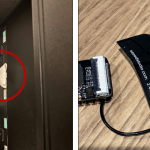
AI Firm Discovers Hidden Recording Device, Ties It to Employee; FBI Investigates
In a striking example of how artificial intelligence is increasingly being used to defend against sophisticated insider threats, a technology company has disclosed that it discovered a concealed recording device inside one of its offices, traced its origin to a specific employee, and turned the matter over to federal authorities. The company said the employee had planted the device days before it was found, and that the individual has since been terminated.
The company, which has not been publicly identified in the statement, described the device as “sophisticated” and said it was hidden within the workspace. While the discovery might have seemed like the opening scene of a corporate thriller, the company’s response demonstrates the growing role of AI-powered security systems in identifying threats that would once have gone unnoticed.
According to the company’s official statement, the organization used its own models to analyze the device and determine its origin. The models helped investigators understand how the device worked and where it may have come from, eventually leading them to identify that a specific employee had placed it in the office a few days earlier. The company did not explain exactly what types of models were used, but the description suggests a combination of data analysis, anomaly detection, and perhaps physical security monitoring.
Once the employee was identified, the company referred the matter to the Federal Bureau of Investigation. The company expressed gratitude to the FBI agents and prosecutors who moved quickly to make an arrest. The FBI’s investigation is ongoing, and the company said it will continue to support the federal investigation.
The company was also careful to note what it had not found. At this time, there are no indications that the employee inappropriately accessed or exfiltrated sensitive information, including model weights, source code, or customer data. Model weights, in particular, are among the most closely guarded assets for companies developing advanced artificial intelligence. These weights are the numerical parameters that define how an AI model processes information, and they represent billions of dollars in research, computing power, and intellectual property. The assurance that these were not compromised will likely be a relief to investors, customers, and the broader AI community.
The employee was terminated, the company confirmed. While the termination was stated plainly, it is clear that the incident was treated with the utmost seriousness. The discovery of a hidden recording device inside an office can be a violation of employee privacy, corporate policy, and potentially federal law. Depending on the nature of the device and the location where it was placed, charges could include illegal wiretapping, interception of oral communications, or other offenses under state and federal statutes.
The company’s statement went on to say that it takes protecting its technology, data, and people seriously, describing this protection as “a matter of national importance.” That phrase is not accidental. For companies at the forefront of AI development, the security of their systems is widely regarded as a national security issue. Advanced AI models have implications for defense, infrastructure, cybersecurity, and economic competitiveness. A breach or insider theft at a leading AI company could have consequences far beyond the corporate bottom line.
The company also outlined the broad scope of its security program, saying it is designed to protect against a wide range of threat actors, from insider risks to cybercriminals to nation states. This is a reminder that the threat landscape facing AI companies is unusually complex. Unlike a traditional software company that might primarily worry about hackers breaking into its network, an AI company must also contend with physical intrusion, social engineering, and malicious insiders. The person who poses the greatest risk may be someone with legitimate access to offices, servers, and data centers.
Insider threats have long been a challenge for government agencies, military organizations, and corporations. The National Institute of Standards and Technology defines an insider threat as a person who uses authorized access, wittingly or unwittingly, to harm an organization. This can include theft of intellectual property, espionage, sabotage, or unauthorized disclosure of sensitive information. In the context of AI, the risk is elevated because the value of the information is so high and because the potential beneficiaries of that information may include hostile foreign governments.
What makes this case particularly notable is the company’s claim that AI was used to solve the crime. The company said, “This case is an example of how AI can help address these sophisticated security threats.” That statement suggests that machine learning models were employed to detect the device, analyze its characteristics, and trace it back to the responsible individual. This could involve analyzing patterns in office access, reviewing security camera footage with computer vision, correlating behavioral anomalies, or examining the device itself with signal detection algorithms.
Using AI to detect hidden recording devices is a growing field. Traditional counter-surveillance methods often rely on manual searches, radio frequency detectors, and nonlinear junction detectors. But AI can add a layer of intelligence to these tools. For example, machine learning algorithms can identify subtle patterns in radio frequency emissions, detect anomalies in network traffic from devices that are surreptitiously transmitting audio, or flag behavioral inconsistencies in employee movement that might indicate unusual activity. AI can also run through massive datasets to reconstruct how a device ended up in a particular location.
In this case, the company said it used “models” to understand the device and where it had come from. This likely means that the company’s internal security teams employed a range of analytical tools, perhaps including large language models for data synthesis, computer vision for interpreting physical evidence, and anomaly detection models for identifying the employee’s actions. The fact that the company used its own models is a powerful demonstration of AI’s dual-use nature. The same technology that powers chatbots, image generators, and autonomous systems can also be harnessed for physical and digital security.
The decision to involve the FBI reflects the seriousness with which the company viewed the incident. Federal involvement suggests that the case may involve more than just an internal policy violation. It could be part of a broader effort to determine whether the employee was acting on behalf of an outside party. Federal agents will likely examine the employee’s communications, financial records, travel history, and personal connections. They will also try to determine the intended purpose of the recording device. Was it meant to capture confidential conversations about AI research? Was it designed to collect evidence for some other purpose? Or was it planted with the intent to blackmail, sabotage, or conduct corporate espionage?
The company’s statement that there is currently no evidence of data exfiltration is an important qualification. It does not rule out the possibility that the employee was attempting to gather information, but it does suggest that the company has conducted a thorough review and found no signs that any crucial systems were breached. The absence of evidence of exfiltration is not the same as proof of innocence, but it offers some reassurance that the damage may have been limited.
Still, the incident raises uncomfortable questions. How did the employee acquire the device? How did they manage to conceal it inside an office? Were there missed signals that should have triggered an earlier response? The company did not provide details about the employee’s role, motives, or method. It is likely that additional information will emerge as the FBI investigation continues.
This episode also highlights the evolving role of physical security in the technology industry. For many years, cybersecurity dominated discussions about protecting intellectual property. Firewalls, encryption, multi-factor authentication, and endpoint detection were the main lines of defense. But physical access remains a critical vulnerability. If an employee can physically enter an office and plant a device, they may be able to bypass all digital security measures. The best encryption in the world is useless if an attacker can simply record a conversation in a conference room.
The company’s security program is described as protecting against a “wide range of threat actors.” That includes nation states, which are actively targeting AI companies for strategic advantage. Governments around the world recognize that leadership in AI could shape the balance of power for decades. As a result, intelligence agencies may attempt to steal AI technology through espionage, either by recruiting insiders or by deploying technicians to insert surveillance devices. This case appears to be a small but significant reminder of that threat.
The response also shows how companies are becoming more transparent about security incidents. In the past, a company might have tried quietly to handle a case like this without public disclosure. But today, stakeholders expect transparency, especially when federal law enforcement is involved. By publicizing the incident, the company is demonstrating that it takes security seriously and that it is willing to cooperate with authorities. This can bolster trust among customers, partners, and regulators, even as it reveals that the company was vulnerable in some way.
The phrase “as a matter of national importance” is particularly telling. It signals that the company sees itself as part of the broader U.S. technology ecosystem and that it believes its security is aligned with national interests. This language is common among companies that work on advanced semiconductors, defense contracting, and critical infrastructure. Its use here suggests that the company considers its AI models and data to be more than just commercial assets. They are seen as contributions to national technological leadership and security.
The involvement of AI in detecting the threat also offers a glimpse into the future of security. As AI becomes more powerful, it will be used both by attackers and defenders. Attackers may deploy AI to design more convincing phishing emails, to identify vulnerable systems, or to process stolen data more efficiently. Defenders, as this case demonstrates, can use AI to spot anomalies, analyze physical evidence, and connect dots that human analysts might miss. The arms race is underway.
While the company’s statement is brief, it carries multiple layers of meaning for the AI industry. First, it confirms that AI companies are targets of sophisticated espionage. Second, it shows that companies are now using AI for internal security in ways that were not widely publicized. Third, it underscores the importance of workforce trust and the difficulty of detecting malicious insiders. Fourth, it serves as a reminder that security is not just about software; it is also about physical spaces, human behavior, and rapid response to incidents.
The terminated employee’s identity, motive, and possible accomplices remain unknown. The FBI’s ongoing investigation will likely produce more information in the coming weeks or months. If federal prosecutors bring charges, the case could reveal details about how the employee obtained the recording device and what they intended to do with it. It might also shed light on whether the employee was acting alone or as part of a larger operation.
For now, the company appears to have contained the threat. The device was found, the employee was identified, and federal authorities made an arrest. The company’s security systems worked as intended, and AI played a central role in the detection. That is a positive story in an industry that often makes headlines for its products rather than its protections.
Still, the incident is a sobering reminder that no organization is completely immune to insider threats. Even the most advanced AI cannot read minds. Human judgment, background checks, access controls, and a culture of security remain essential. The company’s statement is a testament to the value of those defenses, but it also leaves many questions unanswered. What tipped off the company? How quickly did the models identify the employee? How much information did the employee have access to? What actions did the company take immediately after the device was found?
In rewriting this news article, one cannot help but notice the careful language used by the company. It acknowledges the discovery, credits the FBI, reassures stakeholders, and emphasizes national importance. It does not disclose any details that could jeopardize the investigation or the company’s legal position. Every sentence is measured. The result is a statement that is both informative and deliberately vague.
The broader lesson for the technology community is clear. The same artificial intelligence capabilities that are transforming industries, from healthcare and transportation to entertainment and finance, are also being used to protect those transformations. Hidden recording devices may be a low-tech threat, but the response can be highly advanced. This case is likely to be studied by corporate security teams, law enforcement agencies, and AI researchers for years to come.
As the FBI continues its investigation, the company will no doubt conduct its own internal review. It will look at how the employee was hired, whether any warning signs were missed, and what improvements can be made to prevent similar incidents. It may also strengthen its physical security protocols, enhance employee monitoring, and invest in even more advanced detection technologies. The goal is not merely to catch the bad actor, but to create an environment where such actions are nearly impossible to carry out undetected.
In the end, this is a story about the intersection of human behavior, corporate secrets, and artificial intelligence. It shows that the most powerful technologies can be turned inward to defend an organization’s own walls. The device was hidden, but not hidden well enough. The employee was identified, arrested, and terminated. And the company has publicly committed to continuing its work with federal investigators.
The case is far from over. But it already stands as a definitive example of how AI is becoming an indispensable tool in the fight against corporate espionage and insider threats. As one observer might put it, the machines are watching the humans now. And in this instance, the machines won.