Pope Leo XIV Reveals Lung Cancer Diagnosis After Surgery
In a somber announcement that sent ripples through the Catholic world, the Vatican confirmed Tuesday that Pope Leo XIV has been diagnosed with lung cancer. The diagnosis came during surgery to remove part of his right lung, after doctors discovered a suspicious nodule that had been described as well-defined and caught at an early stage. The Holy See Press Office released a statement on October 13 offering a detailed account of the pontiff’s procedure and recovery.
“As planned, the Holy Father underwent thoracic surgery,” the statement read. “To ensure a radical resection, the lower lobe of his right lung was removed using a video-assisted technique.” The mention of “radical resection” indicated that medical teams sought to remove not just the visible nodule but a wider margin of healthy tissue around it, a standard strategy in cancer surgery intended to minimize the chance of leaving any malignant cells behind.
The statement went on to say, “An intraoperative histological examination confirmed the diagnosis of lung adenocarcinoma, as suspected from the preoperative examinations.” In plainer terms, while the pope’s surgeons were performing the operation, they sent tissue samples to pathology, and the immediate analysis confirmed the presence of adenocarcinoma. This type of cancer develops in the cells that line the small airways of the lungs and is widely recognized as the most common form of non-small cell lung cancer. According to the Lung Cancer Foundation of America, adenocarcinoma is the most frequently encountered category of non-small cell lung cancer, a broad grouping that accounts for the majority of lung cancer diagnoses across the world.
The pope’s health had been a subject of intense concern in the days leading up to the operation. On Sunday, October 11, he had spoken openly outside St. Peter’s Square, revealing that a lung nodule had been discovered and that doctors had advised surgery. “It was detected at a very early stage and is well-defined,” he told reporters, according to CNN. “The doctors deem it advisable to intervene, so, following their advice, I have decided to undergo surgery to remove it.” That public announcement broke months of relative quiet about his health, and it immediately sparked prayers and messages of support from Catholic communities around the globe.
Pulmonary nodules, as the Cleveland Clinic explains, are small areas of abnormal tissue in the lungs. The vast majority are benign, and they often cause no symptoms. In some cases, however, they can be accompanied by chest pain, shortness of breath, a lingering cough, fatigue or recurrent respiratory infections. A nodule’s appearance on a scan, its size, growth pattern and other clinical factors can help doctors decide whether to watch it over time or remove it surgically. In Leo’s case, the medical team determined that intervention was the safest route.
The surgery itself took place at a hospital in Rome under tightly controlled conditions. According to the Vatican statement, “The Holy Father was in the operating room for approximately three hours; the operation itself lasted about 90 minutes. The operation was successful, and there were no complications.” That brief but reassuring summary indicated that the pope had come through the procedure without immediate problems, and that the surgical team had achieved its main objective. The statement continued, “Leo awoke normally from surgery and returned to his room on the hospital’s 10th floor following an observation period.” The use of a video-assisted technique, in which a small camera is inserted through tiny incisions rather than a large open chest incision, often allows for shorter hospital stays and faster recovery, though the Vatican did not say specifically how long the pope will remain hospitalized. In the days ahead, doctors will likely monitor his healing, assess the pathology report more fully and decide whether any additional treatment is needed.
The Vatican did not announce a broader treatment plan, and no further public details about his prognosis were revealed at press time. According to CNN, the Vatican will continue to function as usual while the pope recovers. That includes routine administrative work, scheduled appointments and the general operations of the Holy See. Still, the news of cancer in a pope is never ordinary, and it raises questions about the physical demands of the papacy, especially for a relatively new pontiff who has already made his mark with a vigorous and deeply public style of leadership.
Pope Leo XIV is a historic figure in the modern Catholic Church. He was elected in May 2025, chosen by a conclave of cardinals from around the world after the death of Pope Francis. Francis, who had served as pope since 2013, died one month before the conclave at the age of 88 after a series of health struggles, including a severe double pneumonia. Leo’s election made him the first American-born pope in the history of the church. He is a member of the Order of Saint Augustine, and his birth name is Robert Francis Prevost. When he took the name Leo XIV, he selected a name that evoked both the long tradition of the papacy and a particular devotion to the Augustinian spirituality that has shaped his life.
In his first speech after the election, Leo struck a humble note and thanked the cardinals for choosing him. “Thank you to my Cardinal brothers who chose me to be the Successor of Peter and to walk together with you as a united Church searching all together for peace and justice, working together as women and men, faithful to Jesus Christ without fear, proclaiming Christ, to be missionaries, faithful to the gospel,” he said. He also invoked his patron saint. “I am a son of Saint Augustine, an Augustinian. He said, ‘With you I am a Christian, for you a bishop.’ So, may we all walk together towards that homeland that God has prepared for us.” The words were meant to underscore his vision of a synodal, mission-driven church that would not retreat from the public square but would instead engage the world with an emphasis on peace, justice and evangelization.
Just days later, in his first Mass as pontiff, Leo delivered an impassioned homily in which he returned to the same themes. “You have called me to carry that cross and to be blessed with that mission, and I know I can rely on each and every one of you to walk with me as we continue as a church, as a community, as friends of Jesus, as believers, to announce the good news and announce the Gospel,” he said. He went on to describe what he saw as the consequences of a world that has drifted from faith. “A lack of faith is often tragically accompanied by the loss of meaning in life, the neglect of mercy, appalling violations of human dignity, the crisis of the family, and so many other wounds that afflict our society.” In that same spirit, he said, the Church must be a beacon of mercy and hope.
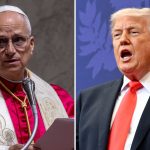
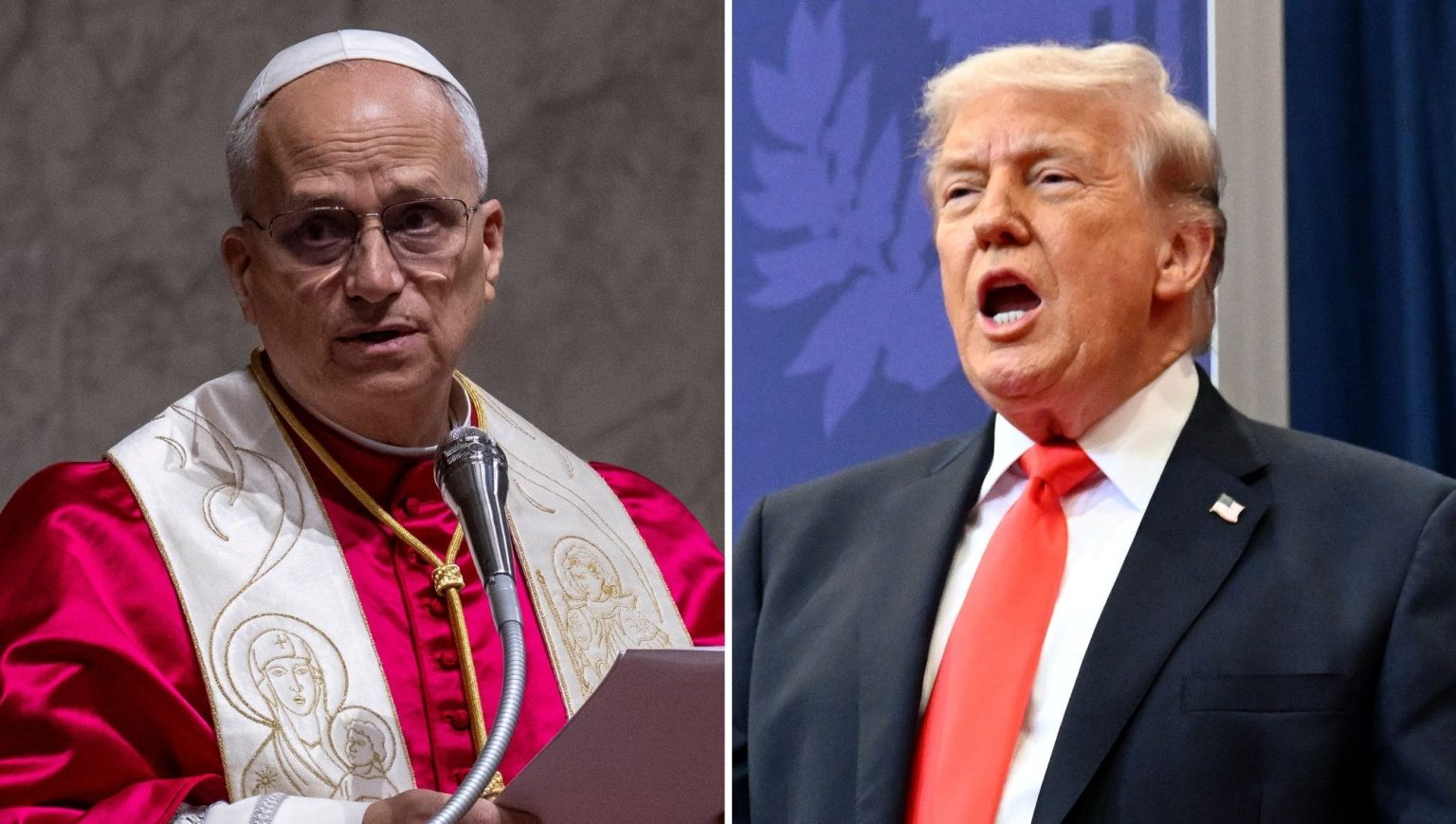
This latest diagnosis now adds a difficult personal challenge to his young papacy. Leo has shown an eagerness to engage with the public in a direct and transparent way, and his decision to announce the nodule and the planned surgery before the operation reflected that same approach. He has also not shied away from controversial political territory. In recent months, he made headlines when he responded to a claim by President Donald Trump that he was “endangering a lot of Catholics.” Speaking at Castel Gandolfo on Wednesday, May 6, Leo defended the Church’s role in the public square. “The mission of the Church is to proclaim the Gospel, to preach peace,” he said, according to reports. “If someone wants to criticise me for that, I accept it with humility.” The exchange underscored a pope who is willing to take strong public stands even in the face of criticism from powerful figures.
Now, as the Catholic faithful around the world pray for the Holy Father’s recovery, the immediate focus is on this operation and the days of healing that follow. The Vatican’s carefully worded announcement made clear that the diagnosis, while serious, was made at an early stage and with no complications during surgery. That combination offers room for hope, but it also leaves many questions unanswered. In the coming days, medical bulletins are likely to provide more details about the full pathology results and the pope’s condition. For now, the Church and the world wait, watching a historic leader take on yet another challenge with the same prayerful confidence he has displayed since his first day as the successor of Peter.