Hidden Listening Device in Company Office Leads to Arrest, FBI Investigation Underway
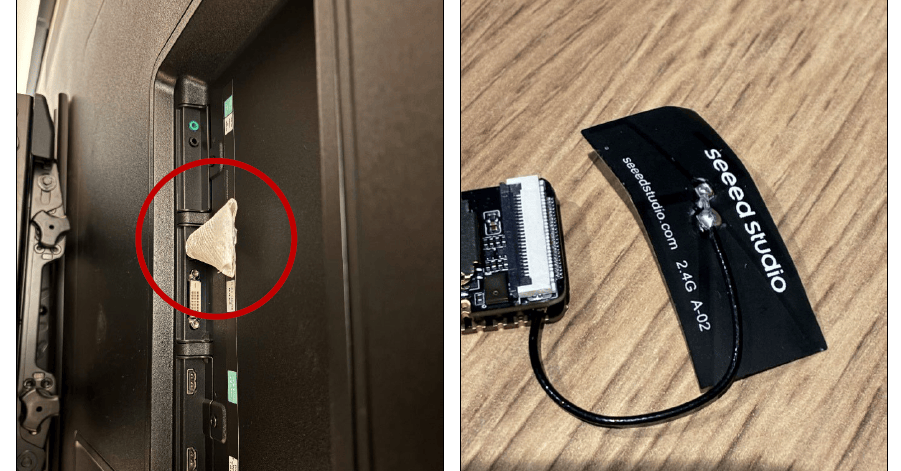
A major technology company has disclosed that it discovered a sophisticated hidden recording device inside one of its offices, leading to an FBI investigation and the arrest of a former employee. The company said it used its own artificial intelligence models to identify the device, trace its origin, and pinpoint the individual responsible for planting it.
In a statement released today, the company revealed that the device had been concealed within one of its office locations. The discovery came after security personnel noticed something unusual and launched an internal review. After examining the device, the company turned to its machine learning tools and internal models to analyze the object and understand how it had arrived there. The models helped investigators determine that a specific employee had placed the device several days before it was found.
The company immediately referred the matter to the Federal Bureau of Investigation. According to the statement, FBI agents and federal prosecutors moved quickly, and an arrest was made as a result. The investigation remains active, and the company says it is continuing to support law enforcement efforts.
“We discovered a sophisticated recording device that was hidden inside one of our offices,” the company stated. “We used our models to understand the device and where it had come from, identifying that a specific employee had planted it a few days earlier. We referred the matter to the FBI, and we’re grateful to the agents and prosecutors who moved quickly to make an arrest. The FBI’s investigation is ongoing and we will continue to support their work.”
No Evidence of Data Theft or Model Weight Exfiltration
The company was quick to emphasize that, at this stage, there is no indication that the employee involved accessed or stole sensitive company information. The statement said that investigators have found no evidence that the individual improperly accessed or exfiltrated model weights, source code, or customer data. Model weights are a particularly valuable form of intellectual property for any advanced technology company, as they contain the learned parameters that power artificial intelligence systems. The fact that no such theft has been detected is likely to reassure customers, partners, and investors who are concerned about the security of proprietary AI technology.
The employee in question has been terminated. The company did not disclose the identity of the former employee, nor did it provide details about the employee’s role or the nature of the recording device. Such details may become public as the FBI investigation unfolds.
A Matter of National Importance
The company framed the incident as more than just a routine workplace security matter. It described protecting its technology, data, and people as “a matter of national importance.” This language is not uncommon among leading AI companies, whose research and development efforts are increasingly viewed as strategically significant. Advanced AI models can have wide-ranging applications in fields such as defense, healthcare, finance, and infrastructure, and many governments around the world have begun treating cutting-edge AI technology as a critical national asset.
The company’s security program is designed to defend against a broad range of threat actors. The statement specifically mentioned insider risks, cybercriminals, and nation states. Insider threats, in particular, are among the most difficult security challenges for any organization. Employees already have legitimate access to facilities, systems, and data, which makes their malicious actions harder to detect than those of external attackers. Physical devices, such as hidden recording devices, add another layer of risk because they can escape the digital security measures that protect most corporate environments.
By acknowledging the threat of nation states, the company also signaled that it takes geopolitical espionage seriously. Technology companies are often targeted by foreign intelligence agencies seeking to steal intellectual property or gather competitive intelligence. The discovery of a listening device in an office could suggest an espionage attempt, although the company has not confirmed who may have directed the employee’s actions.
The Role of AI in Security
Perhaps the most notable aspect of the company’s statement is the way it described using its own models to investigate the incident. The company said it “used our models to understand the device and where it had come from.” This suggests that AI and machine learning are being applied not only to the company’s commercial products but also to its internal security operations.
In recent years, organizations have begun using machine learning to detect patterns of behavior that might indicate a security threat. These systems can analyze vast amounts of data, such as employee access logs, physical movement patterns, communication metadata, and even audio or video feeds, to identify anomalies. In this case, the AI models may have helped security teams trace the device to a specific employee by analyzing office access records, surveillance footage, or other digital trails.
The company called the case “an example of how AI can help address these sophisticated security threats.” It noted that its security program is designed to protect against a wide range of adversaries, and that AI played a key role in responding to this particular incident. This is a powerful message for a company that sells AI technology: it can present itself as a leader not just in building AI, but also in using AI to defend its own operations.
Understanding Insider Threats and Corporate Espionage
Corporate espionage is a serious concern for major technology companies. Hidden listening devices can be used to intercept conversations about product roadmaps, business strategies, legal negotiations, and technical secrets. Even a few minutes of recorded audio could contain information valuable to competitors, foreign governments, or malicious actors.
The fact that the device was planted by an employee makes this an insider threat case. Insider threats can take many forms, including data exfiltration, sabotage, fraud, and physical espionage. Employees who plant recording devices often do so because they are trying to gain a personal advantage, gather information for a competitor, or assist a foreign intelligence service. In some cases, they may act out of personal grievances or financial desperation.
Security experts recommend that companies invest in both digital and physical security measures to protect against insider threats. Digital measures include access controls, encryption, anomaly detection, and continuous monitoring of user behavior. Physical measures include security cameras, badge-controlled entry points, and regular sweeps of sensitive areas for hidden devices. The company in this case appears to have had effective measures in place, at least enough to detect the device and identify the individual responsible.
The FBI’s involvement is significant because it indicates that the case is being treated as a potential federal crime. Unauthorized interception of conversations can violate federal wiretapping laws, and theft of trade secrets is also a federal offense. If the employee is charged and convicted, they could face severe penalties, including prison time and fines.
A Broader Security Landscape
The incident also highlights the broader security landscape facing AI companies. As AI models become more powerful and more integrated into critical systems, they become more tempting targets for espionage. The term “model weights” has become a central concern in AI security debates. These weights are the numerical parameters that define how an AI model processes input and generates output. For large language models and other advanced AI systems, the weights are the result of enormous amounts of data, computing power, and research investment. Stealing model weights can give an adversary a copy of the technology without paying for the research and development.
In addition to model weights, companies must also protect their source code, proprietary datasets, and customer information. A leak of customer data can cause regulatory violations, reputational harm, and financial losses. A leak of source code can enable rivals to clone products or find vulnerabilities. A leak of model weights can undermine years of work and hand a competitive advantage to adversaries.
Because the company has stated that no such data was accessed, the immediate damage from this incident may be limited. However, the mere fact that a recording device was planted in an office suggests that adversaries are willing to go to great lengths to gather intelligence. Companies in high-tech sectors are increasingly hiring former intelligence officers, cybersecurity experts, and counter-espionage specialists to strengthen their defenses.
The Importance of Quick Action and Law Enforcement Cooperation
The company also praised the FBI and federal prosecutors for their swift response. In many corporate espionage cases, law enforcement agencies work closely with the victim company to preserve evidence, identify suspects, and make arrests. Early cooperation can be crucial. Once a suspect has been alerted to an investigation, they may destroy evidence, flee the country, or warn others involved. In this case, the FBI’s quick action appears to have prevented such complications.
The company’s decision to go public with the incident may also send a message to other potential bad actors: espionage will be discovered, investigated, and prosecuted. Transparency about security incidents can be uncomfortable for corporations, but it can also build trust with customers and partners. The company did not disclose any vulnerabilities that were exploited, and it gave no indication that the incident affected its operations.
Looking Ahead
As the FBI investigation continues, more details may emerge about the employee’s motives, the origin of the recording device, and the extent of the surveillance. It remains unclear whether the employee acted alone or was working with others. It is also unclear whether any recorded conversations were transmitted to third parties. These questions may be answered as federal prosecutors build their case.
For the company, the incident is a reminder that security threats are not always digital. Physical security measures, employee vetting, and routine counter-surveillance practices are just as important as firewalls and access controls. The company’s use of its own AI tools to solve the mystery is a testament to the power of technology to protect itself, but it is also a reminder that every organization must remain vigilant.
In the high-stakes world of artificial intelligence, where innovation and competition are intensifying, protecting trade secrets and proprietary technology has become a national security priority. The hidden recording device discovered in this office may be just one small episode in a larger struggle between those who create advanced technologies and those who seek to steal them.
For now, the company says it is focused on supporting the FBI’s investigation and reassuring its stakeholders. “We take protecting our technology, data, and people seriously, and as a matter of national importance,” the company said. “Our security program is designed to protect against a wide range of threat actors, from insider risks to cybercriminals to nation states, and this case is an example of how AI can help address these sophisticated security threats.”
The employee involved has been terminated, and the investigation continues.