Pope Leo XIV Diagnosed With Lung Cancer After Surgery to Remove Part of Right Lung
Pope Leo XIV has been diagnosed with cancer, according to a statement from the Holy See Press Office, following a planned surgical procedure to remove a portion of his right lung. The announcement, made on Tuesday, October 13, confirmed that the 71-year-old pontiff underwent thoracic surgery and that an examination performed during the procedure revealed the presence of lung adenocarcinoma.
The Vatican said the surgery went as intended and that medical teams were able to carry out the intervention using a minimally invasive video-assisted technique. “As planned, the Holy Father underwent thoracic surgery,” the official statement read. “To ensure a radical resection, the lower lobe of his right lung was removed using a video-assisted technique.”
The statement went on to explain that the diagnosis had been anticipated based on earlier examinations. “An intraoperative histological examination confirmed the diagnosis of lung adenocarcinoma, as suspected from the preoperative examinations,” the Vatican said.
Lung adenocarcinoma is the most common form of non-small cell lung cancer, also known as NSCLC, according to the Lung Cancer Foundation of America. Non-small cell lung cancer is generally considered slower-growing and more treatable than small cell lung cancer, particularly when detected early. The Vatican’s statement did not provide details about the stage of the cancer or whether additional treatment would be needed in the weeks ahead.
The surgery itself was described as successful and complication-free. The Holy See Press Office said the Pope spent approximately three hours in the operating room, although the surgical procedure itself lasted about 90 minutes. After the operation, Leo awoke normally and was moved to a room on the hospital’s tenth floor following a period of observation.
The health update came just two days after Pope Leo publicly revealed that he intended to undergo surgery to remove a lung nodule. Speaking outside St. Peter’s Square on Sunday, October 11, he told reporters that the nodule had been discovered at a very early stage and appeared well-defined. “It was detected at a very early stage and is well-defined,” Leo said, according to CNN. “The doctors deem it advisable to intervene, so, following their advice, I have decided to undergo surgery to remove it.”
Pulmonary nodules are small areas of abnormal tissue that can form in the lungs. According to the Cleveland Clinic, the vast majority of pulmonary nodules are noncancerous, though some may be malignant or have the potential to become malignant over time. Many pulmonary nodules cause no symptoms at all and are often discovered incidentally during imaging tests for unrelated conditions. In certain cases, however, they can be accompanied by chest pain, shortness of breath, a chronic cough, fatigue, or recurring respiratory infections. Prior to Tuesday’s announcement, further details about Leo’s condition had not been publicly revealed, and the Vatican had not indicated whether doctors suspected cancer before the operation.
According to CNN’s earlier reporting, the Pope’s procedure was scheduled for early in the week, and the Vatican was expected to continue its usual operations while he recovered. Tuesday’s confirmation of the cancer diagnosis, however, has drawn renewed attention to the health of the leader of the Catholic Church and raised questions about the demands of the papacy during a period of recovery and potential future treatment.
Pope Leo, born Robert Francis Prevost, has led the Catholic Church since May 2025, when he was selected by a conclave of international cardinals to succeed Pope Francis. Francis had died one month earlier at the age of 88, after a series of health struggles in his final years, including a bout of double pneumonia. Leo’s election was historic: he is the first American-born pope in the history of the Catholic Church, and he took the name Leo XIV in honor of a long tradition of papal naming.
In his first speech after his election, Leo addressed the cardinals who chose him and spoke of his new role with humility and a clear sense of mission. “Thank you to my Cardinal brothers who chose me to be the Successor of Peter and to walk together with you as a united Church searching all together for peace and justice, working together as women and men, faithful to Jesus Christ without fear, proclaiming Christ, to be missionaries, faithful to the gospel,” he said. He added, reflecting on his Augustinian roots, “I am a son of Saint Augustine, an Augustinian. He said, ‘With you I am a Christian, for you a bishop.’ So, may we all walk together towards that homeland that God has prepared for us.”
Days after his election, Pope Leo celebrated his first papal Mass as the head of the Catholic Church. His homily was impassioned and wide-ranging, touching on the difficulties facing contemporary society and the importance of faith in responding to those challenges. “You have called me to carry that cross and to be blessed with that mission, and I know I can rely on each and every one of you to walk with me as we continue as a church, as a community, as friends of Jesus, as believers, to announce the good news to announce the Gospel,” he said during the service.
He continued with a warning about the consequences of a world that has drifted away from religious belief. “A lack of faith is often tragically accompanied by the loss of meaning in life, the neglect of mercy, appalling violations of human dignity, the crisis of the family, and so many other wounds that afflict our society,” he said.
Now, just over a year and half into his papacy, Leo faces one of the most personal challenges of his tenure. Health issues affecting the pope have always been a matter of deep interest to the global Catholic community and beyond, and the Vatican has generally sought to balance transparency with the Pope’s right to privacy regarding his medical care. In this case, the Holy See delivered a clear and detailed update, confirming both the surgery and the underlying diagnosis in a single statement.
The confirmation of lung adenocarcinoma is particularly significant because of the Pope’s age and the location of the cancer. The removal of the lower lobe of the right lung represents a major surgical procedure, even when performed with modern video-assisted techniques that tend to reduce recovery time and postoperative pain compared with traditional open surgery. Because the Vatican said the operation was successful and free of complications, attention is expected to shift toward Leo’s recovery and any follow-up treatment plan his medical team may recommend.
The Pope’s schedule in the coming weeks may need to be adjusted to allow for rest and rehabilitation. While the Vatican has not announced any formal changes to his public calendar, officials said earlier this week that the Vatican would continue to function as usual during his recovery. That suggests that day-to-day operations within the Holy See will proceed normally, even if the Pope himself is less visible in the immediate aftermath of the operation.
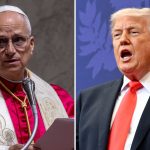
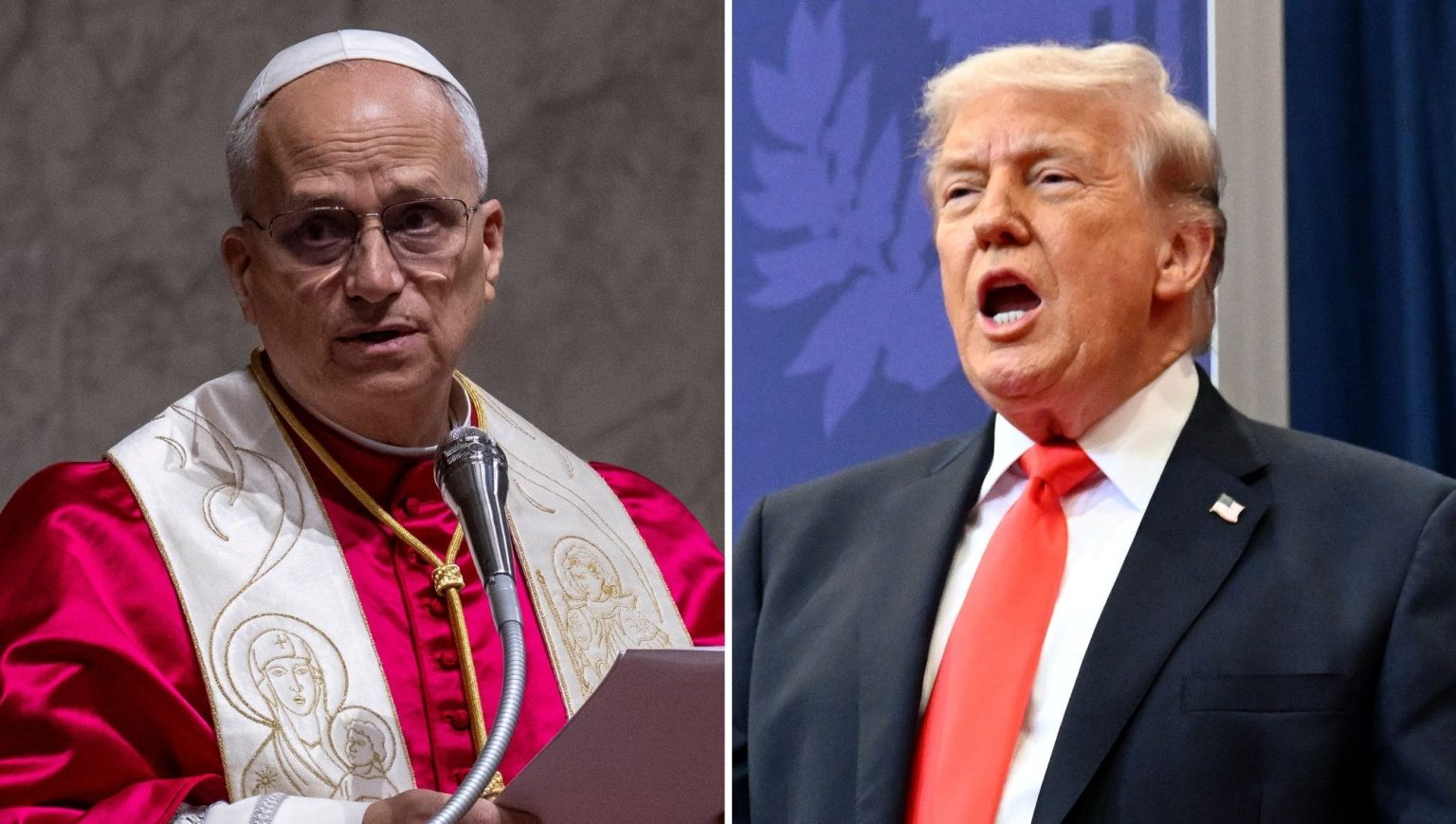
News of the cancer diagnosis is likely to provoke an outpouring of prayers and good wishes from Catholics around the world. The Pope has been an active and visible figure since his election, frequently addressing global issues, meeting with world leaders, and speaking out on matters of peace, mercy, and social justice. His recent public interactions have also included moments of tension, including a public disagreement with former President Donald Trump, whom Leo appeared to respond to after Trump claimed the Pope was “endangering a lot of Catholics.” During a speech in Castel Gandolfo, Italy, in May, Leo defended the mission of the Church in terms that seemed directly aimed at those criticisms. “The mission of the Church is to proclaim the Gospel, to preach peace,” he said at the time.
As the Pope recovers from surgery and begins to confront the reality of a cancer diagnosis, the Vatican is expected to release further updates if significant changes in his condition occur. For now, the message from the Holy See is one of cautious reassurance: the operation was successful, the diagnosis was confirmed, and the Pope is resting under medical supervision. The Catholic world will now wait, watch, and pray for a leader who, since his election, has been determined to walk alongside the faithful in difficult times.