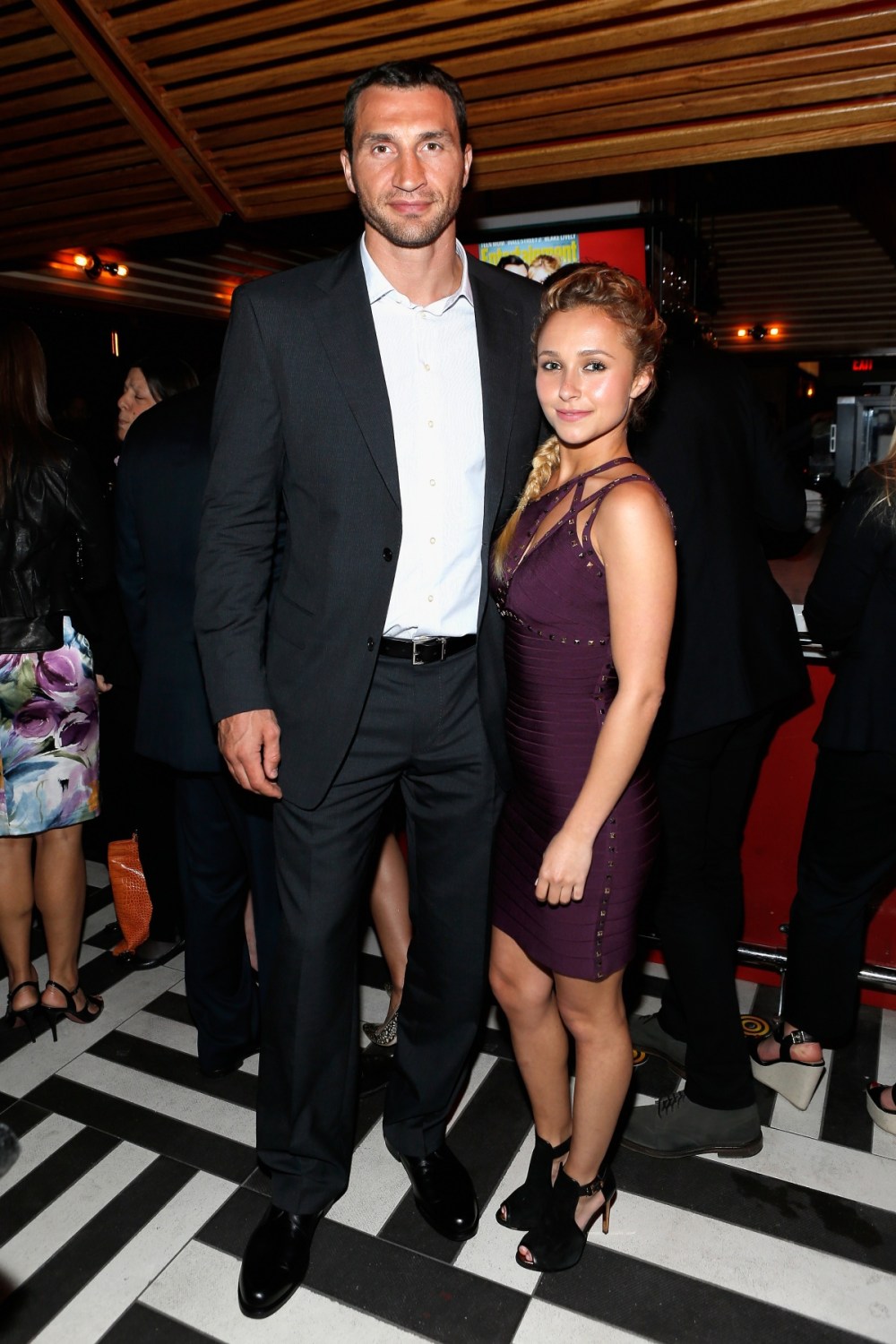
Wladimir Klitschko Steps In to Cover Hayden Panettiere’s Tax Bill Amid Estate Battle
More than seven weeks after Hayden Panettiere’s sudden death, her former fiancé Wladimir Klitschko is quietly trying to protect the financial legacy she left behind — and he is reportedly putting his own money on the line to do it. According to court documents obtained by TMZ on Wednesday, October 7, the retired boxing champion has stepped in to cover a portion of the late actress’s tax debt out of his own pocket, hoping to prevent her estate from hemorrhaging money before a personal representative is formally appointed.
The documents show that Klitschko, 50, claims he is advancing $30,000 of his personal funds to pay Panettiere’s 2025 individual state and federal income tax returns. Those returns are reportedly due on October 15. Klitschko believes that if the bill goes unpaid, the estate will be hit with interest and penalties that could eat away at assets meant for their 11-year-old daughter, Kaya. He has indicated that he will seek reimbursement from the estate once it is officially established and an administrator is in place.
It is an unusual move, made all the more striking by the complicated legal situation surrounding Panettiere’s death. The actress, best known for her roles in Heroes and Nashville, died on August 16 at the age of 36. The Greenville County Coroner’s Office in South Carolina later ruled her death accidental, attributing it to the toxic effects of fentanyl, 4-ANPP, alprazolam, methocarbamol and quetiapine. In the weeks since, the administration of her estate has become a point of focus, with Klitschko taking an active role in trying to secure Kaya’s financial future.
Us Weekly has reached out to Klitschko’s attorneys for additional comment, but the filings themselves paint a clear picture: Klitschko is trying to stabilize an estate that is, at the moment, largely unmanaged. He is not seeking to control the spotlight or draw attention to himself. Instead, his legal maneuvering appears centered on one goal — making sure that his daughter inherits whatever Panettiere left behind without it being drained by debt, mismanagement, or the slow grind of probate court.
Panettiere and Klitschko had a long and storied relationship. They were together on and off from 2009 to 2018, and they got engaged in 2013. Their daughter Kaya was born in 2014. Despite their split, Klitschko has remained a steady presence in Kaya’s life, and his recent actions suggest he is determined to protect her interests even after Panettiere’s passing. The couple’s relationship was often in the public eye, and Panettiere had spoken openly over the years about the challenges they faced, including the emotional toll of distance and her own struggles with postpartum depression.
Klitschko’s latest court filing is just one piece of a larger legal effort. In September, he formally asked the court to be named guardian of Kaya’s estate. His stated reason was straightforward: he wanted to have the legal standing to file documents and nominate a proposed administrator on his daughter’s behalf. By seeking guardianship of the estate, Klitschko would be in a position to protect Kaya’s rights to anything Panettiere left behind, and to make sure that assets were not lost or squandered while the courts worked through the process.
This week, Klitschko also filed court documents demanding answers from law enforcement about personal items belonging to Panettiere that reportedly ended up in a pawn shop. The retired athlete has expressed concern that valuables — including jewelry — may be sold or otherwise lost forever if action is not taken quickly. According to the court filings, the pawn shop declined to disclose specific information about the items unless contacted by law enforcement. Klitschko warned that there is “a real and continuing risk” that any remaining items could be “sold, transferred or otherwise rendered unrecoverable.”
The language in the filing is careful, legalistic, and pointed. Klitschko noted that no personal representative of Panettiere’s estate has yet been appointed. As a result, he argued, no one currently has the authority to request law enforcement assistance in investigating the recovery of Panettiere’s property. That leaves her belongings in limbo and, more importantly, puts Kaya at a financial disadvantage. Because Kaya is Panettiere’s sole heir, any loss of property or value is a direct hit to her inheritance.
This is not the first time Klitschko has raised concerns about how Panettiere’s affairs are being handled. The former boxer has been methodical in his approach, and his legal filings suggest a man who is thinking carefully about the long term. He appears less interested in titles or public sympathy than in making sure that the administrative chaos that often follows a sudden death does not cause irreversible damage.
The circumstances surrounding Panettiere’s death have made the situation even more difficult. In September, a representative for the actress told Us Weekly that the investigation into her death was “still ongoing” and that the case was “complex.” While the coroner’s office ruled the death accidental, questions have lingered about her final days, her state of mind, and the people who may have been around her. One report indicated that Panettiere had texted an alleged drug dealer before her death, adding another layer to the public’s fascination and grief.
For Klitschko, though, the focus seems to be on moving forward. In his first public statement after Panettiere’s death, he offered a heartfelt tribute that acknowledged both her talent and the struggles she faced. “Hayden was, although no longer my partner, an important part of my life and the mother of our daughter, Kaya,” he wrote on Instagram on August 18. “She built an incredible career through immense talent, while also facing the darker sides of a very demanding industry. Nothing will erase the times we shared or the place she had in our lives.”
The statement was measured and respectful, striking a tone that suggested a man who had long since made peace with their complicated history. It also underscored something important: even though Panettiere and Klitschko had ended their romantic relationship years ago, they remained connected through their daughter and through the shared history that no breakup can fully erase.
Now, with Panettiere gone, those ties are taking on a new significance. Klitschko is no longer just a supportive father. He is, in effect, the adult closest to the situation who is willing to take action. His decision to pay $30,000 toward Panettiere’s tax bill is not a grand gesture meant for headlines. It is a practical, necessary step to prevent the estate from falling into a cycle of debt and legal complications before anyone else has the authority to act.
Tax debts can be surprisingly damaging to an estate, especially when there is no one authorized to manage finances. Interest accrues, penalties stack, and the bureaucracy of probate can drag on for months or even years. By stepping in and covering the immediate tax obligation, Klitschko is effectively buying time. He wants to make sure that when the estate is finally organized, there is something left to preserve rather than a pile of debt that has to be untangled.
There is, of course, a deeper emotional layer to all of this. Kaya is only 11 years old. She has lost her mother in a sudden and tragic way. She is too young to fully understand the legal and financial decisions being made around her, and too young to advocate for her own interests in court. Klitschko is clearly trying to fill that gap, not just as a father but as someone who understands that grief does not stop the bills from coming due.
The pawn shop issue adds another troubling dimension. It is hard enough for a child to lose a parent; it is worse to imagine that pieces of her mother’s life were sold off before anyone could step in and say no. Klitschko’s demand for answers suggests he is not willing to let those items disappear quietly. He wants to know how they got there, who brought them, and what can still be recovered. Those are not the questions of a man looking to make a legal point. They are the questions of someone trying to protect a child’s inheritance and memory.
As the case moves forward, the courts will decide whether Klitschko is formally granted the authority he is seeking. But in the meantime, his actions have already sent a message: he is not going to sit back and watch while the financial and personal legacy of his daughter’s mother is left unprotected. Whether he is reimbursed or not, he has made his priorities clear. For Kaya, that may end up meaning more than any legal ruling ever could.