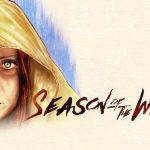
George A. Romero’s Forgotten Feminist Occult Drama: Revisiting Season of the Witch
George A. Romero’s name is inseparable from the living dead. With Night of the Living Dead, he changed horror forever. But his career was not a single-minded march from one zombie outbreak to another. Between that landmark and The Crazies, his 1973 outbreak thriller, Romero made two smaller, stranger films: There’s Always Vanilla and Season of the Witch, originally released as Hungry Wives. The first remains a footnote. The second is a lost treasure that has slowly been rediscovered.
Hungry Wives was designed to be an exploitation movie. The studio marketed it as a softcore sex picture, something to cash in on the post-counterculture market. The title itself promised something lurid: hungry wives, unsatisfied women, forbidden appetites. But Romero didn’t deliver the movie his distributors expected. There is minimal nudity, exactly one sex scene, and a great deal of conversation. The film is not erotic in the conventional sense. It is psychological, domestic, and oddly intellectual. Unsurprisingly, it flopped in 1973. The distributor had already sabotaged it, cutting roughly 40 minutes from Romero’s original 130-minute cut. What remained was an 89-minute feature that satisfied neither horror fans nor exploitation audiences. It was only after Dawn of the Dead made Romero a brand name that the film was resurrected under the title Season of the Witch.
The restoration history is bittersweet. Romero’s full 130-minute cut is lost. But parts of it have been recovered and restored, and the film now runs 104 minutes. That is still not the complete version Romero envisioned, but it is enough to reveal what he was actually doing. The reason Hungry Wives failed is not just that the distributor chopped it up. It’s that Romero made something far more interesting than a skin flick: a slow-burn feminist drama in which the occult is almost beside the point.
The protagonist is Joan Mitchell, a woman trapped in a marriage that is emotionally abusive and spiritually dead. She is expected to be a submissive housewife, to maintain the home, to smile, to obey. Her husband treats her with casual cruelty. Her life has become a series of repetitive, meaningless routines. Joan’s hunger is not sexual, or not only sexual. It is a hunger for autonomy, for purpose, for a self of her own. She tries therapy first. Talking, it turns out, is not enough. Then she discovers witchcraft. The occult offers her something the mundane world refuses: power over her own life.
Romero treats witchcraft not as a source of evil but as a mechanism of liberation. The rituals are real enough to create atmosphere, but the film is less interested in supernatural mechanics than in Joan’s transformation. She is not possessed by demons. She is awakened. The coven she finds is less a satanic conspiracy than a support group for women who have been denied agency. The spells are less about summoning dark forces than about reclaiming control. In that sense, Season of the Witch is a horror movie about the horror of patriarchy. The scariest thing in the film is not a monster; it is the slow suffocation of a woman’s spirit.
The film has obvious flaws. The production value is low. It was made for about $100,000, which is roughly $800,000 in today’s money. That is a tiny budget even by independent standards. The acting is wildly uneven. Jan White, as Joan, gives an excellent performance, nuanced and believable, carrying the film on her shoulders. But the supporting cast is a mixed bag. Some performers appear to be reading from cue cards. Others chew the scenery with an intensity that approaches Al Pacino at his most theatrical. The tonal imbalance can be jarring. One moment is naturalistic, the next is camp.
And yet, despite these problems, there is something compelling about Romero’s direction. He was working outside the horror genre he had helped create, and the change of pace seems to have liberated him. Season of the Witch relies on dialogue rather than action. It is a talky film, sometimes too talky. But Romero stages those conversations with a keen eye for domestic claustrophobia. The Mitchell household feels like a cage. The camera lingers on Joan’s face, on the walls that close in around her, on the small rituals of housework that define her days. The atmosphere is tense and, at times, hallucinatory. There are dream sequences, or at least dreamlike passages, that blur the line between reality and imagination. The film’s low budget becomes an advantage: it gives everything a rough, grainy, documentary-like texture, as if we are watching a real woman’s breakdown and rebirth.
The ending is somewhat predictable. Anyone familiar with feminist horror or occult drama will see it coming. But predictability is not the same as unsatisfying. The conclusion feels earned. After all the talk, all the therapy, all the small humiliations and quiet rebellions, Joan’s final act is a release. It is not a triumph in the traditional sense, but it is a liberation. Romero does not punish her for seeking power. He celebrates her.
Season of the Witch is not a lost masterpiece. It is too messy, too uneven, too compromised by its production history to be called that. But it is a fascinating artifact, a key piece of Romero’s evolution as a filmmaker. It shows that his interests were never limited to zombies. From the beginning, he was interested in social structures, in the ways institutions crush individuals, in the monsters that are not supernatural but everyday. Night of the Living Dead used ghouls to examine racism and family breakdown. Dawn of the Dead used a shopping mall to mock consumer capitalism. Season of the Witch uses witchcraft to explore gender, marriage, and female agency. It is a feminist film, and a surprisingly progressive one for 1973.
The movie’s title, Season of the Witch, evokes the Donovan song of the same name, and it fits. The song is eerie, hypnotic, and open-ended, much like the film. The original title, Hungry Wives, was a marketing gimmick. The later title is a better description. This is a film about a season of change, a time when old identities are shed and new ones are born. It is about a woman who stops being hungry for what she is supposed to want and starts being hungry for what she actually needs.
For years, Season of the Witch was difficult to see. It circulated in poor-quality versions, often under its original title, and was treated as a curiosity. The restoration has changed that. The longer cut, even if incomplete, gives the film room to breathe. It allows the slow-burn pacing to work. It makes Joan’s journey feel more substantial. It is still not the movie Romero originally made, but it is close enough to appreciate his intentions.
Anyone interested in Romero’s career should seek it out. Fans of feminist horror should seek it out. Students of exploitation cinema should seek it out. It is available to stream on Mubi and Kanopy, which means it is finally accessible to a wide audience. That is a good thing. Season of the Witch deserves to be seen, not because it is perfect, but because it is brave. It is a film about a woman finding her own voice, made by a director who was never afraid to go against expectations. Romero will always be remembered as the father of the modern zombie movie. But he was also, for a brief moment, the chronicler of a witch. That witch deserves her season.