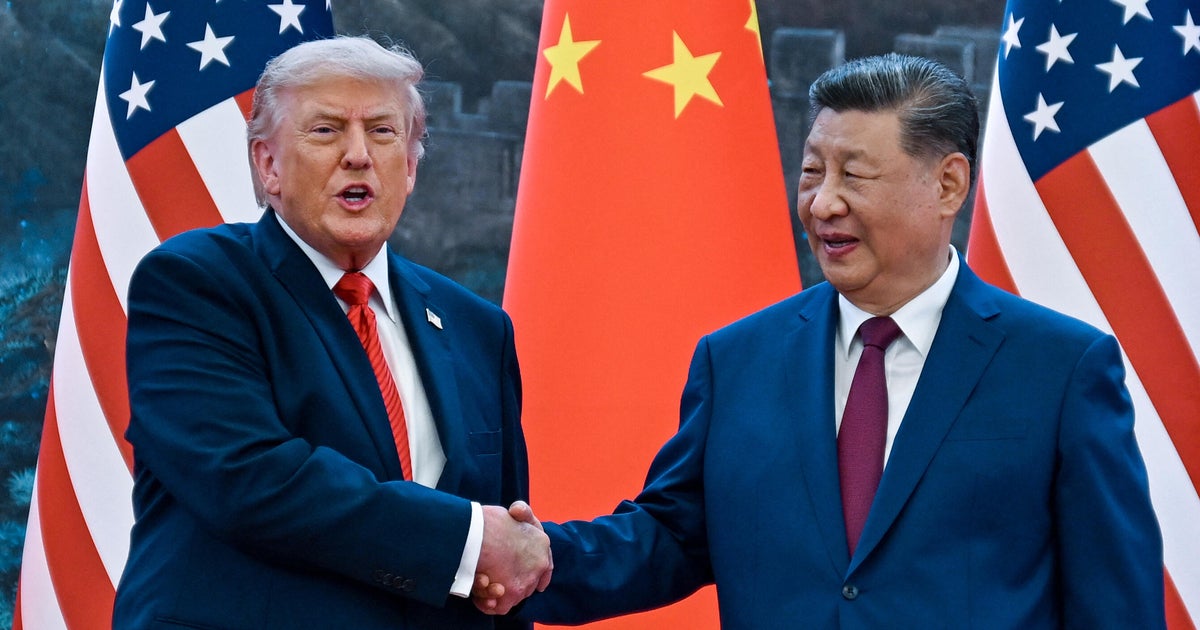
Recent discussions between U.S. President Donald Trump and Chinese President Xi Jinping have held the world’s attention as the two largest global economies attempted to ease economic tensions during a high-profile summit last week. Despite optimistic declarations from both nations, experts remain skeptical about the scarcity of concrete trade agreements emerging from the talks.
The summit, heralded by some as a potential turning point in strained U.S.-China economic relations, concluded without the announcement of any substantial trade deals, leaving more questions than answers about the future trajectory of trade between the two superpowers. Wendy Cutler, a former negotiator for the Office of the U.S. Trade Representative and now a senior vice president at the Asia Society Policy Institute, expressed disappointment, noting, “I was expecting China to announce mega purchases of U.S. agriculture, energy, and airplanes. So far, it doesn’t seem like Trump and his team have a lot to show for the visit.”
In stark contrast to the lack of detailed agreements, President Trump touted the summit as a success, asserting that it had yielded “fantastic trade deals.” He praised the overall outcome of his visit, describing it as an “incredible visit,” while Chinese officials signaled a willingness to open new avenues of cooperation with the U.S. Nonetheless, the lack of specific details provided by either side left analysts like David Meale, head of the China practice at Eurasia Group, in a state of anticipation. Meale stated, “It looks like both sides are saying they got somewhere, but we are not there yet—we are still waiting.”
One of the more definitive outcomes referenced by President Trump involved Boeing, the American aerospace giant. Trump claimed that China had agreed to purchase 200 aircraft, with potential future purchases totaling up to 750 planes. Boeing representatives confirmed viewing the summit as successful, specifically noting the “major goal of reopening the China market to orders for Boeing aircraft.” However, this initial commitment, while significant, still fell short of some analysts’ expectations, as noted by investment advisory firm, Capital Economics. The resultant underwhelming investor response saw Boeing shares dropping by 3.8%.
Apart from aerospace, Trump highlighted agreements purportedly involving sizable purchases of U.S. oil and agricultural products by China, including what he claimed were “billions of dollars of soybeans.” A White House official indicated that the summit had yielded important agricultural agreements that would boost U.S. exports to China. The White House released a fact sheet on May 17th touting these agreements as promoting “strategic stability” based on “fairness and reciprocity,” claiming China had committed to purchasing at least $17 billion in U.S. agricultural products over the next three years and had restored market access for numerous U.S. beef facilities.
However, energy and trade specialists have advised caution. Experts such as Erica Downs, a senior research scholar at the Center on Global Energy Policy at Columbia University SIPA, noted that while positive affirmations from China regarding energy purchases would please the U.S. administration, such statements do not necessarily equate to binding commitments. Likewise, the memory of past verbal agreements that failed to materialize further fuels skepticism. A notable case pointed out was the 2017 agreement during Mr. Trump’s visit to China, where China Energy Investment Corporation expressed intentions to invest nearly $84 billion in shale gas and chemical manufacturing projects in West Virginia—a plan that disintegrated amid escalating U.S.-China tensions.
Despite these uncertainties, there remains a cautious optimism around the potential long-term benefits of continued dialogue between the two nations. The meetings are seen by some, like Wendy Cutler, as integral to establishing a new framework for economic engagement. This includes the creation of new mechanisms like a Board of Trade to resolve trade disputes and a Board of Investment to discuss investment issues. Furthermore, the U.S. has highlighted Chinese commitments to address concerns around the accessibility of rare earth materials—critical inputs for a range of advanced technologies.
Even as these dialogues unfold, the overarching narrative is one of cautious progress punctuated by significant uncertainties. With tariffs still heavily imposed by the U.S. at a rate of about 32%, and China maintaining an average tariff of around 10% on U.S. exports, the economic tensions are far from resolved. What remains clear is that both nations recognize the importance of stabilizing their trade relationship, and while immediate outcomes may fall short of transformative, the ongoing engagement could pave the way for more substantive agreements in the future.