In a landmark decision issued on a calm Thursday in Washington, Judge Colleen McMahon of the U.S. District Court ruled that the Trump administration’s broad cancellation of humanities grants, affecting significant scholarly associations, was both unlawful and unconstitutional. This ruling marked a crucial turning point in a case that has significant implications for the administration of federally approved funding and the execution of congressional mandates.
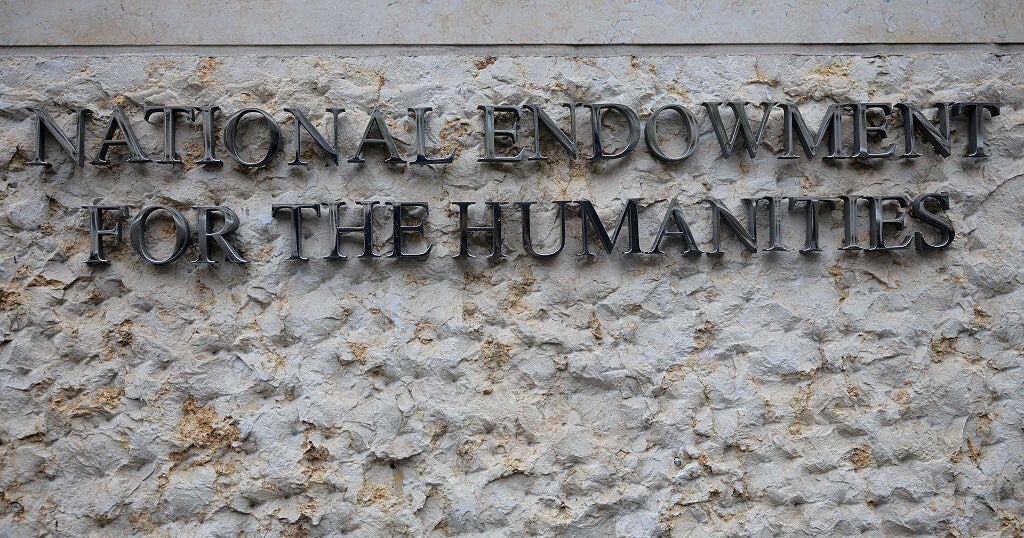
In the spring of 2025, the newly formed Department of Government and Efficiency (DOGE), under directives likely stemming from the upper echelons of the Trump administration, abruptly terminated funding for thousands of grants. These grants had previously been administered by the National Endowment for the Humanities (NEH) and were crucial for the operational and project-based funding of various scholarly bodies including the American Council of Learned Societies, the American Historical Association, and the Modern Language Association of America.
The decimation of these grants prompted immediate legal action. In May 2025, the affected organizations collectively filed a lawsuit against the DOGE, setting the stage for a legal showdown that culminated in McMahon’s recent decision. The plaintiffs contended that the executive branch had overstepped its bounds dramatically. The essence of their argument was that the administration executed these terminations not out of legal necessity but rather as a form of policy preference, masking ideological motivations behind the veneer of bureaucratic reorganization.
The crux of their argument centered around a potent accusation: that the DOGE officials had no constitutional authority to obstruct, modify, or delay the disbursement of funds that had already been earmarked by an act of Congress. Such actions were deemed not only an overreach of executive power but a direct affront to the foundational principles of U.S. governance which clearly delineates the separation of powers, particularly with regards to fiscal responsibilities.
Judge McMahon’s decision was both detailed and damning. She noted that the DOGE’s actions to terminate these grants were in direct violation of the First Amendment and the equal protection clause of the Fifth Amendment. Furthermore, McMahon highlighted the absence of statutory authority that would allow such a broad cancellation of already approved grants. The ruling also issued a permanent injunction, effectively barring the administration from enforcing these terminations.
Adding to the complexity of the situation was how the terminations were determined. According to McMahon’s 143-page detailed ruling, the decision-making process employed by the DOGE was shockingly unsophisticated and alarmingly perfunctory. Remarkably, officials admitted during the litigation that they had not engaged extensively with the grant applications or supporting materials. Instead, they used an AI tool, ChatGPT, to generate post-hoc justifications for their decisions, primarily arguing these were necessary for promoting diversity, equity, and inclusion—grounds that seemed more reflective of a preemptive cover for their actions than a substantive policy goal.
More troubling, according to the court’s findings, was the composition of the DOGE team tasked with overseeing this massive operational shift. The team was predominantly made up of individuals in their twenties, possessing minimal experience, particularly in areas pertinent to humanities and profound academic endeavors. This lack of experience and the consequential mishandling of grant evaluations not only undermined the integrity of the process but also suggested a cavalier disregard for the specialized nature of the humanities fields impacted by these grants.
The ruling has now set a strong legal precedent that aims to curb the potential for executive overreach into areas traditionally and explicitly managed by Congress. It underscores the judiciary’s role in upholding the constitutional balance of power and ensuring that federally funded programs operate within the bounds of the law and established procedures.
The reaction to the ruling has been diverse. The scholarly communities have expressed overwhelming relief and support for the decision, viewing it as a vindication of not just their legal arguments but of the broader principle that federally supported academic inquiry should be free from capricious political interference. On the other hand, representatives from the Trump administration, particularly those linked to the DOGE, have been notably critical of the decision, hinting at potential appeals but providing little in the way of detailed critique of the legal reasoning McMahon provided in her meticulous judicial opinion.
Moving forward, the implications of this case extend beyond the immediate financial reprieve and institutional stabilization it offers the affected organizations. This ruling may well reshape how future administrations approach the intersection of policy preference and legally mandated spending, potentially leading to a more scrutinous examination of executive actions that brush against established legislative intent. Moreover, this incident will likely prompt a reevaluation of the roles and responsibilities entrusted to new bureaucratic entities like the DOGE, ensuring that they operate not merely as extensions of executive will but as responsible stewards of public funds in alignment with broader governmental obligations and constitutional limits.