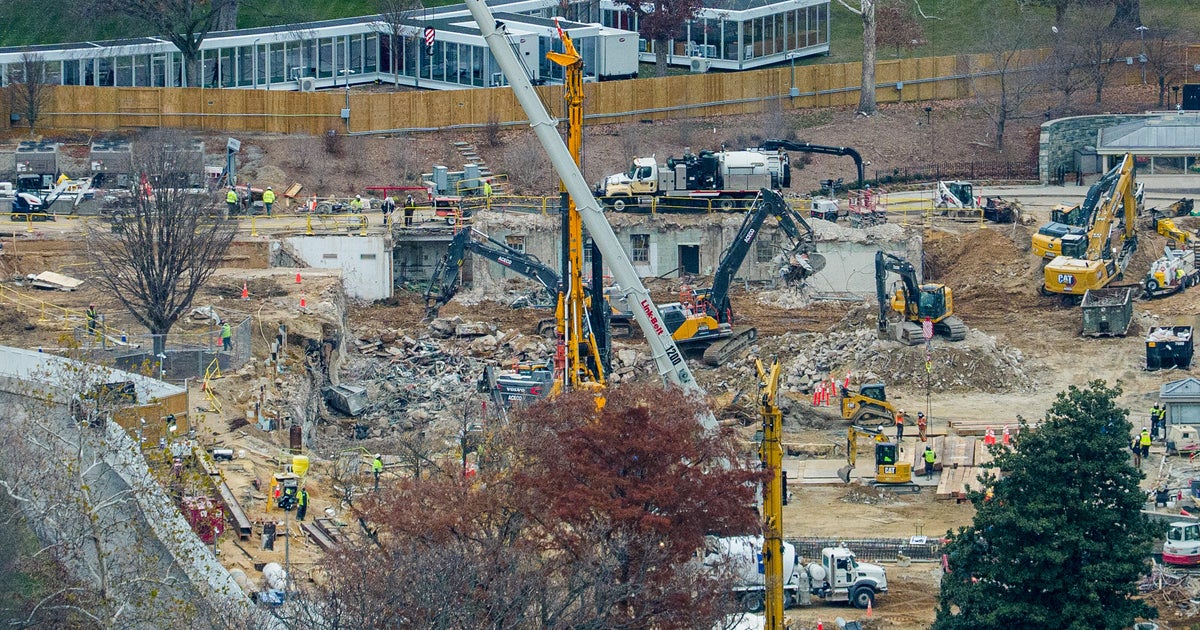
In a recent push for legislative reform, Democratic Representative Jamie Raskin from Maryland announced his intention to introduce a significant bill that would alter the current protocols for renovations at the White House. This action was inspired by what many observed during the last administration, particularly the ambitious ballroom project spearheaded by former President Donald Trump.
Currently exempt from the stringent reviews mandated by the National Historic Preservation Act for other federal projects, the White House has seen relatively unchecked modifications under this exemption. This lack of oversight became a point of contention during Trump’s presidency, especially following the initiation of a substantial 90,000-square-foot ballroom that was privately funded and is projected to cost approximately $300 million. The construction began with the controversial demolition of the historic East Wing in late October. Critiques mounted when Trump described the demolition as respectful to the existing structures, claiming it would be “near but not touching” the original building.
Rep. Raskin’s proposed bill, dubbed the “People’s White House Historic Preservation Act,” seeks to enforce a “Section 106 review” for any future changes to the White House. This review entails a thorough assessment before any groundbreaking occurs, evaluating the potential impacts on the historic qualities of the building. Furthermore, it aims to involve public opinion in the decision-making process, ensuring a democratic approach to any modifications of such a historically and nationally significant property.
Raskin has critiqued the current presidential privileges, arguing against the notion that a president can unilaterally decide on modifications to the White House without public or institutional oversight. His poignant critique came in a response to comments made by Trump regarding the ease with which he was able to initiate construction projects at the White House, which he implied were as convenient as any personal property renovations due to his presidential status.
Aside from internal dialogues, only a few schematic designs of the ballroom have been circulated at select events, with minimal formal examination conducted outside the immediate circle of the White House. However, this might soon change as the administration announced that consultations are slated to start with the National Capital Planning Commission and the Commission of Fine Arts. These bodies oversee federal projects in Washington, D.C., and although the administration declared no legal obligation to engage these entities, starting consultation is a movement towards transparency.
Given the political climate, with Republicans holding major control in the House, Raskin admits that passing this legislation over might face significant obstacles. Despite this, he remains hopeful that the bipartisanship for public-private boundaries will motivate some Republican legislators to support the cause.
Back in December, during a meeting of the National Capital Planning Commission (NCPC), Chairman Will Scharf, who also holds a White House position, commented on the limited jurisdiction over demolition projects by the NCPC. He emphasized their focus on “visible architecture” and above-ground structures, hinting at future supportive engagements once above-ground construction commences.
Furthermore, the recent legal action taken by the National Trust for Historic Preservation has escalated the urgency of the issue. The Trust filed a lawsuit aimed at halting further construction, arguing that no president should have the unilateral right to significantly alter the White House without a thorough review process. They assert that such actions must involve public engagement and adhere to legal standards set for preserving federal property.
An upcoming court hearing scheduled in Washington may provide further clarification on the lawfulness of the demolition and construction activities thus far.
This unfolding situation not only highlights the tension between executive privilege and statutory law regarding national heritage sites but also ignites a broader discussion on historical preservation, executive powers, and democratic involvement in the U.S.
The discourse following these developments will likely influence public perception and legal precedents on how modifications to federally significant buildings are handled in the future. The resolution of this legal challenge and the potential passage of Raskin’s bill could mark a pivotal shift in the protocols governing changes to one of the most iconic residences in the nation.