In a significant escalation of tensions, President Trump has announced a strategic move to intensify economic and logistical pressures on Venezuela by calling for a “total and complete blockade” on all oil tankers operating under sanctions that either enter or depart from Venezuela. This announcement comes as the latest action in a series of forceful measures aimed at crippling the Venezuelan government under President Nicolás Maduro.
During a statement made on Truth Social, President Trump underscored the severity of the blockade, stating, “Venezuela is completely surrounded by the largest Armada ever assembled in the History of South America.” He further emphasized the potential expansion and impact of this military presence, saying, “It will only get bigger, and the shock to them will be like nothing they have ever seen before — Until such time as they return to the United States of America all of the Oil, Land, and other Assets that they previously stole from us.”
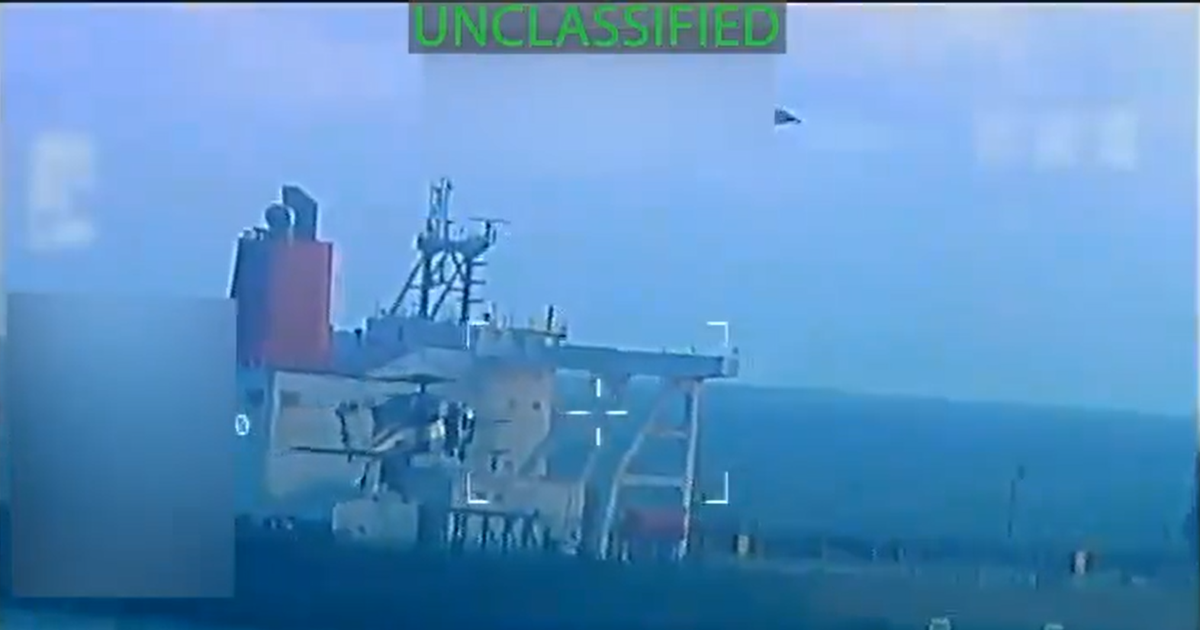
This aggressive posture is underscored by recent actions taken by the U.S. military. Last week, an operation was carried out where a 20-year-old oil tanker, previously sanctioned by the U.S. Treasury for its involvement in an oil smuggling network that benefited the Iranian military and its regional proxies, was seized. This operation involved armed personnel who boarded the vessel via helicopters shortly after it left Venezuelan waters.
The Venezuelan government was quick to denounce the seizure, labeling it as “robbery” and “piracy,” striking a sharp contrast with the U.S. administration’s narrative. In response to the proposed blockade, Venezuela issued a statement late Tuesday, terming it a “grotesque threat” and a stark violation of international law. The statement also accused the Trump administration of attempting to “appropriate the oil, land, and minerals of the country through gigantic campaigns of lies and manipulations.”
As tensions escalate, the economic implications of these actions have been a focal point of discussion. The White House National Economic Council Director, Kevin Hassett, addressed concerns regarding potential impacts on global oil prices during an interview on CBS News’ “Face the Nation.” Hassett explained that while future boat seizures might seem provocative, they are unlikely to affect global oil prices significantly. He hinted at the administration’s broader strategy to curtail what he described as a “black market for oil” that Venezuela, along with other heavily sanctioned states like Russia and Iran, continue to exploit.
Venezuela, recognized for its vast petroleum reserves, has seen its oil industry come under relentless pressure due to extensive U.S. sanctions. These sanctions have been justified by successive U.S. administrations on grounds of human rights abuses and alleged electoral fraud by Maduro’s government. Beyond economic sanctions, these nations have occasionally resorted to utilizing a so-called global “shadow fleet” – a network of older tankers with questionable registrations designed to evade detection and bypass U.S. sanctions.
Amid these developments, President Trump has not only heightened the economic sanctions but has also accused the Maduro regime of using oil exports to fund illicit activities such as drug terrorism, human trafficking, and other serious crimes. This has prompted the U.S. administration to take a harder line against individuals connected to Maduro’s government. Recently, sanctions were imposed on six ships believed to be transporting Venezuelan oil, and three of Maduro’s nephews, with allegations tied to narcotics trafficking and connections to the country’s state oil company.
Furthermore, military operations have intensified in the region, with the U.S. moving additional naval vessels and fighter jets into the Caribbean, and executing targeted strikes against vessels involved in drug trafficking from Latin America. The possibility of land-based military strikes against drug trafficking targets in Venezuela has also been floated by Mr. Trump, pointing to a potential further escalation in military involvement.
Moreover, the Trump administration has taken significant steps within the realm of international diplomacy and law enforcement. Notably, the designation of the Cartel de los Soles, a group allegedly led by Maduro, as a foreign terrorist organization, and the offering of a $50 million reward for Maduro’s capture connected to drug trafficking charges in U.S. federal court are indicative of the administration’s hardline approach.
While the U.S. president has stopped short of outright stating his intention to seek Maduro’s removal from power, his statements and actions strongly suggest that the objective remains a key aspect of U.S. policy towards Venezuela. In a recent interview, President Trump ominously remarked on the Venezuelan leader’s future, suggesting that Maduro’s “days are numbered.”
As this situation continues to unfold, international observers, diplomats, and policymakers around the world remain keenly focused on the impacts of these aggressive maneuvers on Venezuela’s political stability, regional security, and the global oil market. With the U.S. putting substantial pressure on Maduro’s regime, the international community watches closely, waiting to see how this high-stakes geopolitical confrontation will evolve.