In a rare move, a bipartisan group of former federal ethics officials has called for an internal investigation by the Justice Department into a legal opinion that purportedly justifies U.S. military operations against suspected drug-transporting boats in South American waters. This request, addressed to the Justice Department’s Office of Professional Responsibility, underscores growing concerns about the potential misuse of legal frameworks to justify violent acts against civilian foreign nationals, including alleged drug traffickers.
The request was issued by Norm Eisen, Richard Painter, and Virginia Canter, who have previously served as chief ethics counsels under Presidents George W. Bush, Barack Obama, and Bill Clinton, respectively. Their intense concern hinges on a classified opinion provided by the Justice Department’s Office of Legal Counsel. This opinion, as reported by the Washington Post on November 12, stated that U.S. military personnel engaged in these operations would not face future prosecution, essentially giving a green light to conduct strikes without accountability.
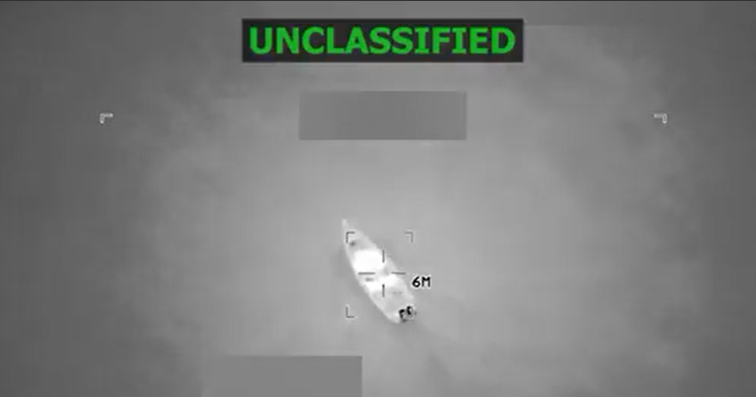
This framework has given the U.S. military liberty to execute over 20 strikes on alleged drug trafficking boats in the Caribbean and eastern Pacific since early September, resulting in the deaths of over 80 individuals. The Trump administration has maintained a staunch defense of these actions, framing them as a necessary response to what it describes as an ongoing “non-international armed conflict” with drug cartels labeled as terrorist outfits. The administration argues that these cartels pose severe threats, citing the high number of American deaths due to drug overdoses directly traceable to these groups.
During a press briefing on October 22, President Trump starkly emphasized the lethal consequence of drug trafficking on American lives, claiming, “They killed 300,000 people last year… and that gives you legal authority.” This assertion represents a central tenet of the administration’s justification for these military strikes.
However, this rationale has not gone unchallenged. Legal experts expressed skepticism about the validity of claiming a “non-international armed conflict,” pointing out that drug cartels do not meet international law criteria for armed groups involved in conflict. This places the legal underpinnings of the administration’s actions in questionable light, suggesting a potential misinterpretation or misapplication of international law principles.
The officials who petitioned the Justice Department have raised profound concerns regarding the ethical and legal validity of the Office of Legal Counsel’s opinion. They assert that even if an armed conflict were legally recognized, the intentional targeting and killing of civilians would remain impermissible under both international and domestic law. They urge an immediate review to determine whether the Legal Counsel’s opinion was crafted with requisite independence, objectivity, and competence — pillars required for ethical legal advisement.
Norm Eisen, now the executive chair of Democracy Defenders Fund, highlighted the gravity of the missteps possibly taken by the Office of Legal Counsel in justifying these military actions. He warned that without a robust legal and factual grounding, the strikes lack valid premises in both domestic and international law, thus potentially crossing ethical lines. Richard Painter aligned with this view, criticizing the counsel’s role in potentially rendering biased legal advice to justify executive decisions, thereby undermining the constitutional mandate to ensure that laws are “faithfully executed.”
In response to these damning allegations, a Justice Department spokesperson defended the legality of the strikes, stating they were congruent with the laws of armed conflict and therefore constituted lawful orders. Nonetheless, this defense has not quelled calls for accountability and transparency.
The controversy has reached the halls of Congress, where top lawmakers, particularly Democrats on the Senate Judiciary Committee, have called for thorough briefings on the legal justifications underpinning the strikes. Senators Peter Welch and Dick Durbin have actively sought insight into the Department’s provision of legal advice concerning the planning and execution of these fatal operations.
Amidst this contentious backdrop, civil liberties groups like the American Civil Liberties Union, the Center for Constitutional Rights, and the New York Civil Liberties Union have initiated legal action aiming at the public release of the Office of Legal Counsel’s memo. Their lawsuit underscores a pressing public interest in understanding and scrutinizing the legal rationales that permit such severe military undertakings.
As this situation unfolds, the integrity of legal advisements issued by the Justice Department’s Office of Legal Counsel remains under intense scrutiny. The outcome of the requested internal investigation could have significant implications for the accountability and ethical standards of legal advisories provided at the highest levels of government.