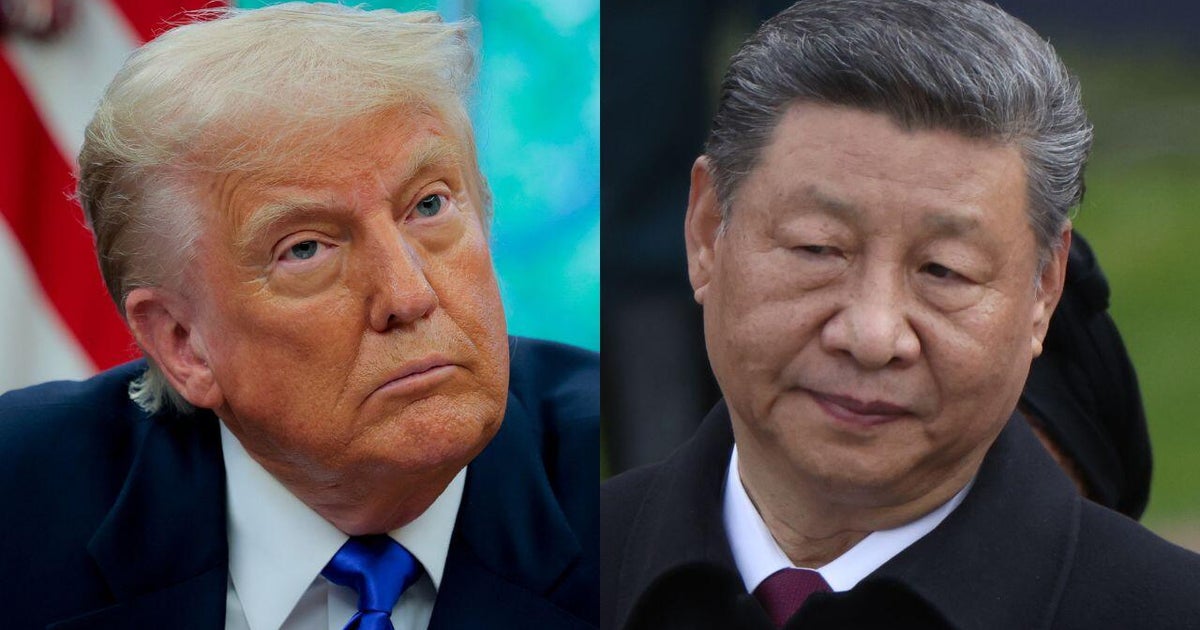
President Trump announced on Friday that he plans to impose an additional 100% tariff on imports from China, starting next month. This decision comes as a response to new Chinese export controls and marks a significant escalation in the ongoing U.S.-China trade war. The new tariffs will be added on top of existing import taxes on Chinese goods, which currently stand at 30%. In addition to the tariffs, the U.S. will also impose export controls on “any and all critical software” starting next month.
The tariffs could be implemented on November 1st or sooner, depending on any further actions or changes taken by China, according to President Trump. This announcement came shortly after the president threatened steeper duties on China in response to new Chinese rules requiring companies to obtain special approval to export products containing even trace amounts of rare earths from China, even if they were manufactured elsewhere. China is a major producer of rare earth metals, which are essential for manufacturing products like semiconductors, electric car batteries, jet engines, and defense weapons.
President Trump criticized China’s export controls as “extraordinarily aggressive” and a “moral disgrace” in his statement announcing the new tariffs. The move by China to impose port fees on U.S.-owned ships that dock in the country is seen as a retaliatory measure against what Beijing considers a “discriminatory” U.S. port fee on Chinese ships.
Following President Trump’s initial tariff threat, major stock indexes experienced a sharp decline on Friday. The S&P 500 dropped 2.7%, the Dow Jones Industrial Average fell 1.8%, and the tech-heavy Nasdaq Composite saw a 3.6% decrease. These new tariffs and export restrictions have the potential to further escalate trade tensions between China and the Trump administration. Despite an upcoming meeting between President Trump and Chinese President Xi Jinping, the U.S. president indicated earlier on Friday that “there seems to be no reason” for the meeting to take place.
China is currently the United States’ third-largest trading partner, with the U.S. importing $438.9 billion worth of Chinese goods and China purchasing $143.5 billion in U.S. goods last year, according to federal statistics. The trade relationship between China and the U.S. has been strained in recent months, with both countries imposing significant tariffs on each other’s goods earlier in the year. In May, the U.S. and China agreed to reduce their tariffs to 30% and 10%, respectively, as they worked towards a broader trade deal.
The economic relationship between the U.S. and China has become increasingly complex, with additional issues such as the Trump administration’s need for Beijing’s approval to finalize a deal to transfer ownership of TikTok’s U.S. operations away from its China-based parent company, ByteDance. This latest escalation in tariffs and export controls further complicates the already tense trade relationship between the two economic powerhouses.
As the trade war between the U.S. and China continues to evolve, the impact on global markets and economies remains uncertain. The implementation of additional tariffs and export restrictions could have far-reaching consequences for businesses, consumers, and international trade relations. It remains to be seen how both countries will navigate these challenges and whether a resolution to the trade dispute can be reached in the near future.