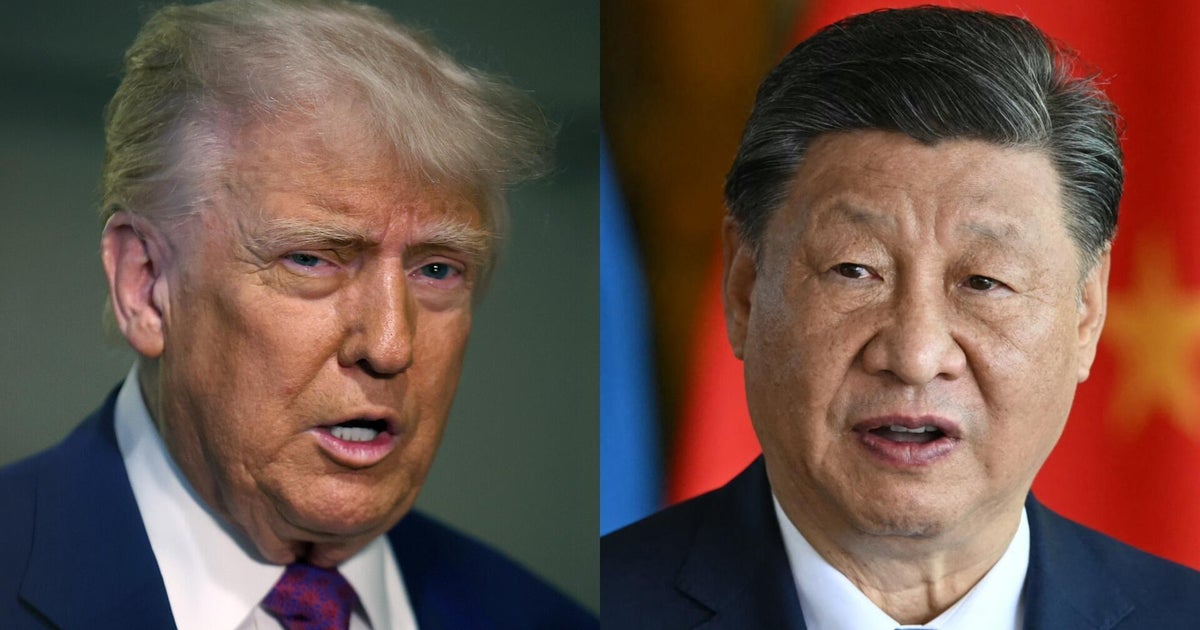
In a significant development pertaining to international tech governance and the geopolitical tug-of-war over digital assets, President Donald Trump held a crucial discussion with Chinese President Xi Jinping last Friday. This dialogue, aiming to iron out complexities surrounding the ownership of the popular social media platform TikTok, marks a tentative yet pivotal step towards a bilateral agreement. However, despite Trump’s initially positive response about making progress, he later expressed to reporters that a final deal has not yet been reached.
TikTok, an app beloved by millions across the globe for its engaging short videos, has been caught in a whirlwind of international scrutiny and regulatory measures. Owned by the Chinese company ByteDance, TikTok has faced intense scrutiny by the U.S. government due to concerns over national security, privacy, and data governance, as the U.S. fears that the Chinese government could potentially access user data.
The dialogue between Trump and Xi was not just a routine check-in but was meant to steer toward the finalization of an agreement that was preliminarily shaped earlier in the week. This earlier framework was set by U.S. Treasury Secretary Scott Bessent and Chinese negotiators, who collectively announced on Monday an emerging consensus, albeit pending further discussions and endorsements.
According to Trump’s post on Truth Social following his conversation, the call with Xi was “very good” and productive, highlighting a reciprocal appreciation of the progress over the TikTok issue. Trump also revealed plans to visit China in the early part of the upcoming year, reciprocating a future U.S. visit by President Xi at a mutually agreeable time. More immediately, both leaders are scheduled to meet at the APEC Summit in South Korea this November, providing them another platform to perhaps cement the deal.
The significance of the Trump-Xi call is twofold. Firstly, it underscores ongoing negotiations at the highest political levels, reflecting the critical economic and security stakes tied to digital platforms like TikTok. Secondly, it indicates a mutual willingness to stabilize tumultuous U.S.-China relations affected by trade disagreements, technological competition, and differing global strategic interests.
Highlighting the complexities in bilateral relations, Xi’s recent actions on the international stage, specifically his pronounced display of unity with Russian President Vladimir Putin during a large military parade showing off an array of missiles and drones, have raised concerns in international circles about China’s global military ambitions and its implications for U.S.-China relations.
Moreover, Trump’s management of the TikTok issue departs notably from strict adherence to existing U.S. laws mandating foreign divestiture from digital platforms deemed a security risk. Although a federal law, upheld unanimously by the Supreme Court, compels ByteDance to divest ownership of TikTok or face a U.S. ban, Trump has utilized executive powers to delay this enforcement. While some might see this as a pragmatic approach to navigating complex international tech governance, critics argue it could set a precarious precedent regarding the enforcement of national security laws.
Trump’s additional act of establishing a White House TikTok account suggests an attempt to engage with a wider, particularly younger, audience using the platform. This engagement can be seen as a strategic move to soften the public perception of administration policies towards the social media sphere, entwined with national security concerns.
As anticipated, the ongoing discussions and the forthcoming diplomatic engagements between Trump and Xi will be closely monitored. Stakeholders including lawmakers, tech industry leaders, and privacy advocates are keen to understand how U.S. interests are being balanced with international diplomacy and corporate tech interests. The ultimate resolution of the TikTok ownership and governance issue will likely set precedents for future U.S. dealings with foreign-owned tech companies and could redefine the landscape of digital media and technology governance.
While the immediate outcome of the Trump-Xi dialogue appears to be a diplomatic, yet non-conclusive step towards resolving the TikTok dilemma, the broader implications resonate through the spheres of international trade, cybersecurity, global digital policy, and U.S.-China bilateral relations.