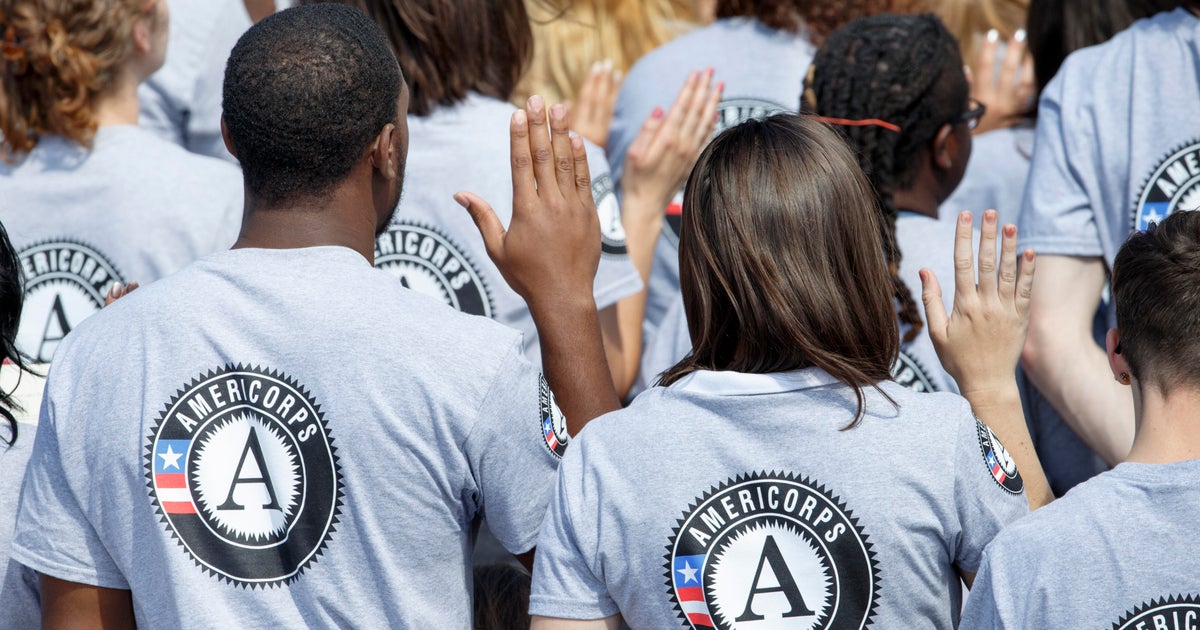
In a significant legal action reflecting wide state-level resistance to federal budget cuts, a coalition of 24 states initiated a lawsuit on Tuesday challenging what they describe as critical reductions to AmeriCorps, the nation’s premier volunteer service organization. The states allege that these reductions, initiated under President Donald Trump’s federal cost-cutting campaign led by the Department of Government Efficiency, are efforts to dismantle AmeriCorps, jeopardizing the livelihoods of thousands and the essential services they provide to communities across the United States.
AmeriCorps, an entity that was brought to life in 1993 under President Bill Clinton, has historically been a vehicle for forwarding national service and community involvement through various programs including the National Civilian Community Corps. This sub-agency uniquely focuses on projects such as conservation, disaster response, and infrastructure improvement. AmeriCorps engages approximately 200,000 members who mostly receive living stipends, and directly employs hundreds in its operations. Until recently, its operation extended support through both directly operated programs and a multitude of state-overseen, grant-funded programs.
However, the current administration’s actions have put these contributions in peril. The lawsuit claims that AmeriCorps has placed 85% of its staff on administrative leave in anticipation of severe employment cuts and has starkly reduced the functionality of its National Civilian Community Corps. Furthermore, it is alleged that the administration has slashed nearly $400 million in grants which represents 41% of AmeriCorps’ operating budget. The impact of these cuts is not trivial; they affect volunteer programs across all 50 states, essentially crippling the organization’s ability to serve communities and carry out its missions.
The legal challenge articulated by the states asserts that the administration’s cuts contravene federal laws and overstep constitutional boundaries regarding the separation of powers. Since AmeriCorps was established and is funded by Congressional mandate, any significant alteration to its structure or funding should involve legislative scrutiny and approval, a process the states claim has been circumvented by unilateral executive action.
In defense of the cuts, White House spokesperson Anna Kelly outlined concerns about the organization’s financial practices, noting “AmeriCorps has failed eight consecutive audits and identified over $45 million in improper payments in 2024 alone.” Kelly further emphasized the president’s legal authority to ensure accountability across the Executive Branch, suggesting that the financial irregularities had necessitated the sweeping budget reductions.
The lawsuit was filed in the Federal Court of Maryland with leading involvement from states like California, Colorado, Delaware, and Maryland, reflecting a broad geographic concern over the cuts. In detailing the immediate negative impacts, the lawsuit emphasizes how communities and residents are starting to feel the lack of AmeriCorps’ presence and support, which had been a bedrock for local development and emergency response endeavors for decades.
Expressions of discontent and alarm have similarly emerged from other quarters. The America’s Service Commissions, a nonprofit organization overlooking state service commissions, criticized the manner in which the Trump administration communicated these substantial grant cuts—devoid of prior notice—and highlighted the resultant upheaval within communities reliant on AmeriCorps volunteers.
California’s reaction to the federal cuts exemplifies the state-level agitation. Governor Gavin Newsom of California, where AmeriCorps volunteers logged nearly 4.4 million service hours in the 2023-24 fiscal year, fiercely condemned the cuts. “These actions by President Trump not only threaten our funding—they vandalize our values,” said Newsom, signaling that his state would actively contest the federal decision. Furthermore, Newsom highlighted ongoing recruitment for California’s own volunteer program, suggesting a move towards self-reliance in the face of federal retrenchment.
As states rally to counter what they perceive as unwarranted and potentially illegal federal infringements on a valued national resource, the legal battle over AmeriCorps’ future is setting up to be a significant standoff that could define the contours of national service provision in America for years to come. This lawsuit underscores a critical struggle over national priorities, fiscal responsibility, and the extent of executive power during a time of political tension and socioeconomic challenges across the United States.