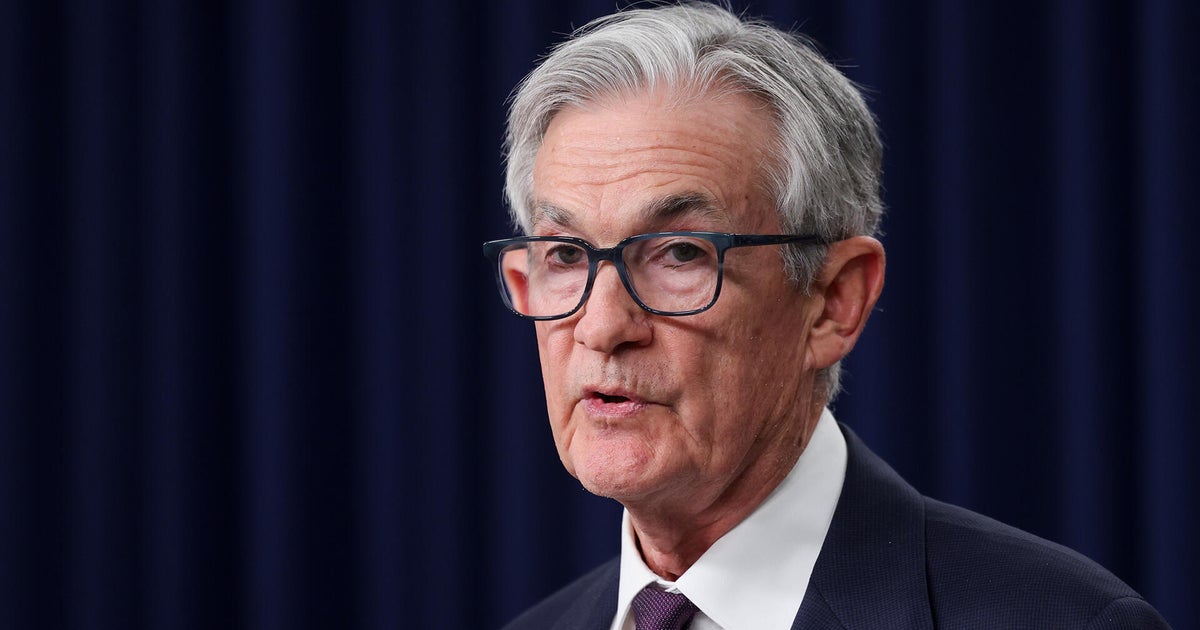
In a recent development concerning the U.S. economic landscape, Federal Reserve Chair Jerome Powell delivered a firm statement on the stance of the central bank regarding interest rates amidst the dynamic shifts induced by U.S. tariffs. This declaration arose during Powell’s semiannual testimony before the House Committee on Financial Services, a protocol that garnered heightened attention given the current economic uncertainties influenced by trade policies. His remarks on Tuesday reflected a deep contemplation of the economic indices and a resolute intention to maintain the status quo concerning the benchmark interest rates.
President Donald Trump has recurrently exerted pressure on the Federal Reserve, advocating for a rate cut to reduce the cost of borrowing for consumers and businesses—an economic stimulus widely debated in financial circles. Subsequent to this political pressure, the discourse around the central bank’s interest rate policies has intensified. In its last assembly on June 18, pivotal to this ongoing discussion, the Fed held its rates steady, maintaining the mainstay interest rate within the range of 4.25% to 4.5%, unchanged since December.
Powell’s crucial testimony underscored a meticulous approach, emphasizing the need for prudence before making any policy shifts. He delineated the central bank’s significant uncertainty over the impacts of the Trump administration’s tariffs on the trade and overall economic situation. According to Powell, the resultant inflation from these tariffs could either be a fleeting phenomenon or a more enduring predicament. So far, the data collated by the Federal Reserve has depicted minimal effect of tariffs on overall consumer prices, but a deeper dig into the near future still remains uncertain.
Contrasting with the concerns over inflation, the U.S. labor market potential slowdown has added another layer of complexity. Despite these concerns, some Federal Reserve officials have hinted at the possibility of a need for rate cuts. Notable among them are Federal Reserve Governors Michelle Bowman and Christopher Waller, who recently suggested the necessity to lower the benchmark rate in the coming meetings, considering persistent economic conditions. Waller, in a statement to CNBC, mentioned that he does not foresee the tariffs significantly triggering inflation, which could potentially open the pathway for a rate reduction as early as the next meeting scheduled for July 29-30. Similarly, Bowman articulated in a speech in Prague, her analysis that the impact of tariffs on inflation might be slower and more attenuated than initially anticipated.
Despite the diverging views within the Federal Reserve, Powell’s steadfast position reflects both caution and meticulous analysis. He reiterated that the Fed was “well positioned to wait to learn more about the likely course of the economy.” This stance points towards a desire to navigate through these uncertain waters with a detailed and data-driven approach rather than precipitate decisions that could lead to unintended economic ramifications.
Furthermore, Powell highlighted an important aspect of the tariff-induced complexities—the timing of their impact on retail prices. According to Powell, products that currently populate retail outlets might have been stocked before the implication of tariffs, suggesting the potential emergence of tariff-induced price hikes during the summer. However, he cushioned this by reiterating a commitment to adapt policy should these price elevations not manifest as problematic inflation.
While the anticipation of potential rate cuts looms, market analysts are split regarding the timing of such adjustments. FactSet, a financial data firm, currently indicates roughly a 20% likelihood of a rate cut by July, with prospects rising sharply for the September 17 meeting, indicating around an 80% likelihood.
The Fed remains a critical fulcrum in the balancing act of the U.S. economy, especially in times of policy-induced volatilities. Powell, unyielding amidst considerable pressure and guided by empirical data and economic forecasts, is tasked with navigating this treacherous terrain. This approach not only underscores the autonomy and institutional robustness of the Federal Reserve but also reflects a broader narrative of cautious optimism and strategic planning pivotal in contemporary economic governance.
Thus, as the broader economic community and stakeholders look towards these impending Federal Reserve decisions, the synthesis of political dynamics, economic data, and policy implications continues to frame a complex narrative that will undoubtedly influence the trajectory of U.S. economic policy and health. The coming months will prove crucial in revealing how these multifaceted influences coalesce, impacting everything from market performance to consumer confidence.