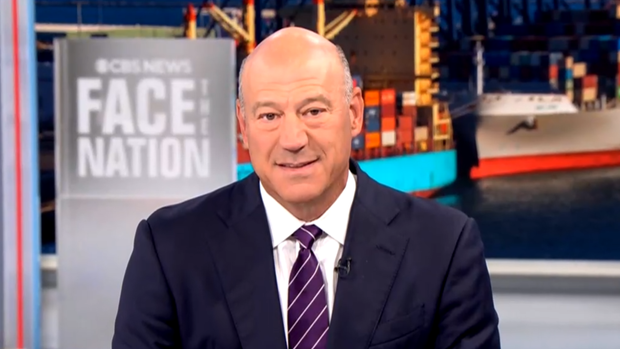
In an insightful discussion on CBS News’ “Face the Nation” hosted by Margaret Brennan on September 21, 2025, Gary Cohn, IBM Vice Chair and former National Economic Council Director during President Donald Trump’s first term, delivered a sobering analysis of the current state of the U.S. job market. Amid concerning trends and economic indicators, Cohn expressed concerns that the job market’s robustness is waning, although he hopes these changes are temporary.
Cohn’s comments come in the wake of the recent Federal Reserve decisions and observations about the labor market. Just last week, the Fed enacted a modest reduction in its benchmark interest rate by 0.25 percentage points. This decision marked the first rate cut since December and was largely influenced by signs of slowing economic growth and a decelerating labor market. Jerome Powell, the Federal Reserve Chair, emphasized the array of new risks facing the labor market, noting a shift in the economic landscape. Powell specifically advised not to place excessive emphasis on payroll job creation alone, but acknowledged it as one of several indicators suggesting a significant cooling off in the labor environment.
Additionally, Powell signaled the importance of integrating current labor market conditions into broader economic analyses and policymaking. This is particularly relevant as the administration faces criticism over its handling and interpretation of employment data. In a controversial move last month, President Trump dismissed the Commissioner of the Bureau of Labor Statistics, Erika McEntarfer, following a disappointing July jobs report, casting further scrutiny on the administration’s response to unfavorable economic news.
During his appearance, Cohn presented a concise overview of recent job creation statistics, pointing out a stark decrease in new jobs. From a period of adding over 100,000 jobs monthly, the figures have dwindled to less than 50,000 jobs a month. He noted the trend where companies, previously in a phase of labor hoarding due to COVID-19 pandemic uncertainties, have shifted strategies aggressively towards cutting costs, with labor expenses being a significant focus.
“The shift we are seeing is pronounced. A few months ago, businesses were engaged in what you might call ‘labor hoarding’, keeping more staff on payroll out of concern over attracting and retaining talent during uncertain times,” Cohn explained. “Now, faced with rising input costs, partly due to tariffs and other economic pressures, and unable to pass these costs onto consumers, companies are opting to pull back on employment costs significantly.”
Cohn went on to describe a natural attrition in workforce numbers as companies are not replacing retiring workers or are subtly reducing their headcount to manage financial pressures better. This approach aligns with broader corporate attempts to streamline operations and enhance profitability amidst economic constraints.
Looking ahead, Cohn emphasized the significance of recent Federal Reserve actions and their broader economic implications. He highlighted the transparency and forthcoming nature of the Fed’s recent communications, which included projections and expectations for future interest rates, noting a high level of consensus among Fed officials. “This unanimity is crucial, particularly at a time when the independence of the Federal Reserve has been a subject of intense debate and scrutiny,” Cohn remarked.
Cohn reassured that through its recent actions, the Federal Reserve demonstrated its capacity as an independent entity capable of making decisions based on comprehensive economic data and prevailing conditions, rather than bending under political pressures.
Concluding his discussion, Cohn expressed cautious optimism about the future of the U.S. economy, indicating that while current trends pose challenges, the adaptability and resilience of the economic system, coupled with strategic oversight from entities like the Federal Reserve, should help navigate through these turbulent times. Although the current job market scenario does reflect some downturns, the broader economic fundamentals remain robust, offering a glimpse of hope for recovery and growth in the coming months.
This in-depth dialogue paints a clear picture of the complexities involved in economic policy-making and labor market dynamics, showcasing the varied tools and strategies used by entities like the Federal Reserve to manage economic cycles. As such, Gary Cohn’s insights offer valuable perspectives for policymakers, business leaders, and the general public alike, about navigating economic uncertainties with a balanced and informed approach.