In a significant and controversial move, the Democratic legislators of the Senate and House have initiated a detailed investigation into the executive clemency actions taken by President Donald Trump, suspecting that these pardons and commutations may have been influenced by monetary motivations and political reciprocities. This probe aims to uncover whether there was a ‘pay-to-play’ dynamic at play, where clemency was possibly exchanged for financial contributions or other forms of influence.
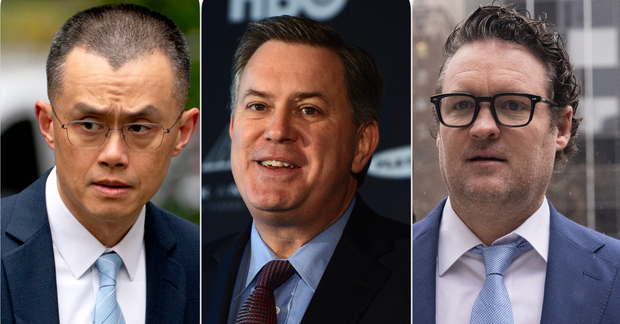
The inquiry covers a broad spectrum of pardons issued by President Trump, including high-profile cases like cryptocurrency billionaire Changpeng Zhao, nursing home mogul Joseph Schwartz, and automotive entrepreneur Trevor Milton. These individuals, despite their heinous offenses ranging from money laundering to tax evasion and fraud, received pardons or commutations raising eyebrows about the motivations behind these acts of clemency.
Changpeng Zhao, for example, pleaded guilty to money laundering charges. Joseph Schwartz faced conviction related to tax crimes linked with his nursing home operations, and Trevor Milton, who was found guilty of misleading investors in 2023, served only a minimal portion of his prison sentence due to the clemency he received. The legislators, spearheaded by California Reps. Dave Min and Raul Ruiz and Vermont Sen. Peter Welch, sent out letters to over a dozen recipients of such executive clemency. These communications request detailed information on any intermediaries, financial contributions, or other forms of influence that might have played a role in obtaining their pardon or commutation.
The lawmakers are also delving into the broader impact of these pardons on the financial victims involved. Their concern is that the acts of clemency have potentially obstructed justice and deprived victims of due compensation. According to the campaigners, President Trump’s pardon strategy has side-stepped the conventional role of the Supreme Court’s outlook on executive clemency, which views pardons as acts of grace intended for public good, not personal or political gain.
A specific investigation surrounds the high-profile pardoning of Zhao, the founder of the crypto exchange Binance. Reports highlighted how his clemency efforts were orchestrated by influential figures connected to the Trump administration, including lobbyists and attorneys known to the Trump family. Public reports also include mentions of significant investments made into the Trump family’s cryptocurrency ventures around the time of Zhao’s pardon, raising critical questions about the integrity of these decisions.
Similarly, the case of Schwartz is disturbing wherein after just three months into his sentence, he was pardoned following his financial engagements with political operatives closely connected to President Trump. Moreover, the probe extends to other cases like that of Lawrence Duran, who had $87 million in restitution wiped away and David Gentile, whose commutation erased significant financial obligations stemming from a Ponzi scheme. These instances suggest a concerning pattern where financial and political influences might have overridden the judicial outcomes originally imposed by courts.
In communications with the implicated parties, the Democrats have expressed severe consequences for lack of cooperation, including potential further investigations and repercussions. However, the power dynamics at play restrict these legislators since they, being in the minority in both the Senate and the House, currently lack subpoena power. This limitation means they can merely request information and cooperation at this stage. The situation could pivot significantly if the Democrats reclaim majority control in the forthcoming midterm elections, potentially leading to more stringent investigative actions including compelling document productions and testimonies.
Responding to the allegations and inquiries, the White House has firmly denied any wrongdoing in these pardons. Statements made by press secretary Karoline Leavitt and attorney Goody Guillén emphasize a robust review process for pardons, dismissing claims of any ‘quid pro quo’ arrangements.
This sweeping investigation sheds light on a critical and controversial aspect of presidential powers, embroiling the Trump administration in yet another significant legal and ethical inquiry. As the investigation progresses, it is likely to stir considerable public and political debate about the principles and processes governing executive clemency, possibly influencing how future administrations approach such significant powers.