Apple Introduces $49.99 Intelligence Usage Packs, Starting with Logic Pro, to Expand Access for Cloud-Based AI Features
New one-time purchase option allows users to buy additional credits for cloud-powered AI tools, as Apple begins to monetize its advanced artificial intelligence infrastructure beyond initial free allowances.
In a significant move that signals a shift in how the tech giant intends to handle the computational costs associated with advanced artificial intelligence, Apple has officially begun rolling out purchasable “Intelligence Usage Packs.” The new add-on, which went live this week, is currently available exclusively within Logic Pro, Apple’s professional audio workstation, but is expected to expand to a suite of other Creator Studio applications and productivity tools in the coming weeks.
The introduction of these paid tiers follows Apple’s publication of a support article in early September that quietly outlined specific usage limits for certain Apple Intelligence features. Now, the company is providing a concrete solution for users who exceed those thresholds: a one-time, non-subscription purchase that adds a buffer of extra AI processing capacity.
According to a report from 9to5Mac, the new usage pack is priced at $49.99. This is not a recurring fee, but rather a one-time purchase tied to a specific set of usage credits. Apple has designed the system to be flexible, with a unique rollover policy, but there are important caveats regarding account sharing and expiration dates.
How the Usage Packs Work
For professionals and power users who integrate Apple Intelligence into their daily workflows, hitting a wall mid-project can be a frustrating experience. The new “Buy More Usage” option is designed to bridge that gap. Apple has confirmed that the usage packs will be usable only by the Apple Account that originally purchased them; critically, they do not support Family Sharing. This means users with multiple accounts or families who share app purchases will need to purchase the pack individually for the specific account that is running out of credits.
Apple’s support documentation sheds further light on the logistics of these packs. “Any unused additional usage will roll over from month to month, but will expire 12 months after it was purchased,” the company states on its website. This provides a generous window for users who purchase the pack but do not immediately need the extra capacity. However, the 12-month expiration cap ensures that the credits are not a permanent part of the user’s account, encouraging eventual consumption.
The specific features that are limited by these usage caps are those that rely on cloud-based AI models rather than on-device processing. This is a crucial distinction. While many of Apple’s core intelligence features (such as notification summaries, writing tools, and image generation) are designed to run on the device’s Neural Engine, the more advanced tasks—such as heavy conversational context for the AI assistant or complex media generation—require the computational power of cloud servers.
Apple has partnered with third-party providers to power these cloud-based workloads, most notably integrating models from OpenAI and Google Gemini. Because these services incur real operational costs for Apple—processing power, server maintenance, and licensing fees—the company has decided to implement caps on how much “free” cloud access comes with the standard app or operating system, before asking heavy users to pay for the overhead.
Logic Pro Integration
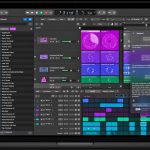
The first application to receive the “Buy More Usage” option is Logic Pro, Apple’s professional Digital Audio Workstation (DAW). In a recent update, Logic Pro received a deep integration with Apple Intelligence, featuring a built-in AI assistant capable of performing complex audio tasks. According to Apple’s descriptions, this assistant can do everything from “starting a new song” and “setting up a vocal track from a single prompt” to “refining an active project.”
For musicians and producers, this assistant is intended to feel like a creative co-pilot. However, the complexity of these conversations directly impacts the usage limits. As Apple explicitly states, the usage limit is “impacted by the complexity of conversations you have with the assistant.” A simple command like “lower the volume on track three” uses minimal credits, whereas a sophisticated request to “analyze the harmonic structure of this chord progression and suggest a similar riff in a different key” will consume significantly more.
Users who find themselves running out of access in the middle of a session will see a prompt appear in the app. The option to purchase more usage is located in a specific part of the Logic Pro menu: Intelligence Features > Show Usage. From here, users can monitor their remaining credits and initiate the purchase of a new Intelligence Usage Pack to immediately replenish their access.
Expansion to Other Apps on the Horizon
While Logic Pro is currently the only app with the purchase option live, the 9to5Mac report indicates this is just the beginning. The Intelligence Usage Packs are expected to be added to other Apple Creator Studio apps throughout the month of November. The expanded rollout will see the feature become available in:
- Pixelmator Pro: The professional image editor is expected to leverage cloud AI for advanced photo retouching, object removal, and style transfers that require more power than on-device models can provide.
- Final Cut Pro: Video editors might use the AI for complex scene detection, automated multicam syncing, or generating transitions and effects that rely on cloud processing.
- Motion: The motion graphics software is likely to integrate similar generative capabilities for titling and effects.
In addition to these professional creative tools, Apple is also extending the access to its productivity suite. Pages, Keynote, and Numbers are reportedly getting access to Apple’s AI chatbot, which will allow users to generate text content, create key visual data representations, or draft scripts directly within the documents. These apps will likely feature the same usage cap structure, pushing office workers and students into the paid tier if they rely heavily on the generative writing and data analysis features.
The Price of Intelligence
The $49.99 price point is interesting. It is positioned as a low-cost “top-up” rather than a subscription seat, which might be an intentional strategy to avoid consumer subscription fatigue. By making it a one-time purchase, Apple lowers the psychological barrier to entry. However, because the credits expire after 12 months, a user who consistently hits the limit every few weeks will effectively be purchasing these packs multiple times a year, creating a de facto subscription cost of up to $100-$200 per year for heavy users.
This move also highlights the increasing cost of frontier AI models. By offloading compute to providers like OpenAI and Google, Apple is ceding some control but gaining the ability to offer state-of-the-art features without having to build massive data centers solely for these consumer features. The usage pack monetization is a way to offset those direct costs from the hardest-hitting users.
A Shift in the Apple Ecosystem
For years, Apple has championed on-device privacy and processing, using it as a differentiator against competitors like Google, which process more data in the cloud. However, the limitations of on-device processing are becoming apparent as AI models grow more powerful. By introducing these cloud-based features and usage packs, Apple is acknowledging that while they still prioritize on-device handling for privacy-sensitive tasks, there is a class of high-complexity tasks where the cloud is necessary.
This necessitates a payment plan. The “Buy More Usage” feature is the first significant step toward a multi-tier Apple Intelligence offering. While consumers might initially balk at paying extra on top of a $1,000+ device, the pricing is relatively modest compared to enterprise AI APIs. The success of these packs will likely determine how Apple structures its future AI pricing, and whether they will continue to lean on external partners like OpenAI and Google, or eventually build out their own server-side models to bring down costs.
As the feature rolls out to more apps, users can expect to see usage meters appearing across their creative and productivity software, providing a clear visual representation of exactly how much compute they are consuming, and just how much more they are willing to pay for it.