The Bird Automation, the Pop Star, and the Journalist Who Couldn’t Look Away
Who would have thought that a standoff between a pop star-turned-talk-show-host and a small Brooklyn magic shop would come to define the cultural conversation online? Yet that is exactly what happened this week, as Kelly Clarkson and Art of Play became the subject of endless speculation, hot takes, and passionate fan defense. The object at the center of it all: a bird automaton reportedly priced at $15,000 — or, depending on which version of the story you believe, $15,000,000. It was the kind of story that seemed to materialize out of nowhere and immediately consume everyone’s timelines.
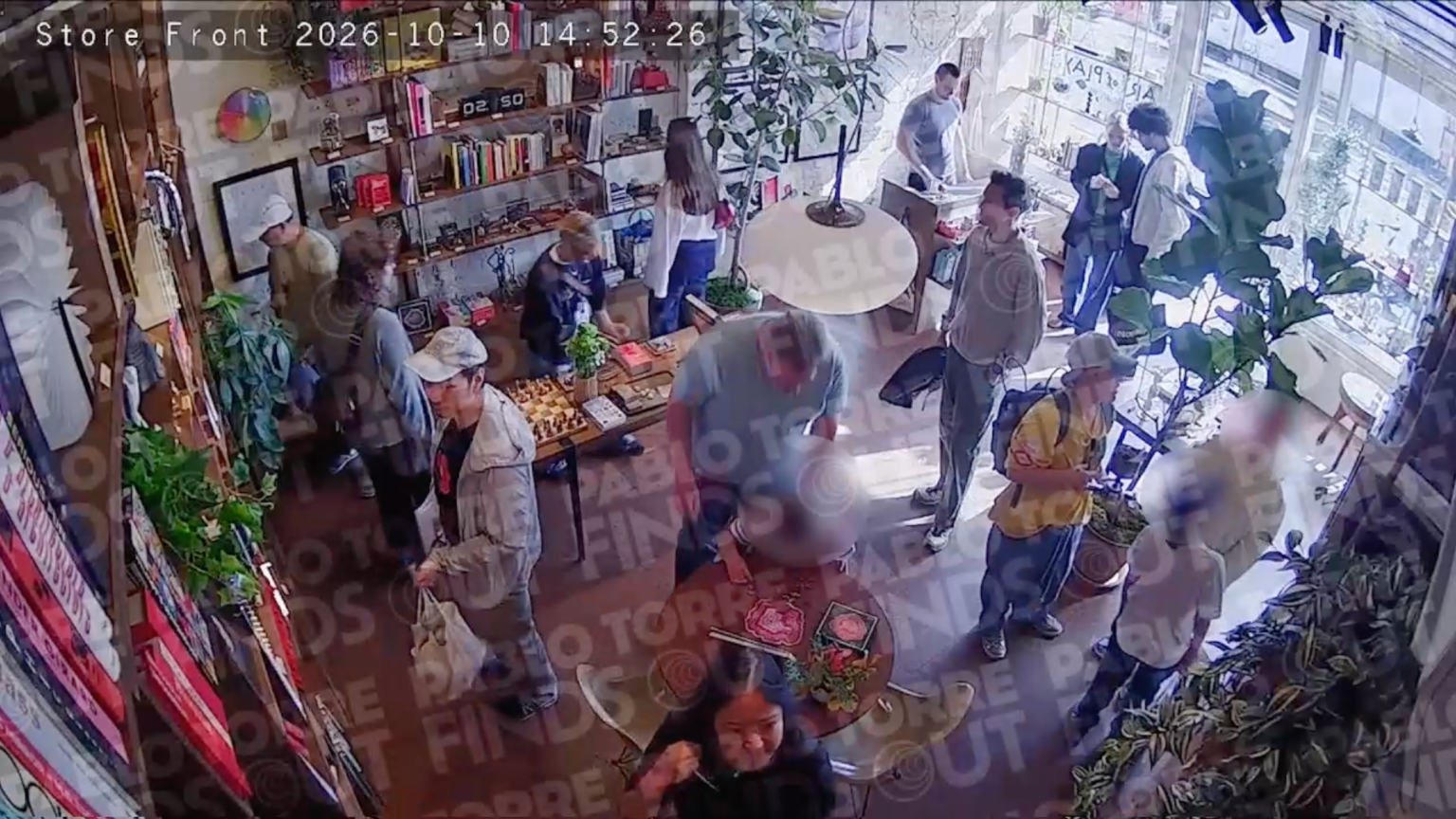
But it was Pablo Torre, the host of Pablo Torre Finds Out, who actually managed to advance the story. By obtaining security camera footage of Clarkson’s visit to the store, Torre gave viewers a chance to see the interaction for themselves. That single piece of evidence reframed the entire saga, moving it from a he-said-she-said celebrity dispute into something closer to journalism.
Torre, of course, is not a typical celebrity gossip journalist. He is the reporter who broke the Los Angeles Clippers-Kawhi Leonard salary cap scandal, an investigation that ultimately led to steep penalties for the team and owner Steve Ballmer, as well as a possible criminal investigation. He was named to The Hollywood Reporter’s New York power list this year because of that work. And, yes, he won a Pulitzer for it, too.
THR recently caught up with Torre to discuss why he decided to dive into the Clarkson story, how he balances serious investigative work with the demands of the creator economy, and what it means to sit at the intersection of journalism and internet culture. The conversation has been edited for length and clarity.
Why a Bird Automaton?
When asked why he decided to look into the Clarkson-Art of Play dispute, Torre did not hesitate.
“On my show, we do have a tendency to take stupid things seriously, and also sometimes serious things stupidly,” he said. “But this is a story that I became obsessed with because I live here in New York City. I had been to that shop before. I am actually a big on-the-record Kelly Clarkson fan, and this had the making of a modern morality play, in which everyone was trying to figure out what’s true. My show does, I would say, investigations into culture in every investigation that we do into sports, and this felt like something that I think we could contribute to.”
The show is known for taking months on deep-dive investigations. But occasionally, something pops off in real time that demands immediate attention. Torre acknowledged that there is no formula for deciding when to interrupt a planned schedule.
“We are learning that in real time,” he said. “This is all feeling to me as we make the show, like an experiment, and the returns on our many month investigations, our deepest dives, have yielded a level of result that is beyond our imagination.”
Still, he explained, the team is always asking a simple question: “Is this thing that’s breaking right now something that we can illuminate?” And in that way, there is no rule for when they will blow up a carefully planned week because a “bird automaton became the center of a national controversy.”
“That is a sentence that, if you were to tell that to me a week ago, I would have felt like I was on acid,” Torre admitted. “But maybe there’s a breaking news story that makes you feel like you’re on drugs, and the only way to sober up is journalism. I’m sort of workshopping this with you now on the phone. Maybe that’s the standard for us, but I don’t know. And that’s kind of the joy is that the unpredictability of what our show ends up being is a mystery box sometimes even to ourselves.”
Making Disposable Stories Last
Torre acknowledged that, a month from now, most people will have forgotten the Kelly Clarkson bird automaton controversy. But that does not make it worthless. For him, the challenge is figuring out how to give disposable stories a sense of lasting meaning.
“To me, the thing that I grapple with to your very fair point is how do you make disposable things last?” he said. “And for us, we’re always prioritizing stories with durability that have depth and substance.”
In this case, the story offered a deeper conversation about celebrity power and how it can be directed toward an audience. Torre pointed out that this is not just about Clarkson.
“That’s about Taylor Swift and Beyoncé and Donald Trump and BTS and any super famous person who exists in public for whom their fandom is their business,” he said. “And what happens when they direct it without explicitly saying the thing, but implicitly it seems like there’s a call to action.”
The episode, in other words, was never only about a magic shop or a mechanical bird. It was about how enormous celebrity power operates in an online world where fans are ready to mobilize at a moment’s notice.
A Comical Docket
Torre’s show tackles a number of stories at any given time. Asked how many investigations are in motion, he laughed.
“Oh gosh, our docket is comical,” he said. “I mean, we have currently right now — I’m looking at our Google Calendar — we have a dozen things in various stages of production.”
The work is often unpredictable. Stories sometimes have to wait for the right moment to be published News pegs matter. An A-plus investigation can sit for a year if there is no hook to attach it to.
“There are two planes right now that I think are A-plus stories that just have zero news peg, and so we’ve been having these poor people wait on the tarmac for a year,” Torre said. “And I so look forward to getting to tell people those stories.”
But in the meantime, there is always something happening, whether it is the bird automaton, the next Ballmer lawsuit, or a sports gambling development in the Eastern District of New York.
“It’s all quite a lot,” he said.
Public vs. Private Investigation
Torre’s investigations are not entirely conducted behind closed doors. With the Clippers story, for example, the findings have continued to unfold in public, with multiple installments and ongoing debates. He also engaged with Mark Cuban, and that debate became part of the story itself.
But Torre explained that there is a limit to what he will reveal before he is ready. He noted that there were things he knew during his debate with Cuban that he had not yet published.
“There were things that I had not published that I did have a pretty strong sense of, that informed my confidence and my convictions, but I wasn’t ready to report that, and I wasn’t ready to say that, and so I didn’t say it,” he said. “And when I was ready to report, that’s when the public got it.”
That tension between public engagement and private verification is central to the show. The team does a great deal of research that never becomes public, and much of that work never makes it into an episode.
“We are that duck that is paddling furiously under the surface,” Torre said. “Even as you can see us flapping our wings wildly, you know we’re still doing a lot more than I think people can ever see.”
The Creator Economy, Reverse Engineered
Torre’s work is not only journalistic; it also exists in the broader creator economy. He publishes multiple episodes per week, which means he cannot simply wait months to release everything. The trick, he said, is reverse engineering.
“Your goals are journalistic,” he said. “They are along the lines of both following your curiosity and making impact. So within that framework, what do you do?”
He recalled meeting MrBeast, the YouTube superstar, when he was co-hosting Morning Joe. MrBeast was “prolific, but also so tired.”
“Like, they’re all burnt out,” Torre said. “I think some of them are superhuman, but a lot of them are just tired.”
Torre’s own approach is to prioritize what he finds energizing and then backfill the calendar. Deep investigations take time, so the team plans around themologist less intense segments to fill the gaps. Those lighter pieces have become a signature of the show, such as when he had art critic Jerry Saltz review sports trophies, or when he had a butter sculpture made of himself.
“It’s a bit of a palate cleanser for me, and probably I hope for the audience,” Torre said.
Turning Stupid Into Something Good
The Kelly Clarkson investigation also offered an opportunity to do something meaningful. During the course of reporting, Torre noticed something interesting: there was another automaton that Clarkson apparently had no interest in. According to the security footage, she did not even stick around to hear its price, which was $2,000.
“That occurred to me … Is that too much money for us?” Torre said. “Like, if we were to go and buy that other bird, what would we do with it?”
The answer came from a tragedy close to Torre’s heart. David Samson, a friend of the show and frequent contributor, lost his daughter Kyra over the summer. In response, Samson created the Kyra Fund, which fights glioblastoma and searches for a cure.
“In honor of having a charity and a cause close to home, I thought, what better way to harness the attention to something that feels profoundly stupid, like a truly petty grievance that had saturated all of our brains?” Torre said. “How could we turn all of that attention to something positive?”
So the show decided to put the second automaton up for auction, with proceeds going to the Kyra Fund. Torre’s hope is that someone will buy a piece of pop culture history while also supporting research into one of the worst forms of brain cancer.
“So, yeah, I hope people take that part seriously as well,” he said.
In the end, a silly story about a pop star and a magic shop became something more: a chance to illuminate an unexpected truth, and maybe even make a difference.