Supreme Court Decision Reverberates Through Virginia’s Redistricting Battle
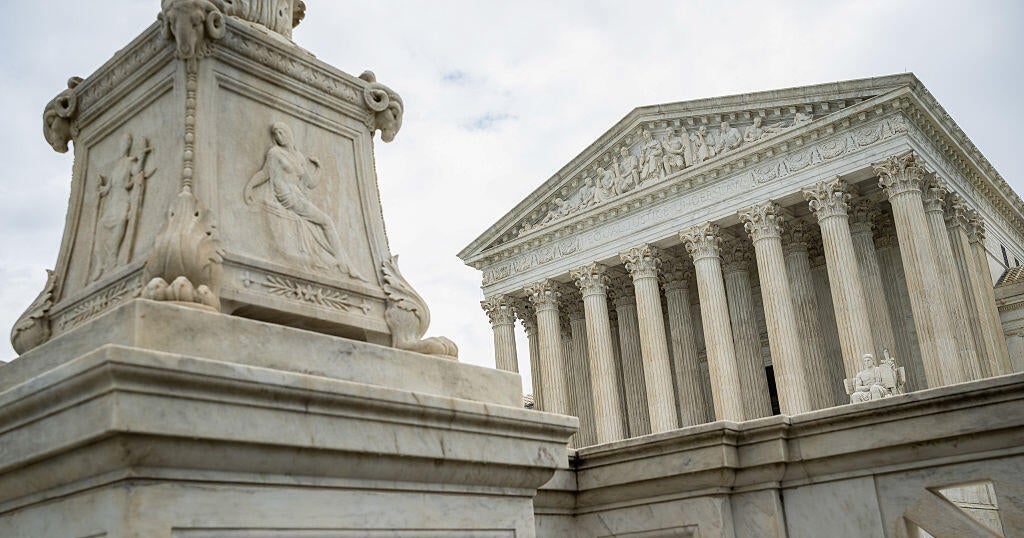
In a recent unfolding in Washington, the Supreme Court issued a decision that has significant implications for the political landscape of Virginia. On Friday, the court denied an appeal from Virginia Democrats who sought to implement a newly drawn congressional map that had been designed to favor their party in the upcoming midterm elections. The justices left in place a prior ruling by Virginia’s highest court which found an amendment to the state constitution authorizing the adoption of these new House district lines to be invalid. This decision was delivered via an unsigned one-sentence order, and there were no noted dissents.
The Democrats’ bid to have the map reinstated was always going to be challenging. Traditionally, the Supreme Court has been reluctant to overturn interpretations of state law made by state supreme courts. This principle held true in this case, leaving the Democrats’ redesigned districts unusable in the midterms.
The fallout from this decision was immediate. Dorothy McAuliffe, a prominent figure running for the congressional seat created under the rejected map, announced she would be suspending her campaign. McAuliffe, married to former Virginia Governor Terry McAuliffe, made her decision public through social media. She expressed her profound disappointment, attributing the failure to what she described as “disgraceful rulings” from both the Virginia and United States Supreme Courts. She highlighted that the voters had clearly rejected what she termed as “Donald Trump’s redistricting scheme,” a reference to alleged efforts to influence redistricting across multiple states.
National Implications of Redistricting and the Role of the Supreme Court
Virginia’s struggle over redistricting is not an isolated incident; it mirrors a national tug-of-war over the control of congressional maps. These battles have pivotal implications for which party holds the majority in the House of Representatives. For example, last year under the encouragement of former President Donald Trump, Texas adopted a congressional map that could potentially secure five additional House seats for Republicans. In a counter-maneuver, California officials redesigned their districts potentially netting Democrats five new seats, an effort that was approved by voters and sanctioned by the Supreme Court for use in the midterms.
Other states like North Carolina, Missouri, and Florida have witnessed Republican-led efforts to reconfigure their voting lines favorably. The strategic redrawing of districts, often pejoratively called gerrymandering, has become a critical and contentious player in the battle for House control.
The Virginia Amendment and Subsequent Legal Challenges
In Virginia, the journey towards the disputed congressional map began last October when the Democratic-led General Assembly passed a proposed constitutional amendment to redraw the state’s House districts mid-decade. This proposal passed a second legislative approval in January. The voters of Virginia then officially approved the amendment in April, seemingly setting the stage for its implementation.
However, within days, the Supreme Court of Virginia intervened, striking down the redistricting plan in a close 4-3 decision. The court sided with opposition arguments that the legislature had not adhered to the proper process for presenting the amendment to voters, a requirement set out in the Virginia Constitution.
Following this, State Democratic leaders sought emergency relief from the U.S. Supreme Court, arguing that the Virginia court’s decision not only misinterpreted federal law but also unjustly deprived Virginia voters, candidates, and the Commonwealth itself of their rights to the congressional districts enacted under the new amendment. Despite this plea, their request was ultimately rejected, leaving the state to conduct its congressional elections using previously set district maps.
Virginia Republicans had argued robustly against the Democrats’ request for intervention, emphasizing that the underlying decision by the Virginia Supreme Court was based strictly on interpretations of state law, over which the U.S. Supreme Court typically does not have jurisdiction.
Broadening Horizons: Response and Reactions Across the South
This recent judicial decision in Virginia is part of a broader narrative of redistricting disputes in the United States. Following a landmark ruling that weakened a key provision of the Voting Rights Act, states like Louisiana, Alabama, and Tennessee have been gearing up to redraw their congressional maps in anticipation of their primary elections.
The stakes of these redistricting efforts are high, as they could potentially reshape the political balance in the U.S. House of Representatives. As part of a wider reflection on the implications of these developments, stakeholders in political, judicial, and civic circles continue to debate and navigate the complex landscape of electoral redistricting. This ongoing tug-of-war over district boundaries underscores the significant impact that Supreme Court decisions can have on the political fabric of the nation, echoing far beyond the corridors of power in Washington.