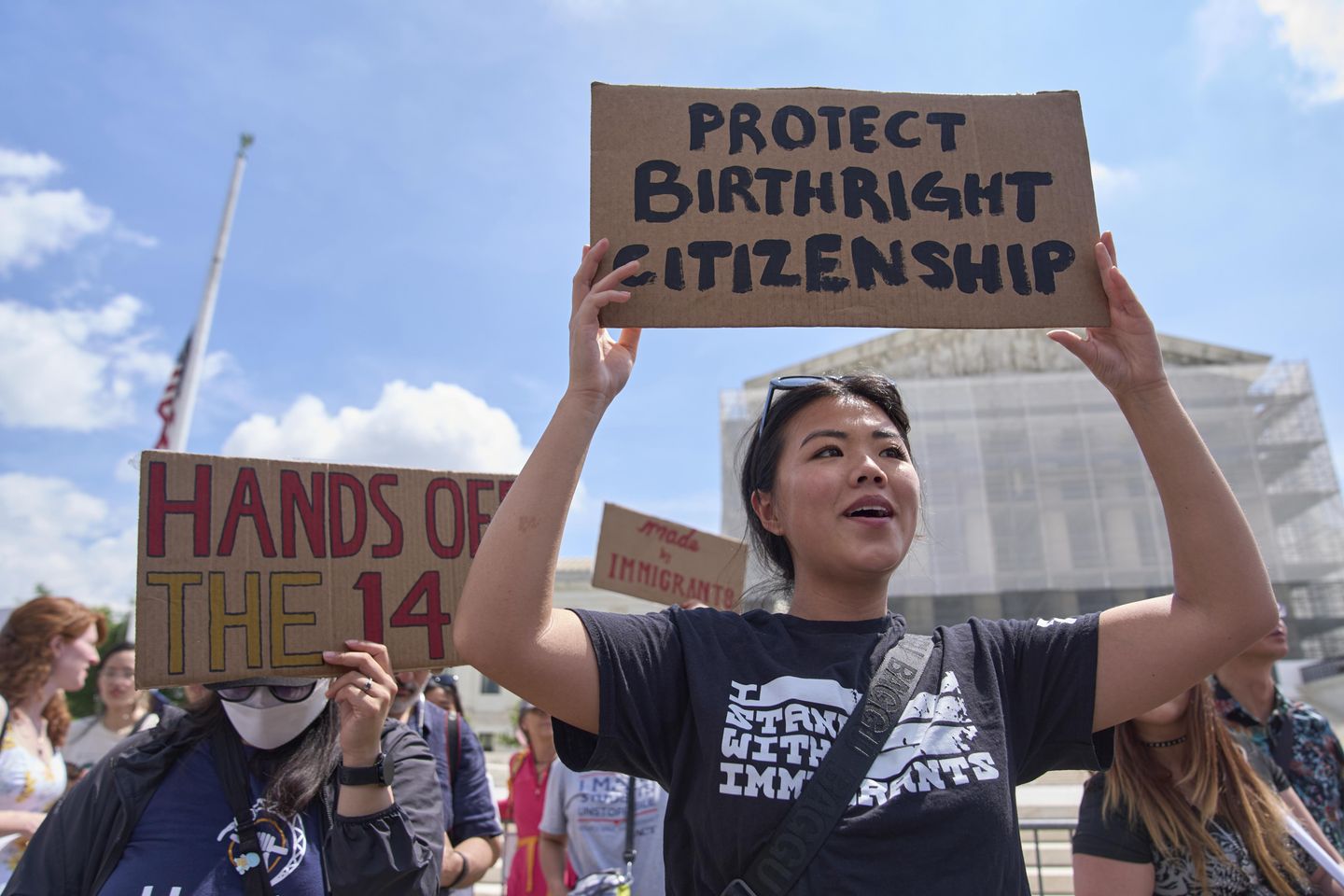
The concept of birthright citizenship, a term that signifies the right of a person to citizenship by virtue of being born in a particular country, is one that has been widely debated throughout American history. Despite the ongoing debate, it remains to be definitively legally defined and codified. The lack of a concrete legal definition for birthright citizenship dates back to more than 160 years ago and is tied to a constitutional gap that has, once again, found its way to the forefront of American politics. Today, this rather nebulous constitutional issue is the core of a potentially landmark Supreme Court showdown revolving around President Trump’s executive order that seeks to limit citizenship for children born to illegal immigrants.
The U.S. Constitution, in its Fourteenth Amendment, states that “All persons born or naturalized in the United States, and subject to the jurisdiction thereof, are citizens of the United States and of the State wherein they reside.” This amendment, ratified back in 1868, was initially designed to ensure that former slaves were granted U.S. citizenship. However, the phrase “subject to the jurisdiction thereof” has sparked debates and legal battles over the years, with varying interpretations being applied.
On one hand, some legal scholars and practitioners interpret this phrase as granting automatic citizenship to anyone born on U.S. soil, regardless of the immigration status of their parents. This interpretation is based on the principle of “jus soli” or right of the soil, which is a policy that grants citizenship based on place of birth. This principle is followed by many countries, including the United States, Canada, and most Latin American countries.
On the other hand, some legal experts argue that the phrase “subject to the jurisdiction thereof” should be interpreted to exclude children born to foreign diplomats, enemy combatants, or illegal immigrants, as these individuals are not technically ‘subject to the jurisdiction’ of the United States. This interpretation is based on the principle of “jus sanguinis” or right of blood, which grants citizenship based on one’s descent or parentage. This principle is commonly followed by many European and Asian countries.
This ongoing debate has been stirred up once again due to an executive order from President Trump. The executive order seeks to restrict citizenship rights for children born to parents who are in the country illegally. This move by the Trump administration has sparked a flurry of debates and has led to a legal battle that is now being fought in the Supreme Court.
Critics of President Trump’s executive order argue that it contradicts the widely accepted interpretation of the Fourteenth Amendment, which grants automatic citizenship to anyone born on U.S. soil. They contend that such a move is not only unconstitutional but also discriminates against immigrants.
Supporters of the executive order, on the other hand, argue that the Fourteenth Amendment has been misinterpreted over the years and that the original intent was not to grant citizenship to children of illegal immigrants. They argue that the executive order is an attempt to rectify this misinterpretation and uphold the original intent of the Fourteenth Amendment.
This Supreme Court showdown is not just about the interpretation of a constitutional amendment, but it also brings to light the broader issue of immigration in the United States. It raises questions about the rights of immigrants, the definition of citizenship, and the role of executive power in shaping these rights and definitions.
The outcome of this legal battle has the potential to redefine the concept of birthright citizenship in the United States. If the Supreme Court upholds President Trump’s executive order, it could lead to a significant shift in the country’s immigration policy and have far-reaching implications for millions of people.
Despite the heated debates and high stakes, it’s important to remember that at the heart of this issue is a 160-year-old constitutional gap. This gap, which has been left open for interpretation, has the potential to shape not only the future of immigration policy in the United States but also the lives of countless individuals who call this country home.
In conclusion, the lack of a legally defined concept of birthright citizenship, coupled with a constitutional gap dating back to more than a century ago, has set the stage for a historic Supreme Court showdown. As we await the court’s decision, it’s clear that this is more than a legal battle – it’s a battle about who we are as a nation, how we define our citizens, and how we treat those seeking a better life on our shores.